January 16, 2026
Rooftop work is common across industrial plants, warehouses, commercial buildings, and infrastructure facilities. Tasks such as maintenance, inspection, solar panel installation, and repairs often require workers to operate close to roof edges and elevated surfaces. These conditions create a high risk of falls if proper safety measures are not in place.
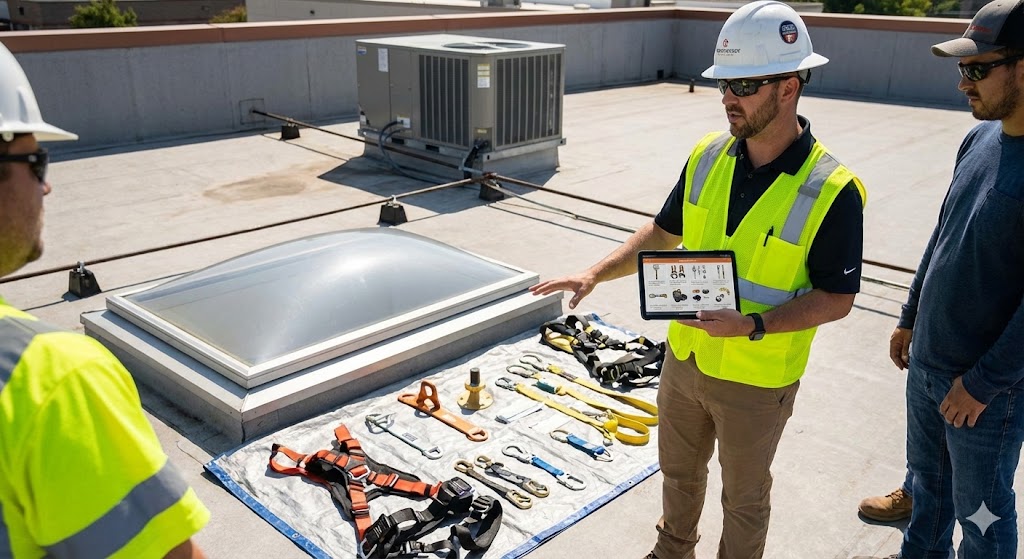
Choosing the right fall arrest system for rooftop work is essential to protect workers, meet safety requirements, and reduce the likelihood of serious injuries. A well selected system allows workers to perform tasks safely while controlling fall risks and supporting compliance.
Understanding the factors involved in selecting a rooftop fall arrest system helps employers make informed safety decisions for their job sites.
What Is a Rooftop Fall Arrest System
A rooftop fall arrest system is a safety arrangement designed to stop a worker from falling from a roof after a fall begins. Unlike guardrails or parapets that prevent access to roof edges, fall arrest systems allow workers to move freely while remaining protected.
These systems are used when fall prevention measures cannot be installed due to structural or operational limitations. A properly designed rooftop fall arrest system limits fall distance, absorbs impact forces, and supports the worker safely until rescue.
Step 1. Assess Rooftop Work Conditions
The first step in selecting the right fall arrest system is understanding the rooftop environment and work requirements.
Key factors to evaluate include:
- Roof type such as flat, sloped, metal sheet, or concrete
- Roof height and edge exposure
- Frequency of access
- Number of workers on the roof
- Duration of work activities
A detailed site assessment helps identify hazards and determine the most suitable system type.
Step 2. Identify Fall Hazards and Access Points
Every rooftop has different fall risks. Identifying where workers may be exposed to edges, openings, or fragile surfaces is critical.
Consider:
- Unprotected roof edges
- Skylights and fragile panels
- Access ladders and hatches
- Walk paths across the roof
The fall arrest system should provide continuous protection across all identified hazard zones.
Step 3. Choose the Appropriate System Type
Different rooftop conditions require different fall arrest solutions.
Individual Anchor Based Systems
These systems use fixed roof anchors where workers connect using lanyards or self retracting lifelines. They are suitable for short duration work in specific locations.
Horizontal Lifeline Systems
Horizontal lifelines allow workers to move laterally across the roof while remaining connected to the system. They are ideal for large roofs and areas requiring frequent movement.
Cable Based Roof Systems
A fall arrest cable system provides controlled movement along the roof edge or work zone. These systems are commonly used for maintenance and inspection work.
Selecting the right system depends on roof layout, work movement, and number of users.
Step 4. Select Suitable Anchorage Points
Anchorage points are the foundation of any fall arrest system. They must be strong enough to withstand fall arrest forces and positioned correctly to reduce fall distance.
When selecting anchors, ensure:
- Anchors are certified for fall arrest loads
- Installation is on a stable roof structure
- Anchor locations minimize swing fall risks
- Anchors are compatible with connectors used
Improper anchorage selection can compromise the entire system.
Step 5. Choose the Right Connecting Devices
Connecting devices link the worker’s harness to the anchorage or lifeline system. The choice of connector affects fall distance and impact forces.
Common options include:
- Energy absorbing lanyards
- Self retracting lifelines
- Rope or cable lifeline connectors
Self retracting lifelines are often preferred for rooftop work due to reduced free fall distance and better mobility.
Step 6. Use a Certified Full Body Harness
A full body harness is mandatory for rooftop fall arrest systems. It distributes fall forces across the shoulders, thighs, and pelvis, reducing injury risk.
When selecting a harness:
- Ensure proper size and adjustability
- Check dorsal D ring positioning
- Confirm compatibility with connectors
- Verify compliance with safety standards
Harnesses must be comfortable to encourage consistent use during long work periods.
Step 7. Consider Fall Clearance Requirements
Fall clearance is the vertical distance required to safely arrest a fall without the worker hitting a lower level.
When selecting a rooftop fall arrest system, calculate:
- Free fall distance
- Deceleration distance
- Harness stretch
- Worker height
- Safety margin
Systems must be chosen to suit available clearance on the roof.
Step 8. Plan for Rescue and Emergency Response
A fall arrest system must always include a rescue plan. After a fall is arrested, the worker must be rescued quickly to prevent suspension related injuries.
Effective rooftop rescue planning includes:
- Defined rescue procedures
- Trained personnel
- Access to rescue or descent equipment
- Clear communication methods
Rescue planning should be part of the system selection process, not an afterthought.
Step 9. Ensure Inspection and Maintenance Support
Rooftop fall arrest systems require regular inspection to remain effective.
Inspection requirements include:
- Pre use checks by workers
- Periodic inspections by a competent person
- Annual inspections by a qualified safety inspector
Cables, anchors, connectors, and harnesses must be inspected for wear, corrosion, or damage. Any defective component must be removed from service immediately.
Step 10. Verify Compliance and Training
The final step is ensuring that the selected system meets safety standards and that workers are trained to use it correctly.
Training should cover:
- System setup and connection
- Safe movement on rooftops
- Fall clearance awareness
- Emergency response procedures
Proper training improves system effectiveness and reduces misuse.
Common Mistakes to Avoid
When selecting a rooftop fall arrest system, avoid these common errors:
- Using uncertified or temporary anchors
- Selecting systems without fall clearance calculations
- Ignoring rescue requirements
- Mixing incompatible system components
- Failing to train workers properly
Avoiding these mistakes improves safety and compliance.
Why Indian Inovatix Rooftop Fall Arrest Solutions
Indian Inovatix designs and supplies engineered fall arrest systems for rooftop applications across industrial and infrastructure projects. Our solutions are developed to support safe movement, controlled fall arrest, and effective rescue.
Indian Inovatix supports clients with:
- Site specific system selection
- Certified rooftop fall arrest systems
- Guidance on inspection and maintenance
- Support for worker safety and compliance
Each system is designed with a focus on reliability, safety, and long term performance.
Conclusion
Choosing the right fall arrest system for rooftop work requires careful evaluation of roof conditions, fall hazards, system type, anchorage, connectors, and rescue planning. A properly selected system protects workers, supports compliance, and reduces the risk of serious injuries.
By understanding site requirements and selecting certified solutions, organizations can ensure safe rooftop operations across all work activities.
Every worker deserves safety. Contact or enquire now with Indian Inovatix for rooftop fall arrest systems, technical guidance, and customized height safety solutions.
Frequently Asked Questions
1. What is a fall arrest system for rooftop work
A fall arrest system for rooftop work is a safety setup that stops a worker from falling from a roof after a fall begins and reduces injury risk.
2. When should a rooftop fall arrest system be used
It should be used when guardrails, parapets, or restraint systems cannot be installed and workers must operate near roof edges.
3. What type of fall arrest system is best for rooftops
The best system depends on roof size, work movement, number of users, and fall clearance. Horizontal lifelines are suitable for large roofs, while anchor based systems work for localized tasks.
4. Is a full body harness required for rooftop work
Yes. A full body harness is required to distribute fall forces safely during fall arrest.
5. How is fall clearance calculated for rooftop systems
Fall clearance includes free fall distance, deceleration distance, harness stretch, worker height, and a safety margin.
6. Can self retracting lifelines be used on rooftops
Yes. Self retracting lifelines are commonly used for rooftop work due to reduced free fall distance and improved mobility.
7. How often should rooftop fall arrest systems be inspected
Systems should be checked before use, inspected periodically by a competent person, and fully inspected at least once a year.
8. Is rescue planning mandatory for rooftop fall arrest systems
Yes. A rescue plan is required to safely retrieve a worker after fall arrest and prevent suspension related injuries.
9. Who is responsible for rooftop fall arrest safety
The employer is responsible for system selection, inspection, training, and safe use.
10. Can rooftop fall arrest systems be customized
Yes. Rooftop fall arrest systems can be designed based on roof structure, access points, and operational requirements.


Talk to Our Safety & Protection Specialists
Have questions or need guidance? Our experts can help you choose the most reliable and high-performance safety solutions tailored to your industry and site requirements.
-

- Call Us +91-8849452638
Need Help Determining the Right Fall Protection for You?
With our vast experience, our experts will assist you in selecting the most relevant system for your needs.