
April 4, 2026
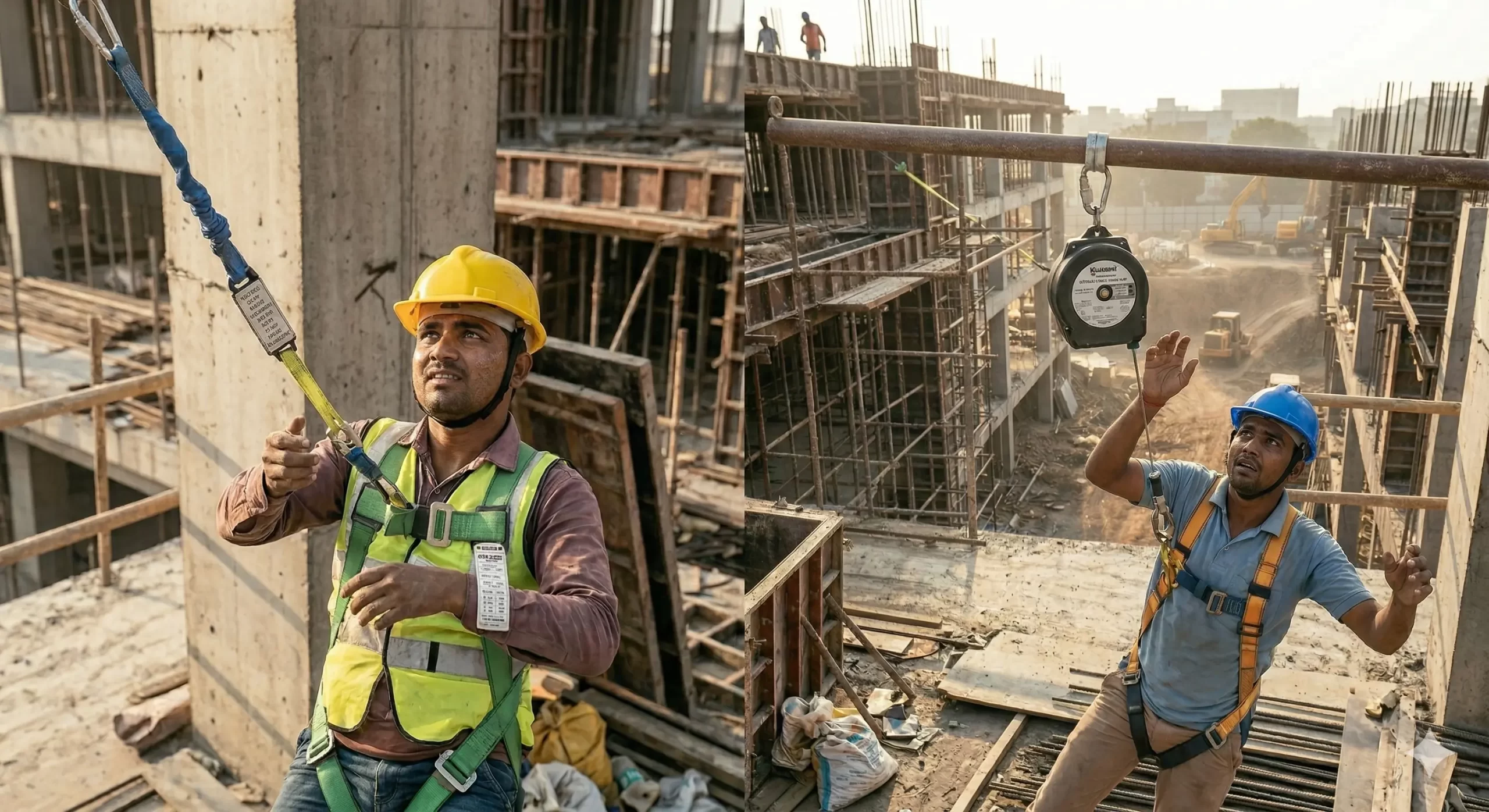
Falls from height remain one of the leading causes of injuries across construction sites, industrial plants, and infrastructure projects. Many teams still confuse system types, which leads to incorrect selection and unsafe work practices. This confusion increases risk exposure, downtime, and compliance issues.
The difference between fall restraint vs fall arrest systems directly affects worker safety and project outcomes. A wrong choice can result in uncontrolled falls or ineffective protection.
Indian Inovatix designs and supplies certified fall protection systems that match real site conditions. With the right system in place, teams can work safely while meeting regulatory requirements.
Key Takeaways: Fall Restraint vs Fall Arrest
- Fall restraint vs fall arrest defines two different safety approaches
- Fall restraint prevents workers from reaching a fall edge
- Fall arrest allows a fall but stops it safely
- Restraint systems reduce risk before exposure
- Arrest systems control impact after a fall begins
- Selection depends on work height, movement range, and hazard level
- Both systems require certified equipment and trained users
What is a Fall Restraint System?
A fall restraint system stops a worker from reaching a fall hazard. It restricts movement within a safe working zone.
This approach focuses on prevention rather than reaction.
How Fall Restraint Works
The system uses a fixed-length connection between the worker and an anchor point. The length is calculated so the worker cannot reach the edge.
Components of Fall Restraint Systems
- Full body harness or restraint belt
- Anchorage point or lifeline system
- Fixed-length lanyard or rope
- Connectors such as carabiners
Where Fall Restraint is Used
- Rooftop maintenance
- Industrial platforms
- Warehouse loading areas
- PEB structures and steel buildings
Practical Site Scenario
In a factory roof inspection, workers operate near edges. A restraint system keeps them within a safe boundary. They cannot step beyond the permitted zone.
What is a Fall Arrest System?
A fall arrest system allows a worker to access risky zones. If a fall occurs, the system stops the fall safely.
This approach focuses on controlled stopping.
How Fall Arrest Works
The system activates after a fall starts. It absorbs energy and limits impact force on the worker.
Components of Fall Arrest Systems
- Full body harness
- Shock-absorbing lanyard or self retracting lifeline
- Anchorage system
- Connectors and locking hooks
Where Fall Arrest is Used
- Construction sites at height
- Bridge and infrastructure work
- Telecom towers
- Confined space entry and rescue
Practical Site Scenario
During steel erection, workers must reach exposed edges. A fall arrest system allows access while stopping a fall if it occurs.
Fall Restraint vs Fall Arrest: Core Differences
Understanding fall restraint vs fall arrest helps safety officers choose the correct system for each task.
| Feature | Fall Restraint | Fall Arrest |
| Purpose | Prevent reaching edge | Stop fall after it starts |
| Risk Level | Lower exposure | Higher exposure |
| Movement | Restricted | Flexible |
| Fall Occurrence | No fall occurs | Fall may occur |
| Equipment Type | Fixed lanyard | Shock absorbing system |
| Worker Impact | No impact | Controlled impact |
| Training Need | Moderate | High |
| Rescue Plan | Not required in most cases | Mandatory |
When Should You Use Fall Restraint Systems?
Fall restraint is preferred when the work area allows safe restriction.
Ideal Conditions
- Work can be completed without reaching edges
- Stable anchorage points are available
- Workers do not need full movement flexibility
Benefits for Industrial Projects
- Lower risk exposure
- Reduced need for rescue planning
- Easier implementation
- Better compliance control
Use Case in EPC Projects
In rooftop solar installation, restraint systems limit worker movement. This ensures safe positioning without exposure to edges.
When Should You Use Fall Arrest Systems?
Fall arrest is required when workers must access hazardous zones.
Ideal Conditions
- Work requires edge access
- Structural limitations prevent restraint use
- Tasks involve vertical movement
Key Requirements
- Certified anchorage strength
- Proper clearance calculation
- Detailed rescue plan
- Trained personnel
Use Case in Infrastructure Work
Bridge maintenance often requires unrestricted movement. Fall arrest systems provide protection while allowing operational flexibility.
Why Choosing the Right System Matters
The difference between fall restraint vs fall arrest directly affects safety outcomes.
Common Mistakes Seen on Sites
- Using fall arrest where restraint is possible
- Incorrect lanyard length selection
- Lack of clearance calculation
- No rescue plan for arrest systems
Impact of Wrong Selection
- Increased injury risk
- Project delays
- Compliance violations
- Higher operational cost
Fall Protection Systems by Indian Inovatix
Indian Inovatix designs and manufactures fall protection solutions tailored for industrial applications.
Product Capabilities
- Horizontal and vertical lifeline systems
- Roof safety systems for PEB structures
- Energy absorbing lanyards
- Self retracting lifelines
- Anchorage systems and connectors
Industry Applications
- Manufacturing plants
- Warehousing and logistics
- Infrastructure and bridge projects
- Oil and gas facilities
- Power plants
Customization for Projects
Each project has unique risks. Indian Inovatix provides system design based on site layout, work conditions, and compliance requirements.
Compliance and Safety Standards
Both restraint and arrest systems must meet regulatory standards.
Key Considerations
- IS and international safety standards
- Load testing and certification
- Proper installation and inspection
- Worker training and usage guidelines
Role of Safety Officers
- Evaluate hazard zones
- Select correct system type
- Ensure proper usage
- Conduct periodic audits
FAQs: Fall Restraint vs Fall Arrest
What is the main difference between fall restraint and fall arrest?
Fall restraint prevents workers from reaching a fall hazard. Fall arrest allows a fall but stops it safely using energy absorption systems.
Which is safer, fall restraint or fall arrest?
Fall restraint is safer because it prevents the fall from happening. Fall arrest manages risk after a fall begins.
When should fall arrest systems be used?
Fall arrest systems are used when workers must access edges or hazardous zones where restraint is not possible.
Do fall arrest systems require a rescue plan?
Yes, every fall arrest setup must include a rescue plan. Workers must be rescued quickly after a fall.
Can fall restraint systems replace fall arrest systems?
Yes, if the task allows movement restriction. Restraint is preferred when it can eliminate fall risk.
What industries use fall restraint systems?
Manufacturing plants, warehouses, and rooftop maintenance projects commonly use restraint systems.
What industries use fall arrest systems?
Construction, telecom, infrastructure, and confined space operations rely on fall arrest systems.
How do I choose between fall restraint vs fall arrest?
Assess work area, movement needs, and hazard level. Choose restraint when possible. Use arrest when access to risk zones is required.
Does fall restraint vs fall arrest affect compliance?
Yes, selecting the correct system ensures compliance with safety standards and reduces liability.
Final Word
The difference between fall restraint vs fall arrest is not just technical. It defines how risk is managed on site. Prevention through restraint reduces exposure. Arrest systems provide protection when prevention is not possible.
Indian Inovatix stands as a manufacturer, supplier, and specialist in fall protection systems across industries. With the right system design and certified equipment, organizations can maintain safe working environments and meet compliance requirements.
Every work-at-height task demands the right safety approach. Choose systems that match your site conditions and protect your workforce effectively.
Safe work begins with the right system choice.
Connect with Indian Inovatix to request a quote, discuss bulk requirements, or schedule a site-specific safety consultation.
Latest Post
- April 6, 2026 How to Calculate Fall Distance Before Buying a Fall Arrest System
- April 4, 2026 What is the Difference Between Fall Restraint and Fall Arrest?
- April 2, 2026 Most Common Safety Gaps Observed on Indian Job Sites
- March 28, 2026 Why Is Fall Protection Important on Site? A Complete Guide for Industrial Safety

Corporate Profile
Download CatalogueTalk to Our Safety & Protection Specialists
Have questions or need guidance? Our experts can help you choose the most reliable and high-performance safety solutions tailored to your industry and site requirements.
-

- Call Us +91-8849452638
Need Help Determining the Right Fall Protection for You?
With our vast experience, our experts will assist you in selecting the most relevant system for your needs.