April 30, 2026
Work at height continues to be one of the leading causes of serious industrial accidents under the Factories Act 1948. Poor harness quality, incorrect selection, and non compliant equipment often lead to fatal outcomes and project shutdowns.
EN 361 full body harness standard is a defined safety framework that ensures harnesses used in fall arrest systems can safely stop a fall and distribute forces across the body without causing injury.
For safety officers, EPC contractors, and plant teams, compliance is not only about worker protection. It directly impacts audit readiness, insurance risk, and operational continuity.
Indian Inovatix Ltd., Ahmedabad, Gujarat, India, with over 50 years of manufacturing expertise, designs and builds certified safety harness systems that meet EN and IS standards. With over 1 lakh metres of fall protection systems installed and 500,000 plus workers protected, the focus remains on engineered safety performance.
What is EN 361 and what does it define?
EN 361 is a European safety standard that defines design, testing, and performance requirements for full body harnesses used in fall arrest systems. It ensures safe fall arrest by controlling force distribution across the body.
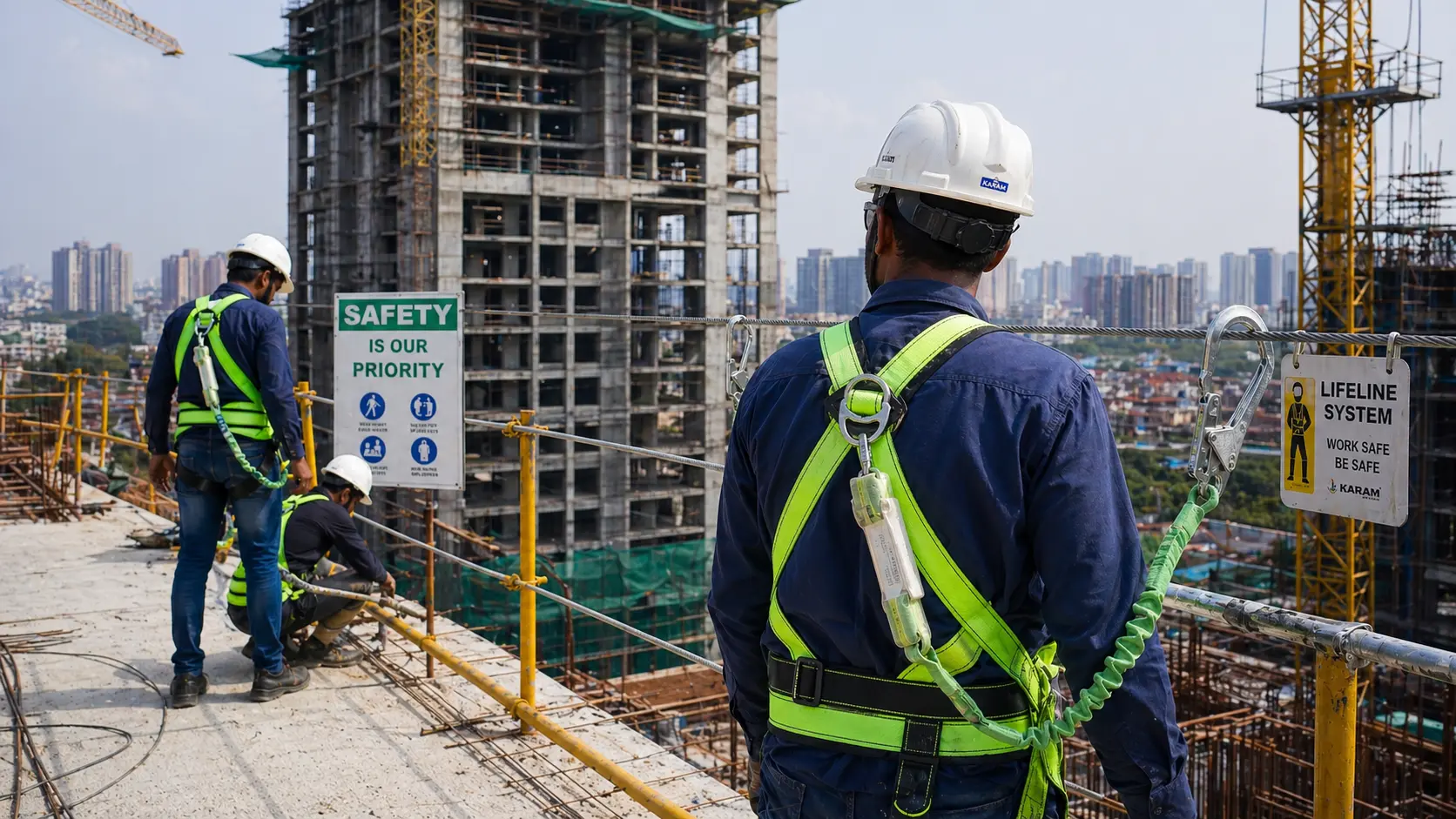
A full body harness under EN 361 is designed as a load bearing system. It connects the worker to anchorage points through lanyards or lifelines.
The standard ensures the harness performs under real fall conditions and prevents concentration of force on vulnerable body parts.
What does EN 361 require in a harness design?
EN 361 requires harnesses to meet strict construction and performance criteria:
- Presence of a dorsal or sternal attachment point
- Controlled load distribution across thighs and torso
- High tensile strength webbing and stitching
- Secure and adjustable buckles
- Clear marking and traceability details
Each requirement ensures predictable performance during a fall arrest event.
Indian Inovatix harness systems follow EN 361 and IS 3521 requirements, ensuring compatibility across Indian and international project specifications.
A well designed harness reduces injury risk significantly by distributing arrest force, typically within safe kN limits defined during testing.
How does EN 361 testing ensure fall protection safety?
EN 361 testing is a structured validation process that simulates real fall conditions to ensure harnesses can withstand dynamic loads, maintain structural integrity, and prevent failure during fall arrest situations.
Testing is not theoretical. It is based on controlled drop scenarios that replicate real site risks.
What tests are included in EN 361 certification?
The standard includes multiple performance tests:
| Test Type | Purpose | Result Expected |
| Dynamic drop test | Simulates a fall using weighted mass | Harness arrests fall safely |
| Static strength test | Applies load to anchor points | No structural failure |
| Strap strength test | Tests webbing durability | No tearing or rupture |
| Buckle test | Checks adjustment security | No slippage under load |
During dynamic testing, the harness must safely arrest the fall without breaking or causing excessive force concentration.
Based on EN 361 certification requirements, arrest forces must remain within safe limits to prevent internal injuries.
Indian Inovatix Ltd. has validated harness systems in applications such as refinery maintenance and power plant shutdown work, where fall arrest reliability is critical.
What are the components of an EN 361 full body harness?
An EN 361 full body harness is a personal protective system that includes load bearing straps, attachment points, and adjustment mechanisms designed to safely arrest falls and distribute forces across the body.
Each component plays a defined role in fall protection.
What are the essential parts of a harness?
Key components include:
- Dorsal D ring for primary fall arrest connection
- Shoulder straps for upper body support
- Leg straps for load distribution
- Chest strap for positioning stability
- Buckles for secure fitting
- High strength webbing material
These components work together to ensure force distribution across the pelvis and thighs, which can handle higher loads.
Improper fitting or missing components can lead to harness failure even if the system is certified.
Indian Inovatix designs harnesses with ergonomic load paths to ensure both safety and long duration comfort for plant operations teams.
EN 361 vs IS 3521 and ANSI standards
EN 361 is a European standard for harness safety, while IS 3521 and ANSI standards define similar requirements in India and the United States, with variations in testing procedures and compliance frameworks.
Understanding the difference helps procurement teams make better decisions.
How do global harness standards compare?
| Standard | Region | Application | Key Focus |
| EN 361 | Europe | Fall arrest harness | Dynamic performance testing |
| IS 3521 | India | Safety equipment | Local compliance alignment |
| ANSI Z359 | USA | Fall protection systems | System level safety |
EN 361 is widely accepted in EPC and multinational projects in India.
Indian Inovatix Ltd., Ahmedabad, Gujarat, India, manufactures harness systems aligned with both EN and IS standards, ensuring compliance across domestic and export markets.
Where are EN 361 harnesses used in industry?
EN 361 harnesses are used in high risk work environments where fall arrest protection is required to prevent injuries during work at height operations across multiple industrial sectors.
These environments demand certified safety systems.
Which industries require EN 361 harness compliance?
Common applications include:
- Construction and infrastructure projects
- Oil and gas facilities
- Power plants and utilities
- Telecom tower installations
- Steel and cement plants
In a recent EPC infrastructure project, Indian Inovatix supplied harness systems for a multi level structure where workers operated above 30 metres.
The challenge was continuous movement across platforms. The solution included EN compliant harnesses integrated with lifeline systems, ensuring zero fall incidents during the project duration.
How to choose the right EN 361 full body harness?
Choosing an EN 361 harness requires evaluating certification, load capacity, comfort, and compatibility with fall arrest systems to ensure worker safety and long term operational reliability.
Incorrect selection leads to safety gaps.
What factors should buyers evaluate?
- EN 361 certification marking
- Maximum load capacity and weight rating
- D ring position and type
- Webbing material strength
- Compatibility with lifelines and lanyards
- Ease of adjustment and comfort
Specification Callout
| Parameter | Typical Value |
| Webbing material | Polyester high strength |
| Breaking strength | 15 kN or higher |
| Attachment points | Dorsal and optional sternal |
| Certification | EN 361, IS 3521 |
Procurement teams must also consider lifecycle cost, replacement intervals, and supplier capability for bulk delivery.
Indian Inovatix Ltd. operates from a 33,000 sq ft facility and supports large scale industrial orders with custom configurations.
Key Takeaways
- EN 361 full body harness standard defines safety requirements for fall arrest harnesses
- It ensures safe force distribution during fall events
- Testing includes dynamic and static performance validation
- Compliance supports safety under the Factories Act 1948
- Indian Inovatix Ltd., Ahmedabad, delivers certified harness systems for industrial use
Frequently Asked Questions
What is EN 361 full body harness standard?
EN 361 full body harness standard defines safety requirements for harnesses used in fall arrest systems. It ensures the harness can safely stop a fall and distribute forces across the body.
This reduces injury risk and improves workplace safety compliance.
Is EN 361 mandatory in India?
EN 361 is not legally mandatory but widely used in industrial projects. Many companies adopt it alongside IS 3521 to meet international safety standards.
It helps improve audit readiness and compliance.
What is the difference between EN 361 and IS 3521?
EN 361 is a European standard, while IS 3521 is an Indian safety standard. Both define harness safety but differ in testing and certification processes.
Manufacturers often comply with both.
What is the safe load capacity of an EN 361 harness?
Most EN 361 harnesses are tested for high load capacities, typically above 15 kN. This ensures safe fall arrest performance.
Actual capacity depends on design and certification.
Where are EN 361 harnesses used in India?
EN 361 harnesses are used in construction, oil and gas, and power plants across cities like Ahmedabad, Mumbai, and Chennai.
They are essential for work at height safety.
Can a harness fail without EN 361 certification?
Yes, non certified harnesses may fail under dynamic loads. This increases risk of serious injury.
Certified harnesses undergo strict testing.
What industries require EN 361 compliance?
Industries such as infrastructure, telecom, and heavy manufacturing require EN 361 harnesses.
These sectors involve frequent work at height.
How often should EN 361 harnesses be inspected?
Harnesses should be inspected before every use and periodically as per safety guidelines.
Regular inspection ensures reliability and compliance.
Conclusion
EN 361 full body harness standard remains a critical benchmark for fall protection safety in industrial environments. It defines how harness systems must perform under real fall conditions, ensuring worker protection and regulatory compliance.
Indian Inovatix Ltd., Ahmedabad, Gujarat, India, combines 50 years of manufacturing expertise with certified engineering to deliver EN compliant harness systems across industries. With proven installations across infrastructure and heavy industry, the focus remains on safety, durability, and performance.
Ensure Harness Compliance Before the Next Safety Audit
Worker safety depends on certified equipment that performs under real conditions.
Speak with an Inovatix safety specialist to select EN 361 compliant harness systems for your project requirements.

Categories
Latest Post
- September 12, 2026 Work at Height Rules India: What Employers Need to Know in 2026
- September 5, 2026 Coconut Tree Climber Machine Buying Guide for Indian Farmers
- August 29, 2026 Best Safety Harness for Construction: How to Choose the Right One

Corporate Profile
Download CatalogueTalk to Our Safety & Protection Specialists
Have questions or need guidance? Our experts can help you choose the most reliable and high-performance safety solutions tailored to your industry and site requirements.
-

- Call Us +91-8849452638
Need Help Determining the Right Fall Protection for You?
With our vast experience, our experts will assist you in selecting the most relevant system for your needs.