May 4, 2026
Unsafe work at height continues to be one of the leading causes of industrial accidents in India. Falls from height result in serious injuries, project delays, and regulatory penalties under the Factories Act 1948. Many worksites still rely on outdated or non-certified safety gear, increasing risk exposure.
The cost of non-compliance is not limited to fines. It includes worker downtime, insurance claims, and loss of operational continuity. Safety officers and EPC contractors face increasing pressure to meet global compliance benchmarks while maintaining productivity.
Fall protection standards have evolved significantly to address these challenges. Indian Inovatix Ltd., Ahmedabad, Gujarat, India, with over 50 years of manufacturing expertise, designs certified fall arrest systems and safety harnesses aligned with IS and EN standards, protecting over 500,000 workers across industries.
What is IS3521 Part 1 and how did it define early fall protection in India?
IS3521 Part 1 is an Indian safety standard that specifies requirements for industrial safety belts and harnesses, focusing on basic fall restraint and positioning functions for workers operating at height.
IS3521 Part 1 laid the foundation for structured height safety in India. It defined material strength, stitching quality, and load-bearing capacity for safety belts and harnesses. However, it was primarily designed for restraint systems rather than advanced fall arrest systems.
Key characteristics of IS3521 Part 1 systems include:
- Basic waist belts and limited full-body harness configurations
- Focus on preventing access to fall zones rather than arresting falls
- Lower emphasis on dynamic fall force distribution
- Minimal ergonomic considerations for long-duration use
These systems were widely used across construction, telecom towers, and maintenance operations. However, they lacked the advanced safety engineering required for modern industrial risks.
A major limitation was the absence of strict requirements for arrest force distribution across the body. This increased the risk of injury during a fall event.
What is EN 361 and why is it considered a global benchmark?
EN 361 is a European standard that defines requirements for full body harnesses used in fall arrest systems, ensuring safe distribution of forces during a fall and reducing injury risks.
EN 361 transformed fall protection from simple restraint to engineered fall arrest systems. It introduced strict testing protocols for dynamic loading, ensuring harnesses can withstand real fall scenarios.
Core features of EN 361 certified harnesses:
- Full body design with dorsal and sternal D-rings
- Load distribution across thighs, pelvis, and shoulders
- Dynamic testing for fall arrest forces measured in kN
- Compatibility with shock absorbers and lifeline systems
According to EN 361 requirements, harnesses must safely manage arrest forces typically below 6 kN to reduce injury risk. This is critical for industries like oil and gas, infrastructure, and power plants.
Indian Inovatix Ltd. manufactures EN-certified harness systems that meet both Indian and international compliance needs, supporting EPC contractors working on global-standard projects.
How do IS 3521 and EN 361 differ in performance and safety?
IS 3521 focuses on restraint and basic protection, while EN 361 ensures complete fall arrest with controlled force distribution, making it significantly safer for modern industrial applications.
The differences between the two standards directly impact worker safety, compliance, and usability.
| Feature | IS 3521 | EN 361 |
| Type of protection | Fall restraint | Fall arrest |
| Harness design | Basic belt or limited harness | Full body harness |
| Force distribution | Limited | Engineered distribution |
| Testing method | Static load | Dynamic fall testing |
| D-ring configuration | Minimal | Multiple certified points |
| Comfort and ergonomics | Basic | Advanced design |
EN 361 systems reduce injury risks during falls by distributing impact forces across stronger parts of the body. This is especially important in high-risk sectors like refineries and high-rise construction.
A recent Inovatix installation at a Gujarat-based petrochemical plant replaced IS 3521 belts with EN 361 harness systems. The result was a measurable reduction in near-miss incidents during maintenance shutdowns.
What are the key components of a modern fall arrest system?
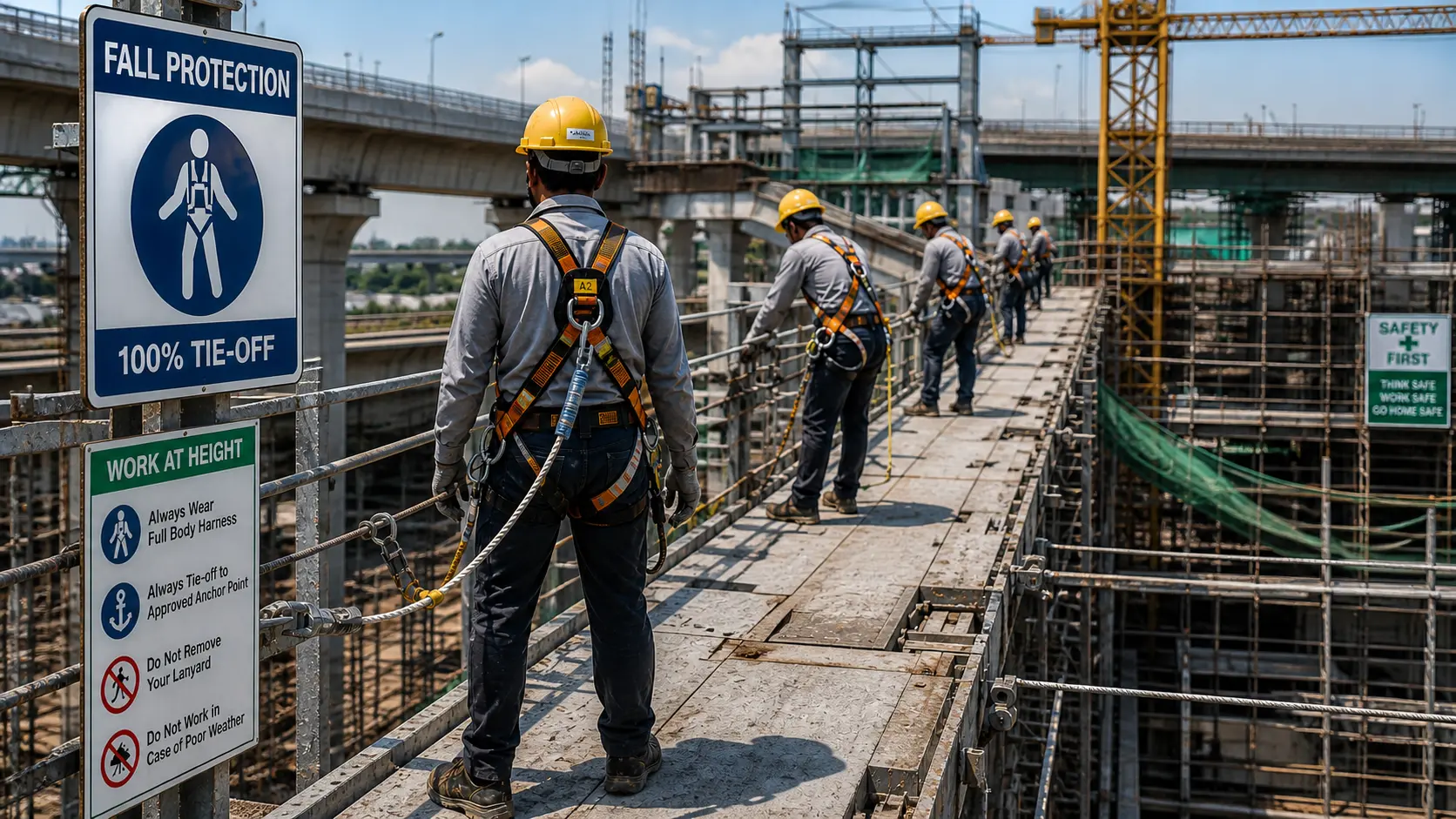
A fall arrest system is a combination of interconnected safety equipment designed to stop a fall safely and minimise injury through controlled deceleration and force distribution.
Modern systems are engineered as integrated solutions rather than standalone products.
Essential components include:
- Full body safety harness (EN 361 compliant)
- Shock absorbing lanyard
- Anchorage point with certified load rating
- Lifeline system (horizontal or vertical)
- Connectors such as carabiners and hooks
Each component must meet certification standards such as EN, ANSI, or IS codes. Improper combinations can compromise the entire system.
Inovatix designs complete systems tailored to site-specific risks, including confined spaces, telecom towers, and industrial plants.
What role do safety harness systems play in compliance and productivity?
Safety harness systems ensure worker protection while enabling uninterrupted operations, reducing downtime caused by accidents and compliance violations.
Modern harness systems are designed for both safety and usability. Workers can operate efficiently without discomfort, even during extended shifts.
Benefits of certified harness systems include:
- Reduced fatigue due to ergonomic design
- Faster compliance approvals during audits
- Lower accident-related downtime
- Improved worker confidence and productivity
At a large infrastructure project supported by Indian Inovatix Ltd., Ahmedabad, workers reported improved mobility and reduced fatigue after transitioning to EN-certified harnesses.
This directly impacted project timelines and operational efficiency.
How do fall protection standards impact procurement decisions?
Fall protection standards influence procurement by defining product specifications, certification requirements, and long-term reliability, ensuring buyers select compliant and durable safety equipment.
Procurement teams must evaluate more than price. They must consider lifecycle cost, certification, and supplier credibility.
Key evaluation factors include:
- Certification: EN 361, IS 3521, ANSI compliance
- Breaking strength and load capacity ratings
- Manufacturer credentials and track record
- Customisation capability for specific projects
- Delivery timelines for bulk orders
Indian Inovatix Ltd. offers manufacturing from a 33,000 sq ft facility in Ahmedabad, ensuring consistent quality and supply reliability.
Choosing certified systems reduces long-term costs associated with accidents, replacements, and compliance failures.
Key Takeaways
- Fall protection standards have evolved from basic restraint systems to advanced fall arrest solutions
- IS 3521 laid the groundwork but lacks modern safety performance
- EN 361 provides global compliance with engineered safety features
- Certified safety harness systems improve productivity and reduce risk
- Indian Inovatix Ltd., Ahmedabad, delivers EN-compliant systems across industries
Conclusion
Modern industrial environments demand systems that not only prevent falls but safely arrest them with minimal injury risk.
Indian Inovatix Ltd., Ahmedabad, Gujarat, India, stands as a manufacturer, supplier, and specialist in fall protection systems. With certified products, large-scale installations, and decades of expertise, the company supports industries in achieving compliance and operational safety.
Upgrade Your Site Safety to Global Standards
Worker safety at height cannot rely on outdated systems. EN-certified fall protection solutions ensure compliance, reduce risk, and support uninterrupted operations.
Request a site assessment from Indian Inovatix Ltd. or enquire for bulk pricing on certified safety harness systems tailored to your project requirements.
FAQs
What is the difference between IS 3521 and EN 361?
IS 3521 focuses on basic restraint systems, while EN 361 defines full body harnesses for fall arrest. EN 361 includes dynamic testing and force distribution requirements. This makes it more suitable for modern industrial safety.
Why is EN 361 important for fall protection systems?
EN 361 ensures that harnesses can safely arrest a fall and distribute forces across the body. It reduces injury risk and meets international safety standards. It is widely required in global EPC projects.
Are IS 3521 harnesses still used in India?
Yes, they are still used in some sectors, especially for low-risk tasks. However, many industries are shifting to EN-certified systems for better safety and compliance. This trend is increasing in cities like Ahmedabad and Mumbai.
What industries require EN 361 compliant harnesses?
Oil and gas, construction, power plants, and infrastructure projects require EN 361 systems. These industries involve high-risk work at height. Compliance is often mandatory for audits and contracts.
How often should safety harnesses be inspected?
Harnesses should be inspected before every use and periodically as per OSHA and EN guidelines. Regular inspection ensures structural integrity and compliance. Damaged equipment must be replaced immediately.
What is the arrest force limit in EN 361 systems?
EN 361 systems are designed to keep arrest forces below safe thresholds, typically around 6 kN when used with shock absorbers. This reduces the risk of injury during a fall. Proper system integration is essential.
Can EN 361 harnesses be used with Indian lifeline systems?
Yes, EN 361 harnesses can be integrated with compatible lifeline systems. However, all components must meet certification standards. Mixed systems must be evaluated for safety compliance.
Where can I buy certified fall protection systems in India?
Indian Inovatix Ltd., Ahmedabad, Gujarat, India, manufactures and supplies certified systems across the country. They offer customised solutions for various industries. Bulk orders and site assessments are available.


Talk to Our Safety & Protection Specialists
Have questions or need guidance? Our experts can help you choose the most reliable and high-performance safety solutions tailored to your industry and site requirements.
-

- Call Us +91-8849452638
Need Help Determining the Right Fall Protection for You?
With our vast experience, our experts will assist you in selecting the most relevant system for your needs.