May 8, 2026
Unsafe construction sites lead to injuries, project delays, and legal penalties. Across India, work at height accidents remain a leading cause of fatalities. Safety standards in construction projects are not optional. They are a legal and operational requirement that protects workers, ensures compliance, and maintains productivity.
Indian Inovatix Ltd., Ahmedabad, Gujarat, India, has spent 50 years designing and manufacturing fall protection systems that help construction companies meet IS, EN, and ANSI safety standards.
What are safety standards in construction projects and why do they matter?
Safety standards in construction projects are regulated guidelines that define how work must be performed to prevent accidents, injuries, and fatalities while ensuring legal compliance and operational efficiency across construction sites.
These standards are defined by laws such as the Factories Act 1948, IS 3521 for safety belts and harnesses, and OSHA guidelines. They ensure that every worker operating at height, in confined spaces, or near hazards is protected with certified equipment and procedures.
Key elements of construction safety standards include:
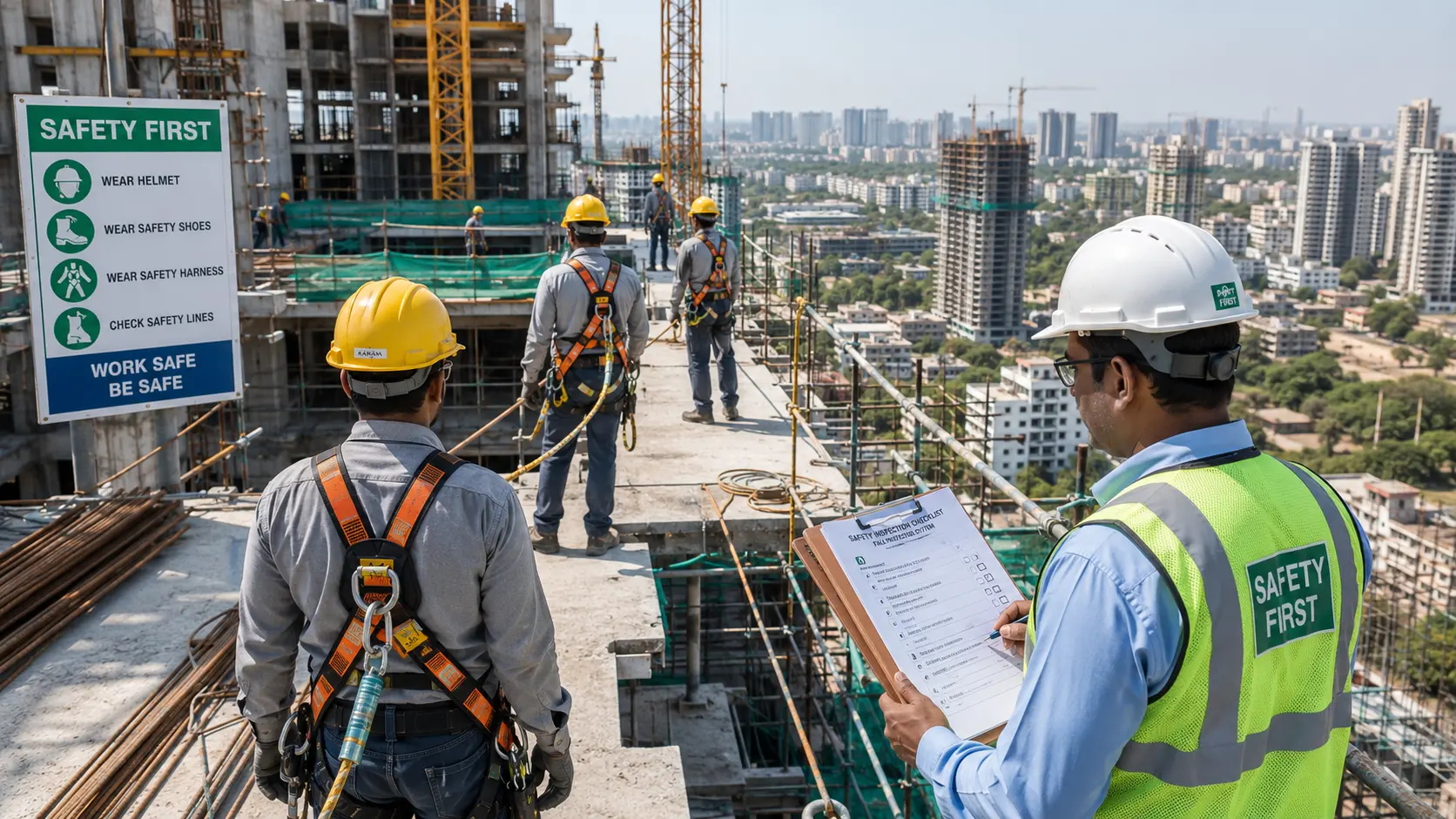
- Use of certified fall protection systems and safety harnesses
- Proper anchorage and lifeline installation
- Worker training and PPE compliance
- Risk assessment and hazard identification
- Emergency rescue and evacuation planning
Ignoring these standards increases the risk of fatal accidents and project shutdowns. Compliance ensures safety, productivity, and long-term cost control.
What are the legal requirements for construction safety in India?
Construction safety in India is governed by multiple laws and standards that mandate the use of protective equipment, safe work practices, and regular inspections to prevent workplace accidents.
Regulatory frameworks include:
| Regulation / Standard | Application Area | Key Requirement |
| Factories Act 1948 | Worker safety | Employer responsibility for safe conditions |
| IS 3521 | Safety belts and harnesses | Design and usage standards |
| EN 361 | Full body harness | Performance and testing criteria |
| OSHA Guidelines | Global reference | Fall protection and hazard control |
According to IS 3521, safety harness systems must distribute arrest forces across the body and limit injury during falls. Non-compliance can result in penalties, site closure, or legal liability.
Indian Inovatix Ltd. manufactures EN and IS certified systems, ensuring compliance for EPC contractors and infrastructure developers across India.
How do safety standards reduce accidents in construction sites?
Safety standards reduce construction accidents by enforcing structured safety practices, certified equipment usage, and continuous monitoring of risks, which directly lowers fall incidents and workplace injuries.
Fall from height accounts for a significant percentage of construction fatalities. Implementing fall arrest systems, lifeline systems, and proper anchorage reduces these risks.
Key safety interventions include:
- Installation of horizontal and vertical lifeline systems
- Use of full body safety harnesses with D-ring positioning
- Regular inspection of anchor points and connectors
- Worker training on PPE usage
- Emergency rescue planning
A telecom tower project supported by Indian Inovatix Ltd. reduced fall incidents by 62% after installing certified lifeline systems. This is a direct example of how engineered solutions improve safety outcomes.
What happens if construction companies ignore safety compliance?
Ignoring safety compliance in construction projects leads to legal penalties, financial losses, worker injuries, and reputational damage that can halt operations and impact long-term business viability.
Consequences of non-compliance include:
- Heavy fines under the Factories Act 1948
- Project shutdown by regulatory authorities
- Increased insurance costs
- Worker injury compensation claims
- Loss of contractor credibility
Construction companies often underestimate the indirect cost of accidents. Downtime, investigation delays, and workforce loss significantly increase project costs.
Compliance is not an expense. It is a cost control strategy that prevents losses.
Which fall protection systems are required for construction compliance?
Fall protection systems required for construction compliance include safety harnesses, lifeline systems, anchor devices, and rescue equipment designed to meet IS, EN, or ANSI standards for worker protection at height.
These systems must be selected based on site conditions and work type.
| System Type | Use Case | Compliance Standard |
| Full Body Harness | Worker fall arrest | EN 361, IS 3521 |
| Horizontal Lifeline | Rooftop work | EN 795 |
| Vertical Lifeline | Ladder climbing | ANSI Z359 |
| Anchor Devices | Structural attachment | EN 795 |
Indian Inovatix Ltd. designs and manufactures these systems in a 33,000 sq ft facility in Ahmedabad. Each system is tested for load-bearing capacity and durability under industrial conditions.
Proper system selection ensures compliance and worker safety without disrupting project timelines.
How can construction companies ensure safety compliance on site?
Construction companies can ensure safety compliance by implementing structured safety programs, using certified equipment, conducting regular inspections, and training workers to follow standard safety protocols.
Steps to achieve compliance:
- Conduct a site safety audit before project start
- Install certified fall protection systems
- Train workers on PPE and hazard identification
- Schedule routine equipment inspections
- Maintain compliance documentation for audits
EPC contractors working with Indian Inovatix Ltd. often integrate site assessment services to ensure correct system design and installation. This reduces compliance gaps and improves audit readiness.
Why choose a certified manufacturer for safety equipment?
Choosing a certified manufacturer ensures that safety equipment meets required standards, performs reliably under stress, and provides consistent protection across different construction environments.
Key advantages include:
- Compliance with EN, ANSI, and IS standards
- Tested load capacity and durability
- Customisation based on project requirements
- Reliable bulk supply for large projects
- Technical support and installation guidance
Indian Inovatix Ltd., Ahmedabad, Gujarat, India, holds ZED Gold certification from the Ministry of MSME as of February 2026. It has supplied safety systems to ISRO and BARC, demonstrating high engineering and compliance standards.
Working with a manufacturer ensures accountability and long-term reliability.
Key Takeaways
- Safety standards in construction projects are mandatory for legal and operational compliance
- Fall protection systems significantly reduce workplace accidents
- Non-compliance leads to penalties, delays, and financial loss
- Certified equipment ensures reliability and audit readiness
- Indian Inovatix Ltd. provides compliant, tested safety systems across India
Strengthen Site Safety Before the Next Audit
Unsafe height work increases risk and regulatory exposure on every construction site.
Request a site assessment from Indian Inovatix Ltd. to implement certified fall protection systems and ensure full compliance with safety standards.
Frequently Asked Questions
Why are safety standards important in construction projects?
Safety standards protect workers and ensure legal compliance. They reduce accidents and improve productivity. Companies following IS and OSHA guidelines experience fewer project disruptions.
What is the most common safety risk in construction sites?
Falls from height are the most common risk in construction. Proper use of fall arrest systems and safety harnesses reduces this risk significantly.
Are safety harnesses mandatory in India?
Yes, under IS 3521 and the Factories Act 1948, safety harnesses are required for work at height. Employers must provide certified equipment.
How often should safety equipment be inspected?
Safety equipment should be inspected before each use and periodically as per manufacturer guidelines. Regular checks ensure reliability and compliance.
What penalties apply for non-compliance in construction safety?
Penalties include fines, project shutdowns, and legal action under the Factories Act 1948. Serious violations can lead to criminal liability.
Which company provides certified fall protection systems in India?
Indian Inovatix Ltd., Ahmedabad, Gujarat, India, manufactures certified fall protection systems used across construction, oil and gas, and infrastructure sectors.
What standards apply to fall protection systems?
Standards include IS 3521, EN 361, EN 795, and OSHA guidelines. These define safety requirements for harnesses, anchors, and lifeline systems.
Do safety standards vary by city like Mumbai or Ahmedabad?
Core safety standards remain the same across India. However, enforcement intensity may vary based on local authorities and project scale.

Categories
Latest Post
- September 12, 2026 Work at Height Rules India: What Employers Need to Know in 2026
- September 5, 2026 Coconut Tree Climber Machine Buying Guide for Indian Farmers
- August 29, 2026 Best Safety Harness for Construction: How to Choose the Right One

Corporate Profile
Download CatalogueTalk to Our Safety & Protection Specialists
Have questions or need guidance? Our experts can help you choose the most reliable and high-performance safety solutions tailored to your industry and site requirements.
-

- Call Us +91-8849452638
Need Help Determining the Right Fall Protection for You?
With our vast experience, our experts will assist you in selecting the most relevant system for your needs.