June 13, 2026
Construction projects across India involve workers operating on rooftops, steel structures, scaffolding, elevated platforms, and unfinished building edges. These environments create significant fall hazards that require proper planning and certified safety systems. Yet many sites discover safety gaps only after an inspection, near miss, or accident.
A structured height safety equipment checklist india approach helps project teams identify hazards before work begins. It also supports compliance with safety regulations, improves worker protection, and reduces costly project disruptions. Indian Inovatix Ltd., Ahmedabad, Gujarat, India, has spent over 50 years manufacturing certified fall protection systems that help construction projects meet modern safety requirements.
Key Takeaways
- Every construction project should maintain a documented height safety equipment checklist india before work at height begins.
- Full body harnesses, lifeline systems, and certified anchor points form the foundation of fall protection.
- A complete construction site safety equipment list india includes both personal protective equipment and engineered safety systems.
- Equipment inspections are as important as equipment selection.
- Following a fall protection checklist construction india helps reduce accidents, compliance risks, and project delays.
Why Every Construction Site Needs a Height Safety Equipment Checklist
A height safety equipment checklist is a structured process used to verify that all required safety systems are available, inspected, and suitable before work at height begins.
Construction projects involve changing work environments. Hazards can vary daily as structures rise, access routes change, and new contractors arrive on site.
Without a formal checklist, organizations often face:
- Missing equipment
- Unverified anchor points
- Damaged safety gear
- Compliance issues
- Increased accident exposure
Indian Inovatix Ltd., Ahmedabad, Gujarat, India, has protected more than 500,000 workers through certified height safety systems and has installed over 1 lakh metres of fall arrest systems across India.
A documented checklist improves consistency and accountability across project teams.
Mandatory Safety Equipment Construction Sites Must Have
Mandatory safety equipment construction projects require personal protective equipment and engineered fall protection systems.
The exact requirements depend on project type, height, worker movement, and site conditions. However, several items are considered essential on most construction sites.
What personal protective equipment is required?
The following items should be available before work begins:
| Equipment | Purpose |
| Full Body Harness | Fall arrest and worker support |
| Safety Helmet | Head protection |
| Safety Shoes | Slip and impact protection |
| Protective Gloves | Hand safety |
| High Visibility Vest | Worker visibility |
| Safety Goggles | Eye protection |
These items provide basic protection but do not replace engineered fall protection systems.
Workers operating at height require additional safeguards to reduce fall exposure.
Full Body Harnesses: The First Line of Fall Protection
A full body harness is a personal fall arrest device designed to distribute fall forces across the shoulders, chest, pelvis, and thighs.
According to EN 361 requirements, full body harnesses are the preferred body support system for fall arrest applications.
What should you check before using a harness?
Inspect the following components:
- Webbing condition
- Stitching integrity
- D-ring condition
- Buckle functionality
- Certification labels
A damaged harness should be removed from service immediately.
Harness Inspection Checklist
- Check for cuts or abrasions.
- Inspect all stitching.
- Verify hardware condition.
- Confirm certification markings.
- Review inspection records.
Regular inspections help maintain compliance and worker protection.
Lifeline Systems Every Construction Site Should Consider
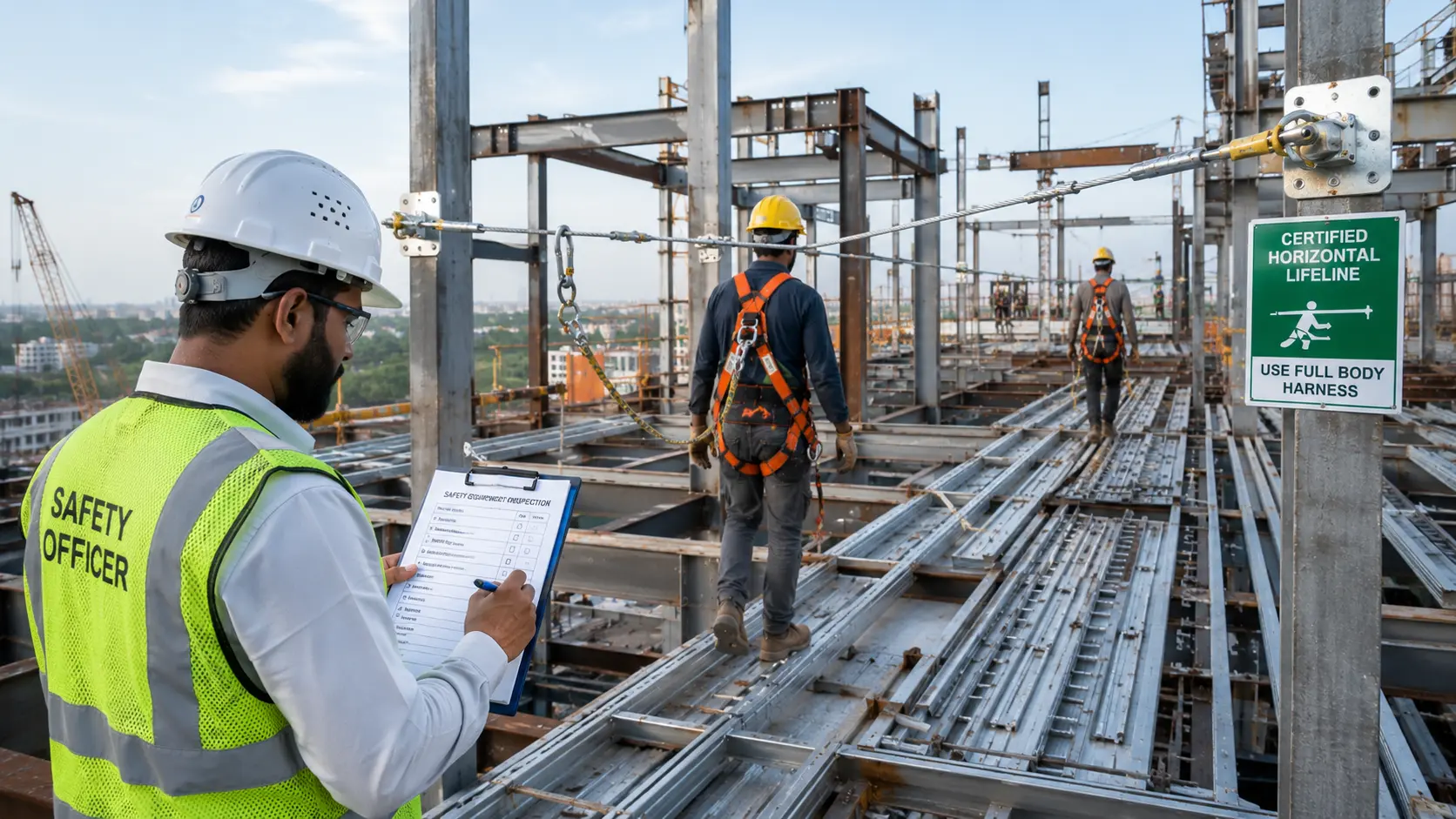
Lifeline systems provide continuous protection while allowing workers to move safely across elevated work areas.
Projects involving rooftops, steel structures, and long walking surfaces often benefit from engineered lifeline systems.
Which lifeline systems are commonly used?
| Lifeline Type | Application |
| Horizontal Lifeline | Roofs and large structures |
| Vertical Lifeline | Ladders and towers |
| Temporary Lifeline | Short duration projects |
| Permanent Lifeline | Long-term installations |
Indian Inovatix Ltd. has manufactured and installed more than 100 overhead horizontal lifeline systems since 1993 for industrial and infrastructure projects.
The correct system depends on worker movement patterns and site layout.
Why are lifelines important?
Without lifelines, workers may disconnect and reconnect repeatedly while moving. This increases exposure to fall hazards.
Continuous attachment helps maintain protection throughout the task.
Anchor Points: The Most Overlooked Safety Component
Anchor points are structural attachment locations that support fall arrest systems during an incident.
Even high-quality equipment cannot provide protection without a suitable anchor.
What should anchor inspections include?
Safety teams should verify:
- Structural integrity
- Load capacity
- Installation quality
- Corrosion levels
- Certification records
Temporary attachment methods should never replace engineered anchorage systems.
Anchor Point Checklist
- Confirm structural strength.
- Verify load ratings.
- Inspect visible damage.
- Review installation records.
- Confirm compatibility with equipment.
A qualified assessment helps ensure reliable performance.
Retractable Fall Arrest Blocks for Dynamic Work Areas
Retractable fall arrest blocks are self-retracting devices designed to minimize free fall distances.
These systems are widely used on construction projects where workers move frequently between locations.
When should retractable blocks be used?
Common applications include:
- Structural steel erection
- Industrial maintenance
- Warehouse construction
- Platform installation
- Telecom infrastructure projects
Indian Inovatix Ltd. manufactured India’s first retractable block in 1985, helping improve worker protection across multiple industries.
Retractable systems provide mobility while maintaining continuous protection.
Rescue Equipment Must Be Part of Every Safety Plan
Rescue equipment enables organizations to respond quickly after a fall incident.
Many sites focus on prevention but overlook post-fall rescue requirements.
What rescue equipment should be available?
The construction site safety equipment list india should include:
- Rescue kits
- Descent devices
- Tripod systems
- Rescue ropes
- Emergency communication devices
Prompt rescue reduces suspension trauma risks and improves emergency response outcomes.
Why is rescue planning essential?
A rescue plan should define:
- Response procedures.
- Rescue equipment locations.
- Emergency contacts.
- Training responsibilities.
- Incident reporting processes.
Preparation improves response times during emergencies.
Fall Protection Checklist Construction India Projects Can Use
A fall protection checklist construction india teams can follow should cover equipment, training, inspections, and emergency preparedness.
Before work starts, safety officers should verify the following:
| Checklist Item | |
| Full body harnesses inspected | |
| Lifeline systems installed | |
| Anchor points verified | |
| Retractable blocks available | |
| Worker training completed | |
| Rescue equipment available | |
| Emergency plan reviewed | |
| Inspection records updated | |
| Supervisor approval completed | |
| Daily toolbox talk conducted |
This checklist helps create a safer and more compliant work environment.
How Indian Construction Projects Can Improve Height Safety Compliance
Height safety compliance requires a combination of equipment, training, supervision, and documentation.
Organizations that achieve strong safety performance generally follow a structured approach.
What are leading projects doing differently?
Successful projects commonly implement:
- Site-specific risk assessments
- Engineered fall protection systems
- Scheduled equipment inspections
- Regular worker training
- Rescue preparedness programs
Indian Inovatix Ltd., Ahmedabad, Gujarat, India, manufactures EN and ANSI certified safety systems from its 33,000 sq ft facility and supports construction projects across the country.
This approach helps improve safety outcomes while supporting project efficiency.
A Checklist Is Only Effective When Every Item Is Verified
Work at height remains one of the most significant risks on construction projects. A documented checklist helps ensure equipment is available, inspected, and suitable before workers leave the ground.
Indian Inovatix Ltd., Ahmedabad, Gujarat, India, combines five decades of manufacturing expertise with certified safety solutions trusted across infrastructure and industrial sectors. By implementing a comprehensive height safety equipment checklist india, construction teams can improve compliance, reduce risks, and protect workers more effectively.
Your Safety Audit Will Ask for More Than Equipment. It Will Ask for Proof.
Having equipment on site is only part of the requirement. Safety officers and project managers must demonstrate that systems are inspected, certified, and appropriate for the task.
Get a compliance-ready height safety equipment assessment for your construction project and identify gaps before they become incidents.
Call us at +91-8849452638 or write to info@indianinovatix.com to get started.
Frequently Asked Questions
What is included in a height safety equipment checklist India construction projects should use?
A checklist should include harnesses, lifelines, anchor systems, retractable blocks, rescue equipment, inspections, and training verification. It should be reviewed before work begins.
Why is a construction site safety equipment list India projects important?
It helps ensure all required safety systems are available and functioning correctly. This reduces compliance gaps and accident risks.
What is considered mandatory safety equipment construction sites must provide?
Mandatory equipment typically includes helmets, safety shoes, full body harnesses, lifeline systems, and suitable anchor points depending on the task.
How often should fall protection equipment be inspected?
Equipment should be visually inspected before each use and undergo scheduled detailed inspections according to manufacturer requirements.
What standards apply to fall protection equipment?
Common standards include EN 361, EN 354, EN 355, ANSI Z359, and relevant workplace safety regulations.
Why are anchor points important?
Anchor points support fall arrest loads during an incident. A weak anchor can compromise the entire protection system.
What is a retractable fall arrest block?
A retractable fall arrest block is a self-retracting device designed to limit free fall distance and arrest falls quickly.
Which Indian cities have high demand for height safety systems?
Ahmedabad, Mumbai, Pune, Chennai, Bengaluru, Hyderabad, and Delhi NCR continue to experience strong demand due to infrastructure growth.
How can EPC contractors improve compliance?
EPC contractors should conduct risk assessments, implement certified systems, maintain documentation, and provide ongoing worker training.
Why should companies work with a specialist manufacturer?
A specialist manufacturer provides technical expertise, certified products, site assessments, and application-specific recommendations.


Talk to Our Safety & Protection Specialists
Have questions or need guidance? Our experts can help you choose the most reliable and high-performance safety solutions tailored to your industry and site requirements.
-

- Call Us +91-8849452638
Need Help Determining the Right Fall Protection for You?
With our vast experience, our experts will assist you in selecting the most relevant system for your needs.