July 15, 2026
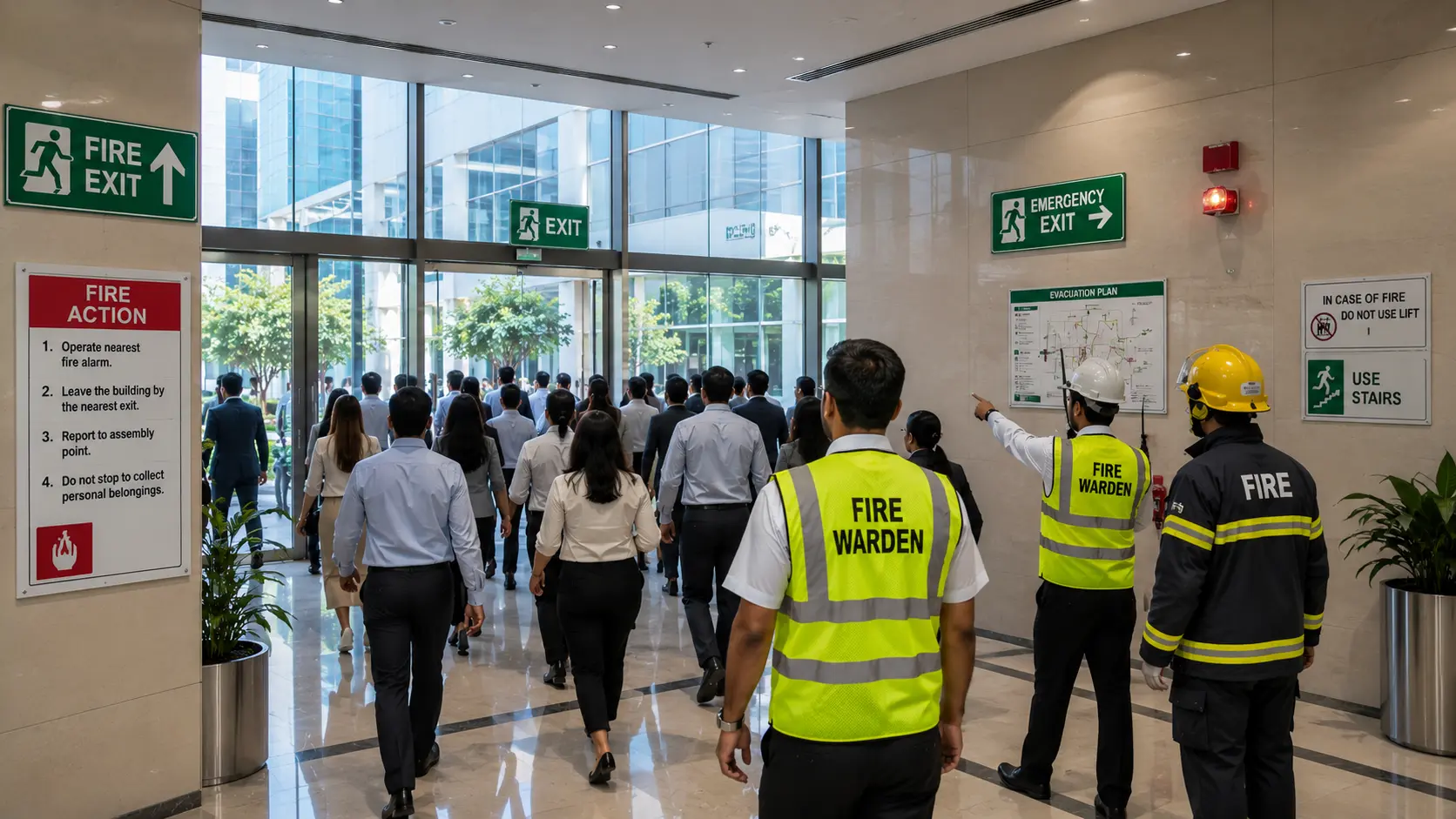
Fire emergencies can escalate within minutes, especially in commercial buildings, industrial facilities, high-rise structures, hospitals, and public infrastructure. Understanding building evacuation requirements is essential for protecting occupants, meeting legal obligations, and reducing the impact of fire incidents.
Many building owners focus on fire detection and suppression systems while overlooking evacuation readiness. However, evacuation equipment, emergency exits, communication systems, and emergency planning are equally important under India’s fire safety framework. A building that cannot be evacuated safely remains vulnerable even when firefighting systems are installed.
The National Building Code (NBC), state fire department regulations, and workplace safety laws establish requirements for fire prevention, emergency preparedness, and evacuation planning. Indian Inovatix Limited, Ahmedabad, Gujarat, India supports organizations through certified safety systems, emergency escape equipment, fall protection solutions, and more than 50 years of manufacturing expertise.
Key Takeaways
- Building owners must establish documented evacuation procedures and maintain emergency equipment.
- Understanding building evacuation requirements india helps improve compliance and occupant safety.
- NBC fire evacuation requirements address exits, emergency lighting, signage, alarms, and evacuation planning.
- Regular inspections and evacuation drills are critical components of fire safety compliance.
- Emergency escape equipment may be required for specialized industrial and elevated work environments.
What Are Building Evacuation Requirements in India?
Building evacuation requirements India regulations establish minimum safety measures that enable occupants to leave a building safely during emergencies such as fire, smoke incidents, structural failures, or hazardous material releases.
These requirements are primarily influenced by:
- National Building Code of India (NBC)
- State Fire Service Regulations
- Factories Act 1948
- Occupational Safety, Health and Working Conditions Code
- Local municipal building regulations
The objective is to ensure safe evacuation, emergency access for responders, and protection of life.
Building owners, facility managers, safety officers, and employers share responsibility for maintaining evacuation readiness.
Why Are Evacuation Requirements Important?
Evacuation requirements help reduce confusion, congestion, and delays during emergencies.
Without proper systems, occupants may face:
- Blocked escape routes
- Insufficient emergency lighting
- Poor communication
- Delayed emergency response
- Increased injury risks
Compliance improves both safety performance and emergency preparedness.
NBC Fire Evacuation Requirements Every Building Should Meet
NBC fire evacuation requirements establish guidelines for emergency exits, travel distances, occupancy loads, fire protection systems, and evacuation procedures.
The National Building Code serves as the primary reference for fire and life safety design in India.
Key NBC evacuation provisions include:
| Requirement | Purpose |
| Multiple Exit Routes | Safe occupant evacuation |
| Emergency Lighting | Visibility during power failure |
| Exit Signage | Route identification |
| Fire Detection Systems | Early warning |
| Alarm Systems | Occupant notification |
| Fire Resistant Stairwells | Protected evacuation paths |
| Assembly Areas | Occupant accountability |
Compliance requirements vary according to occupancy type and building classification.
Higher-risk occupancies generally require more comprehensive safety systems.
What Does NBC Say About Emergency Exits?
Emergency exits are designated routes that allow occupants to reach a safe location during emergencies.
NBC guidelines generally require:
- Adequate number of exits
- Clearly marked exit routes
- Protected staircases where applicable
- Exit route illumination
- Accessible evacuation pathways
Exit design should account for expected occupancy levels and emergency evacuation capacity.
Fire Safety Compliance Checklist India: Essential Equipment Requirements
A fire safety compliance checklist India facilities follow should include all evacuation-related equipment necessary for safe emergency response.
Equipment requirements vary depending on building type, occupancy, and risk profile.
Emergency Lighting Systems
Emergency lighting provides visibility during power failures and fire emergencies.
Lighting should support:
- Stairwells
- Exit corridors
- Assembly routes
- Emergency exits
Regular testing helps verify functionality during emergencies.
Exit Signage
Exit signs guide occupants toward evacuation routes.
Best practices include:
- Illuminated signs
- Directional indicators
- Strategic placement
- Regular inspections
Clearly visible signage reduces evacuation delays.
Fire Alarm Systems
Alarm systems provide early warning and initiate evacuation procedures.
Effective systems should:
- Be audible throughout the building
- Integrate with fire detection systems
- Support emergency communication
Testing should occur according to maintenance schedules.
Emergency Communication Systems
Communication systems help coordinate evacuation activities.
Common systems include:
- Public address systems
- Emergency notification platforms
- Two-way radios
- Central control room communication
Reliable communication improves emergency response effectiveness.
Building Fire Safety Law India and Occupant Protection Responsibilities
Building fire safety law India requirements place responsibility on owners, occupiers, employers, and facility managers to maintain fire safety measures and emergency preparedness programs.
Compliance extends beyond equipment installation.
Organizations must also maintain:
- Emergency response procedures
- Inspection records
- Training documentation
- Maintenance schedules
- Evacuation drill records
Authorities may review these records during inspections and audits.
Who Is Responsible for Compliance?
Responsibility typically falls on:
| Stakeholder | Responsibility |
| Building Owner | Infrastructure compliance |
| Facility Manager | Maintenance and inspections |
| Safety Officer | Emergency preparedness |
| Employer | Worker training |
| Occupants | Following procedures |
Shared responsibility improves overall emergency readiness.
Emergency Egress Systems Required for Safe Evacuation
Emergency egress systems are the pathways and equipment occupants use to leave a building safely during emergencies.
A complete egress system includes:
- Exit doors
- Stairwells
- Corridors
- Emergency lighting
- Exit signs
- Assembly points
Each component contributes to evacuation efficiency.
How Should Emergency Egress Routes Be Maintained?
Emergency routes should remain accessible at all times.
Facilities should:
- Remove obstructions immediately.
- Inspect exits regularly.
- Test emergency lighting.
- Verify signage visibility.
- Review route capacity.
Routine inspections support both compliance and occupant safety.
Specialized Evacuation Equipment for Industrial and High-Rise Facilities
Some facilities require additional evacuation equipment because of elevated work areas, restricted access locations, or complex operational environments.
Examples include:
| Equipment | Application |
| Emergency Escape Devices | Controlled descent evacuation |
| Rescue Harnesses | Elevated rescue operations |
| Rescue Descenders | Emergency evacuation |
| Confined Space Retrieval Systems | Rescue access |
| Fall Arrest Systems | Worker protection |
Indian Inovatix Limited, Ahmedabad, Gujarat, India manufactures certified safety systems that support emergency evacuation and rescue operations across multiple industries.
The company operates a 33,000 sq ft manufacturing facility and has protected more than 500,000 workers through certified height safety and fall protection solutions.
When Are Emergency Escape Devices Required?
Emergency escape devices may be necessary when workers operate in locations where conventional evacuation is difficult or delayed.
Examples include:
- Telecom towers
- Industrial stacks
- Elevated platforms
- High-rise maintenance work
- Wind energy installations
Risk assessments determine equipment requirements for each site.
Why Fire Evacuation Drills Are Part of Compliance
Fire evacuation drills help validate emergency plans and improve occupant readiness.
Regular drills help organizations:
- Measure evacuation times
- Test communication systems
- Verify accountability procedures
- Identify route congestion
- Improve emergency awareness
Drill results should be documented and reviewed.
How Often Should Fire Drills Be Conducted?
The required frequency depends on occupancy type, local regulations, and organizational policies.
Many facilities conduct:
- Quarterly departmental drills
- Semi-annual building exercises
- Annual full-scale emergency drills
Higher-risk facilities often require more frequent exercises.
Fire Safety Compliance Checklist India
Safety teams can use the following checklist to evaluate evacuation readiness.
| Compliance Item |
| Emergency exits clearly marked |
| Exit routes unobstructed |
| Emergency lighting operational |
| Fire alarms tested |
| Communication systems functional |
| Assembly points designated |
| Evacuation plans documented |
| Worker training completed |
| Evacuation drills conducted |
| Inspection records maintained |
Regular reviews help maintain compliance and improve emergency preparedness.
Compliance Is More Than Installing Fire Equipment
Meeting fire safety obligations requires planning, maintenance, training, and continuous improvement. Understanding building evacuation requirements india helps organizations establish safer facilities while meeting legal and operational responsibilities.
Indian Inovatix Limited, Ahmedabad, Gujarat, India serves as a manufacturer, supplier, and specialist in safety systems, emergency escape solutions, fall protection equipment, and rescue systems. With more than five decades of expertise, EN and ANSI certified products, and over 1 lakh metres of fall arrest systems installed, the company supports safer workplaces across India.
Your Building Has Fire Protection. Is Evacuation Readiness Covered Too?
Fire alarms and extinguishers are only part of a complete safety strategy. Evacuation routes, emergency equipment, and documented response procedures are equally important for occupant protection and compliance.
Get a compliance-ready fire safety and evacuation equipment assessment for your facility. Our safety specialists can help identify gaps and recommend certified solutions aligned with your operational risks.
Call us at +91-8849452638 or write to info@indianinovatix.com to get started.
Frequently Asked Questions
What are building evacuation requirements India facilities must follow?
Building evacuation requirements India regulations focus on safe occupant evacuation during emergencies. They include exits, emergency lighting, alarms, communication systems, and evacuation planning. Requirements vary based on building type and occupancy.
What are NBC fire evacuation requirements?
NBC fire evacuation requirements establish guidelines for exits, travel distances, fire-resistant construction, alarm systems, and emergency evacuation procedures. They serve as a key reference for building fire safety design in India. Compliance depends on occupancy classification.
What is included in a fire safety compliance checklist India?
A fire safety compliance checklist India organizations use typically covers emergency exits, lighting, alarms, signage, evacuation plans, drills, and maintenance records. Regular reviews help maintain readiness. Documentation is also important during inspections.
Does building fire safety law India require evacuation plans?
Many occupancies are required to maintain emergency preparedness and evacuation procedures. Requirements vary depending on building type, workforce size, and local regulations. Documented plans improve emergency response effectiveness.
How often should evacuation drills be conducted?
The frequency depends on occupancy risks and regulatory requirements. Many facilities conduct drills at least annually, while higher-risk sites may conduct them more frequently. Results should be reviewed and documented.
What emergency equipment supports building evacuation?
Emergency lighting, exit signage, alarm systems, communication tools, rescue equipment, and emergency escape devices are commonly used. Equipment selection depends on building risk assessments. Regular maintenance is essential.
Are emergency escape devices required in all buildings?
No. Emergency escape devices are generally used in specialized environments where conventional evacuation may be difficult. Examples include industrial facilities, telecom towers, and elevated work locations. Risk assessments determine the need.
Who is responsible for fire safety compliance?
Building owners, facility managers, employers, and safety officers all have responsibilities. Compliance involves maintaining equipment, conducting inspections, and supporting emergency preparedness. Responsibilities vary by organization.
What role do assembly points play during evacuation?
Assembly points provide a designated location where occupants gather after evacuation. They support accountability and emergency coordination. These areas should be clearly identified and accessible.
Why is emergency lighting important?
Emergency lighting helps occupants navigate evacuation routes during power failures or smoke conditions. It improves visibility and reduces evacuation delays. Regular testing helps ensure reliability during emergencies.

Categories
Latest Post
- September 12, 2026 Work at Height Rules India: What Employers Need to Know in 2026
- September 5, 2026 Coconut Tree Climber Machine Buying Guide for Indian Farmers
- August 29, 2026 Best Safety Harness for Construction: How to Choose the Right One

Corporate Profile
Download CatalogueTalk to Our Safety & Protection Specialists
Have questions or need guidance? Our experts can help you choose the most reliable and high-performance safety solutions tailored to your industry and site requirements.
-

- Call Us +91-8849452638
Need Help Determining the Right Fall Protection for You?
With our vast experience, our experts will assist you in selecting the most relevant system for your needs.