August 23, 2026
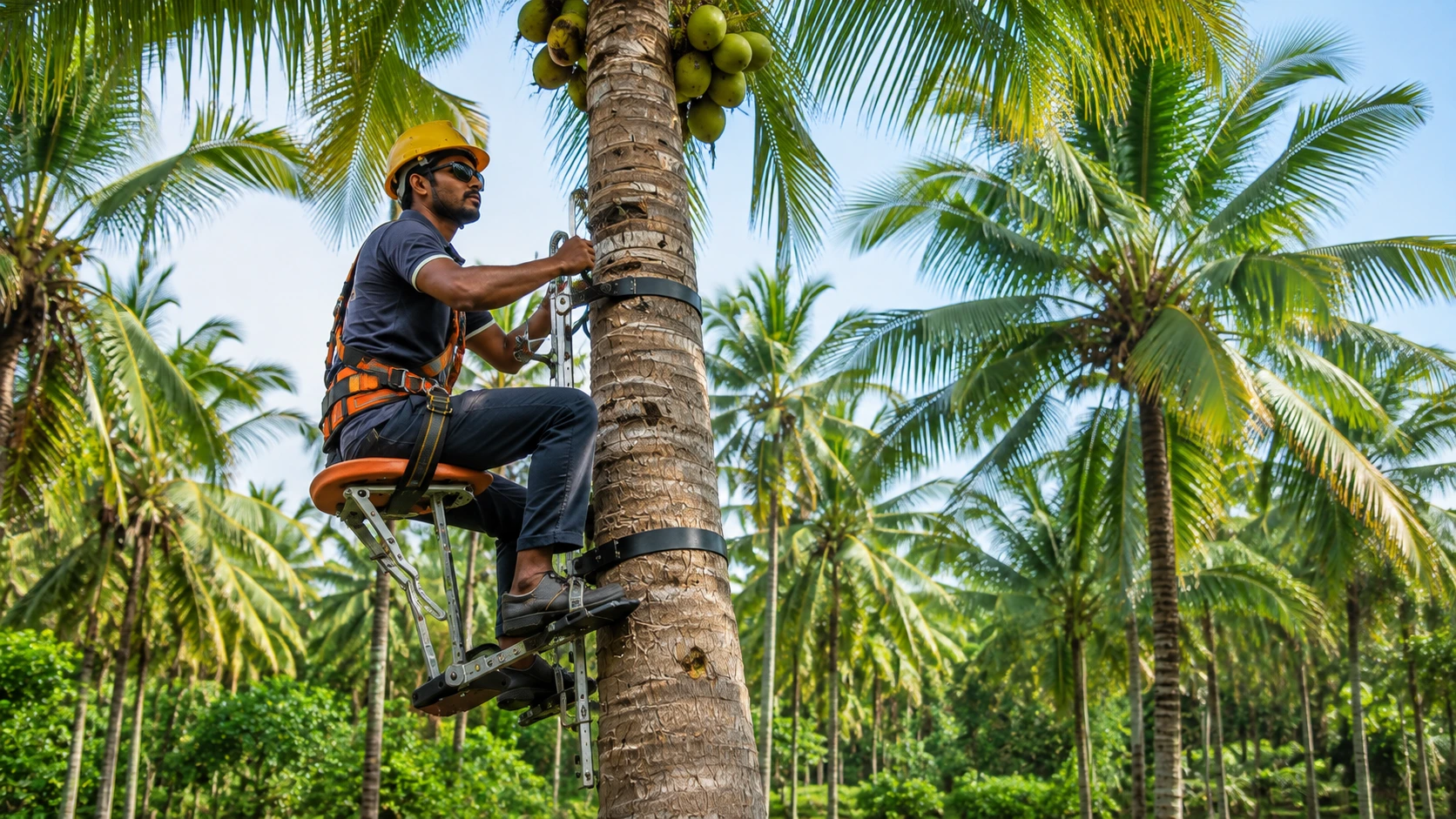
Coconut harvesting requires workers to climb tall, narrow tree trunks while maintaining balance and control. A properly selected coconut tree climbing device can make climbing more stable, comfortable, and controlled.
The images provided highlight six practical questions about coconut tree climbing equipment. They focus on stability, adjustable sizing, operator comfort, rubber grip pads, inspection, and training. These factors matter when selecting equipment for coconut plantations, areca nut farms, and similar tree climbing applications.
Indian Inovatix Limited, Ahmedabad, Gujarat, India, manufactures climb assist systems for agricultural and plantation applications. Its Coconut Climber is designed for coconut trees and provides adjustable sizing, continuous movement with fall protection, rubber pads, and a comfortable seat.
Key Takeaways
- The coconut tree climbing device should provide stability, secure gripping, adjustable positioning, and comfortable operation.
- Adjustable mechanisms allow the equipment to accommodate different tree diameters, but the operating range should be confirmed before use.
- Rubber grip pads can improve contact with the tree while helping reduce unnecessary surface damage.
- Regular inspection before use and periodic maintenance checks help identify wear or equipment problems.
- Proper operator training helps workers understand climbing techniques, equipment adjustment, inspection, and safe operation.
What Is a Coconut Tree Climbing Device?
A coconut tree climbing device is a mechanical climbing aid designed to support workers while ascending and working on coconut trees. It uses gripping components and a seating arrangement to make climbing more controlled and comfortable.
Traditional coconut harvesting can require repeated climbing and descending. The physical effort can become significant when workers handle multiple trees during a working day.
The Indian Inovatix Coconut Climber is specifically developed for climbing and working on coconut trees. Its product information lists adjustable sizing, continuous movement with complete fall protection, rubber pads, and a comfortable seat as key advantages.
The equipment can also be relevant to similar tree applications where trunk diameter and climbing conditions are compatible.
The manufacturer’s catalogue identifies applications including coconut trees, supari trees, and other trees with trunks of similar diameter.
1. What Is the Most Important Feature in a Coconut Tree Climbing Device?
Stability is one of the most important features because the operator needs secure contact with the tree while climbing and working. A stable design should combine reliable gripping, suitable adjustment, and controlled movement.
The first image specifically highlights stability as the leading consideration. It also identifies three related factors:
- Secure grip
- Adjustable design
- Comfortable operation
These features work together. A device that grips securely but cannot accommodate the tree diameter correctly may not provide the intended performance.
Similarly, equipment that provides good grip but causes excessive operator fatigue may be difficult to use during repeated harvesting activities.
For plantation operators, the selection process should therefore consider the complete working experience rather than looking at one component in isolation.
Why does stability matter during coconut harvesting?
Stable equipment helps the operator maintain better control while climbing and working at height. It also allows the climbing mechanism to remain positioned correctly against the tree during movement.
The equipment should always be used according to manufacturer instructions. Operators should also assess the tree condition before climbing.
2. Can One Climbing Device Fit Every Coconut Tree?
Not necessarily. Tree trunks can vary in diameter, shape, and surface condition, so the climbing device should have an adjustment range suitable for the trees where it will be used.
The second image highlights adjustable mechanisms as an important feature. It also advises buyers to confirm the operating range before purchasing.
This is especially important for plantation owners managing different varieties or multiple tree sizes.
Before procurement, teams should consider:
- Typical trunk diameter across the plantation.
- Minimum and maximum diameter supported by the device.
- Adjustment mechanism and locking arrangement.
- Tree surface and shape.
- Compatibility with the intended application.
Indian Inovatix states that its Coconut Climber can be adjusted to different sizes. Its catalogue also describes an adjusting pin, adjuster frame, locking pin, and tree gripping pipe as parts of the equipment.
Selecting equipment within its intended operating range helps prevent unsuitable use.
3. Does Operator Comfort Improve Climbing Safety?
Yes. Comfortable climbing equipment can help reduce physical strain and allow operators to maintain better control during repeated climbing and harvesting activities.
The third image specifically highlights operator comfort and reduced fatigue. A comfortable seat can provide support while the operator performs work above ground.
This feature is particularly useful when workers need to remain positioned on the tree while carrying out harvesting tasks.
The Indian Inovatix Coconut Climber includes a comfortable seat as one of its listed advantages.
Comfort should not be viewed separately from safety. Workers who experience excessive discomfort may have difficulty maintaining their working position or may attempt unsafe adjustments during climbing.
For this reason, buyers should evaluate seat design, grip stability, adjustment, and overall operation together.
4. Why Are Rubber Grip Pads Important?
Rubber grip pads help improve contact between the climbing device and the tree while reducing unnecessary damage to the tree surface. They also contribute to the gripping function required during ascent and descent.
The fourth image highlights rubber pads as a specific feature. It explains that they improve grip while helping protect the tree surface.
This matters in agricultural environments because the same trees may need to be accessed repeatedly throughout their productive life.
The Coconut Climber listed by Indian Inovatix includes rubber pads designed not to injure the tree.
| Feature | Why it matters |
| Rubber grip pads | Improve contact with the tree |
| Adjustable mechanism | Accommodates different tree sizes |
| Locking arrangement | Helps maintain the selected adjustment |
| Comfortable seat | Supports the operator while working |
| Gripping frame | Maintains contact during climbing |
The correct combination of these features can make the equipment more practical for repeated plantation work.
5. How Often Should a Coconut Tree Climbing Device Be Inspected?
Operators should visually inspect the equipment before every use and conduct periodic detailed inspections according to the manufacturer’s maintenance recommendations. Any damaged or defective component should be addressed before the device returns to service.
The fifth image directly recommends inspection before every use. It also highlights periodic detailed inspections.
A pre use inspection should focus on visible condition and the operation of key components.
Operators can check:
- Gripping components
- Rubber pads
- Adjustment mechanisms
- Locking components
- Seat condition
- Frames and connecting parts
- Signs of cracks, deformation, or unusual wear
The inspection should follow the manufacturer’s instructions for the specific model.
If equipment has been exposed to unusual loading, impact, environmental damage, or other conditions outside normal operation, a more detailed assessment may be required.
Regular inspection also helps plantation managers identify equipment that needs maintenance or replacement before it creates an operational problem.
7. Is Training Necessary Before Using Climbing Equipment?
Yes. Operators should receive appropriate training before using climbing equipment. Training should cover safe climbing techniques, correct adjustment, inspection procedures, and the manufacturer’s operating instructions.
The sixth image emphasises training as an important part of safe equipment use.
A climbing device is mechanical equipment. Its performance depends not only on its construction but also on correct setup and operation.
A practical training programme should cover:
- Pre use equipment inspection.
- Correct adjustment for tree diameter.
- Proper positioning of the climbing device.
- Safe ascent and descent techniques.
- Correct use of the seat and gripping components.
- Recognition of damaged or worn parts.
- Procedures for reporting equipment defects.
Operators should not improvise with modifications or use the equipment outside its intended application.
Where a climbing device is integrated with a separate fall protection arrangement, workers should also be trained in the relevant harness, connector, and fall protection procedures.
6. What Should Buyers Check Before Purchasing a Coconut Climber?
Buyers should evaluate tree compatibility, adjustment range, grip design, operator comfort, inspection requirements, and the manufacturer’s technical information. The device should match the actual trees and work practices where it will be used.
A useful procurement checklist includes:
| Selection factor | What buyers should verify |
| Application | Coconut, supari, or compatible tree |
| Tree diameter | Within the device’s specified range |
| Adjustment | Easy and secure adjustment |
| Grip | Reliable contact with the trunk |
| Tree protection | Suitable protective pads |
| Comfort | Adequate seating and operator support |
| Inspection | Clear maintenance and inspection guidance |
| Training | Manufacturer operating instructions available |
For plantation owners, the best choice is not necessarily the equipment with the most components. It should be the device that matches the trees, operators, workload, and intended application.
Indian Inovatix places its Coconut Climber within its wider Climb Assist Systems range, which also includes climbing equipment for poles and other vertical applications.
How Does the Indian Inovatix Coconut Climber Support Tree Work?
The Indian Inovatix Coconut Climber is designed specifically for coconut tree climbing and working. Its listed features include adjustable sizing, continuous movement with complete fall protection, rubber pads, and a comfortable seat.
Its catalogue identifies the product as a climb assist device made for coconut trees, supari trees, and trees with similar trunk diameters. The catalogue also shows adjustable and locking components within the climbing frame.
Indian Inovatix Limited, Ahmedabad, Gujarat, India, has more than 50 years of experience in fall protection and climb assist equipment. Its climb assist category includes products for agricultural, telecom, power, industrial, and other vertical access applications.
For plantation operators, this provides an option specifically developed around tree climbing rather than adapting unrelated climbing equipment to the application.
Frequently Asked Questions About Coconut Tree Climbing Devices
What is the main benefit of a coconut tree climbing device?
A coconut tree climbing device supports controlled movement while climbing and working on coconut trees. Features such as adjustable gripping, rubber pads, and a comfortable seat can improve stability and operator comfort.
Can a coconut climber be adjusted for different tree sizes?
Yes, adjustable coconut climbers can accommodate different tree diameters within their specified operating range. Buyers should confirm the manufacturer’s adjustment range before selecting equipment.
Are rubber pads important on a coconut tree climber?
Yes. Rubber pads can improve grip and help reduce unnecessary damage to the tree surface. Their condition should also be checked during routine inspections.
Should operators inspect the climber before every use?
Yes. A visual inspection before every use can help identify damaged, loose, worn, or incorrectly adjusted components. Detailed inspections should follow the manufacturer’s maintenance recommendations.
Does the device provide a comfortable working position?
A suitable climbing device can include a seat that supports the operator while working on the tree. The Indian Inovatix Coconut Climber lists a comfortable seat as one of its advantages.
Is training required to operate a coconut climber?
Yes. Operators should understand equipment adjustment, inspection, climbing techniques, and safe operating procedures before using the device.
Can the same device be used on areca nut trees?
Some devices can be suitable for trees with similar trunk diameters. Indian Inovatix’s catalogue identifies supari trees and other trees with similar trunk diameters as applications for its Coconut Climber.
Does a climbing device replace fall protection?
A climbing aid and a fall protection system have different functions. Where fall protection is required, the complete safety arrangement should be designed and used according to the applicable equipment requirements and manufacturer’s instructions.
Safer Coconut Harvesting Starts With the Right Climbing Equipment
The right coconut tree climbing device should provide stable gripping, suitable adjustment, tree friendly contact, and comfortable operation. Regular inspection and operator training are equally important because safe equipment performance depends on correct use and maintenance.
Indian Inovatix Limited, Ahmedabad, Gujarat, India, manufactures climb assist equipment for coconut tree and related agricultural applications. Its Coconut Climber is designed with adjustable sizing, rubber grip pads, continuous movement, and a comfortable seat.
Is Your Coconut Climbing Equipment Suitable for Your Trees?
Plantation operators should select climbing equipment based on tree size, operating conditions, worker requirements, and inspection procedures. Indian Inovatix can help identify a suitable climb assist solution for compatible coconut and similar tree applications.
Enquire about the Coconut Climber for your plantation and confirm the suitable operating range for your trees.


Talk to Our Safety & Protection Specialists
Have questions or need guidance? Our experts can help you choose the most reliable and high-performance safety solutions tailored to your industry and site requirements.
-

- Call Us +91-8849452638
Need Help Determining the Right Fall Protection for You?
With our vast experience, our experts will assist you in selecting the most relevant system for your needs.