May 15, 2026
Choosing the correct safety harness standard is critical for worker protection during industrial operations at height. EN 361 EN 358 EN 813 standards define different harness functions for fall arrest, work positioning, and rope access applications.
Many industrial buyers mistakenly assume all safety harnesses perform the same role. In reality, each EN standard addresses a specific safety requirement. Using the wrong harness configuration can increase fall risk, reduce worker mobility, and create compliance issues during audits.
Indian Inovatix Ltd., Ahmedabad, Gujarat, India, manufactures certified industrial safety harness systems designed for construction, telecom, infrastructure, energy, and confined space operations.
What Is EN 361 Certification?
EN 361 is a European safety standard for full-body fall arrest harnesses designed to stop a worker safely during a fall.
This standard applies to harnesses used in construction, telecom towers, warehouses, industrial plants, and infrastructure projects where workers face fall hazards. EN 361-certified harnesses distribute arrest forces across the shoulders, thighs, and pelvis to reduce injury risk.
F = ma
Fall arrest systems must manage impact forces safely during sudden deceleration. Proper harness design reduces concentrated stress on the worker’s body during arrest events.
Typical EN 361 harness features include:
| Feature | Purpose |
| Dorsal D-ring | Primary fall arrest attachment |
| Shoulder straps | Force distribution |
| Leg straps | Worker stabilization |
| Chest strap | Harness positioning |
| Adjustable buckles | Proper fit and comfort |
Indian Inovatix Ltd., Ahmedabad, manufactures EN-certified full-body harness systems for industrial environments requiring fall arrest protection.
When Is EN 361 Required?
EN 361 is required whenever workers face the risk of free fall during elevated work activities. This includes roof work, scaffolding, tower climbing, and structural steel operations.
Industries commonly using EN 361 harnesses include:
- Construction projects
- Telecom tower maintenance
- Oil and gas facilities
- Warehousing operations
- Infrastructure development
- Industrial shutdown maintenance
EN 361 compliance supports OSHA and industrial work-at-height safety requirements.
What Is EN 358 Certification?
EN 358 is a safety standard for work positioning and restraint systems that help workers maintain stable positioning during elevated tasks.
Unlike EN 361, EN 358 does not serve as a primary fall arrest system. Instead, it supports workers who need hands-free stability while working at height.
Common EN 358 equipment includes:
- Positioning belts
- Side D-rings
- Adjustable work positioning lanyards
- Restraint systems
These systems are widely used in utility maintenance, telecom work, steel erection, and industrial maintenance operations.
How Does EN 358 Improve Worker Stability?
EN 358 systems improve balance and positioning during tasks that require prolonged elevated work. They reduce worker fatigue and improve operational control.
For example, telecom maintenance crews often use EN 358 positioning systems while climbing towers and servicing elevated equipment. Proper positioning support allows technicians to maintain stability while keeping both hands available for work activities.
The following table compares work positioning and fall arrest applications:
| Function | EN 358 | EN 361 |
| Work positioning | Yes | Limited |
| Fall arrest | No | Yes |
| Hands-free support | Yes | No |
| Restraint applications | Yes | Limited |
| Free-fall protection | No | Yes |
EN 358 systems should always integrate with fall arrest protection where free-fall risks exist.
What Is EN 813 Certification?
EN 813 is a European standard for sit harnesses designed for rope access, suspension work, and controlled descent operations.
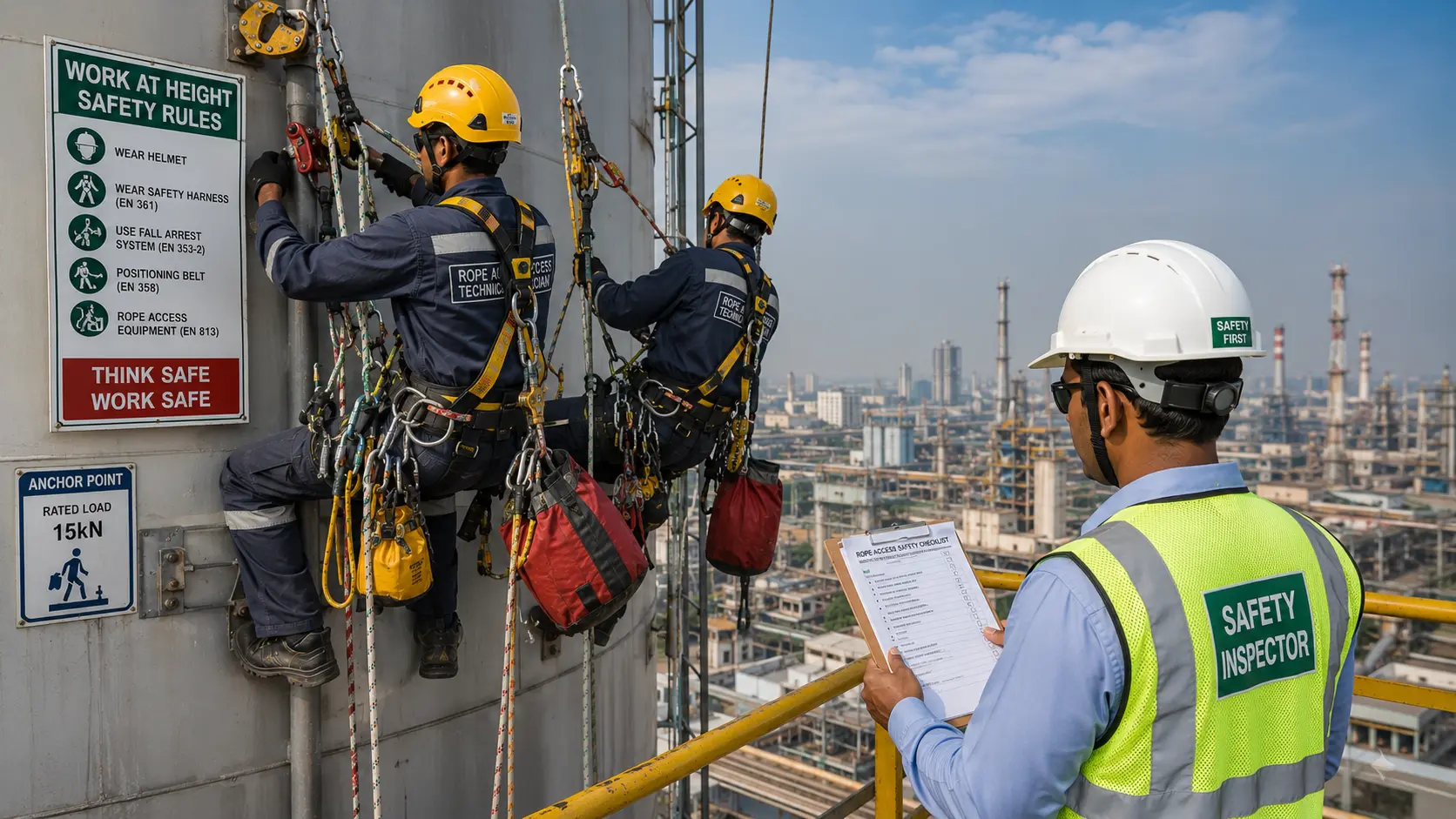
These harnesses position the worker in a seated orientation during prolonged suspended activities. Rope access teams commonly use EN 813 systems for inspection, maintenance, façade cleaning, and industrial rescue operations.
Typical EN 813 harness features include:
| Feature | Purpose |
| Ventral attachment point | Rope access connection |
| Wide leg support | Worker comfort |
| Suspension support | Prolonged hanging work |
| Integrated waist support | Improved stability |
Indian Inovatix Ltd. supplies industrial rope access and rescue systems for infrastructure, confined space, and maintenance applications.
Why Is EN 813 Important for Rope Access Work?
EN 813 harnesses reduce fatigue and improve worker positioning during suspended operations. Traditional fall arrest harnesses alone may not provide sufficient comfort during long-duration rope access tasks.
An industrial maintenance contractor servicing elevated refinery structures improved worker efficiency after implementing combined EN 361 and EN 813 harness systems for rope access technicians.
Proper suspended work systems also improve rescue response capability during emergencies.
What Is the Main Difference Between EN 361, EN 358, and EN 813?
The primary difference between EN 361, EN 358, and EN 813 standards is the intended safety function of each harness system.
Each standard addresses a different type of industrial work activity.
| Standard | Primary Purpose | Typical Application |
| EN 361 | Fall arrest | Height safety |
| EN 358 | Work positioning | Hands-free elevated work |
| EN 813 | Rope access and suspension | Suspended operations |
Many industrial harnesses combine multiple standards into one integrated system.
Can One Harness Meet Multiple EN Standards?
Yes. Multi-purpose industrial harnesses often combine EN 361, EN 358, and EN 813 certifications within a single system.
Combined harness systems support:
- Fall arrest protection
- Work positioning stability
- Rope access mobility
- Rescue operations
- Confined space entry
This approach improves operational flexibility across complex industrial environments.
Indian Inovatix Ltd., Ahmedabad, Gujarat, manufactures integrated industrial harness systems for multi-hazard applications across India.
Which Industries Use EN 361, EN 358, and EN 813 Harnesses?
Different industries require different harness configurations depending on operational hazards and worker mobility requirements.
The following table outlines common industrial applications:
| Industry | Common Standard Used |
| Construction | EN 361 |
| Telecom Towers | EN 361 + EN 358 |
| Rope Access Maintenance | EN 361 + EN 813 |
| Confined Space Rescue | EN 361 + EN 813 |
| Utility Maintenance | EN 358 |
| Wind Energy | EN 361 + EN 813 |
Industrial safety planning should align harness selection with task-specific risks.
What Happens If the Wrong Harness Is Used?
Incorrect harness selection can reduce protection effectiveness and increase injury risk. It may also create non-compliance issues during safety inspections.
Common consequences include:
- Poor worker stability
- Reduced rescue efficiency
- Excessive suspension discomfort
- Improper force distribution
- Increased fatigue during prolonged work
Task-specific hazard assessment remains essential before selecting harness systems.
How to Choose the Correct Industrial Safety Harness
Selecting the correct harness depends on fall exposure, work duration, movement requirements, and rescue planning.
Industrial buyers should evaluate:
| Selection Factor | Consideration |
| Fall risk | Free-fall exposure |
| Work positioning needs | Hands-free stability |
| Suspension duration | Rope access comfort |
| Rescue requirements | Retrieval compatibility |
| Certification requirements | EN compliance |
Indian Inovatix Ltd. provides engineered safety consultations for industrial fall protection and rope access system selection.
What Features Should Buyers Look for in Certified Harnesses?
Certified industrial harnesses should include durable webbing, load-rated attachment points, corrosion-resistant hardware, and ergonomic adjustment systems.
Buyers should verify:
- EN certification labeling
- Load test compliance
- Stitching integrity
- D-ring material quality
- Inspection traceability
Proper inspection and maintenance schedules are also critical for long-term compliance.
Why EN Standards Matter for Industrial Compliance
EN standards establish tested safety performance requirements for industrial protective equipment. Certified systems improve worker protection and audit readiness.
According to EN certification requirements, harness systems undergo testing for:
| Test Area | Purpose |
| Dynamic performance | Fall arrest evaluation |
| Static strength | Load resistance |
| Corrosion resistance | Hardware durability |
| Strap integrity | Structural reliability |
| Attachment security | Connection stability |
Industrial facilities using certified systems often achieve stronger compliance outcomes during third-party safety audits.
How Do Certified Systems Improve Workplace Safety?
Certified harness systems provide predictable performance under hazardous conditions. They reduce uncertainty during fall arrest and rescue situations.
Indian Inovatix Ltd., Ahmedabad, Gujarat, India, manufactures certified industrial safety systems designed for demanding industrial applications across construction, infrastructure, energy, telecom, and confined space sectors.
Organizations that prioritize certified equipment improve both worker safety and operational reliability.
Frequently Asked Questions
What does EN 361 mean in safety harnesses?
EN 361 is a European standard for full-body fall arrest harnesses. It applies to systems designed to stop workers safely during falls from height.
What is the purpose of EN 358?
EN 358 covers work positioning and restraint systems. These systems help workers maintain stable positioning while performing elevated tasks.
What is EN 813 used for?
EN 813 applies to sit harnesses used for rope access, suspension work, and industrial rescue applications. These harnesses support prolonged suspended operations.
Can one harness comply with EN 361, EN 358, and EN 813 together?
Yes. Many industrial harness systems combine all three standards into one integrated configuration for fall arrest, positioning, and rope access work.
Is EN 358 enough for fall protection?
No. EN 358 alone does not provide primary fall arrest protection. Workers exposed to free-fall hazards require EN 361-certified systems.
Which industries commonly use EN 813 harnesses?
Rope access maintenance, wind energy, industrial inspection, confined space rescue, and façade maintenance industries commonly use EN 813 systems.
Why are EN-certified harnesses important?
EN-certified harnesses undergo performance testing for safety, durability, and structural strength. Certified systems improve compliance and worker protection.
How often should industrial harnesses be inspected?
Industrial harnesses should undergo visual inspection before each use and periodic formal inspection according to manufacturer guidelines and applicable standards.
Are EN standards accepted in India?
Yes. Many industrial projects in India use EN-certified safety systems alongside IS and OSHA compliance requirements.
Where can industries source certified industrial harness systems in India?
Indian Inovatix Ltd., Ahmedabad, Gujarat, India, manufactures certified industrial safety harnesses, fall arrest systems, and rope access equipment for industrial sectors across India.
Choose the Right Harness Standard Before Work Begins
Industrial safety depends on selecting equipment designed for the actual work environment. EN 361, EN 358, and EN 813 standards each serve a specific purpose in fall protection, positioning, and rope access safety.
Indian Inovatix Ltd., Ahmedabad, Gujarat, India, manufactures certified industrial harness systems designed for demanding industrial operations across construction, energy, telecom, infrastructure, and confined space applications.
Safe elevated work starts with correct equipment selection and certified compliance systems.
Talk to an Inovatix safety specialist to identify the right harness configuration for your industrial operations.


Talk to Our Safety & Protection Specialists
Have questions or need guidance? Our experts can help you choose the most reliable and high-performance safety solutions tailored to your industry and site requirements.
-

- Call Us +91-8849452638
Need Help Determining the Right Fall Protection for You?
With our vast experience, our experts will assist you in selecting the most relevant system for your needs.