April 8, 2026
Work at height requires consistent safety control across industrial sites, construction projects, and infrastructure operations. Many organizations install systems but fail to maintain them regularly. This creates hidden risks that may not be visible during routine work.
A fall arrest system that is not maintained properly can fail during a fall event. This exposes workers to serious injury and leads to compliance violations.
A structured fall arrest system maintenance checklist helps safety managers ensure system reliability. Indian Inovatix supports organizations with certified systems and maintenance planning for safe operations.
Key Takeaways: Fall Arrest System Maintenance Checklist
- fall arrest system maintenance checklist ensures system reliability
- Regular inspection reduces equipment failure risk
- Visual and functional checks must be performed
- Documentation is required for compliance
- Anchor points require periodic verification
- Damaged equipment must be removed immediately
- Maintenance planning supports long term safety
Why Maintenance of Fall Arrest Systems is Required
Fall arrest systems are exposed to load, weather, and regular use. Over time, components degrade and lose strength.
Risks of Poor Maintenance
- Failure during fall event
- Reduced energy absorption performance
- Corrosion and wear in connectors
- Non compliance during safety audits
Impact on Industrial Operations
- Increased downtime
- Worker injury and liability
- Project delays
Regular maintenance ensures that systems function correctly under real conditions.
Types of Inspections in Fall Arrest Systems
Safety managers must follow a structured inspection schedule to maintain system performance.
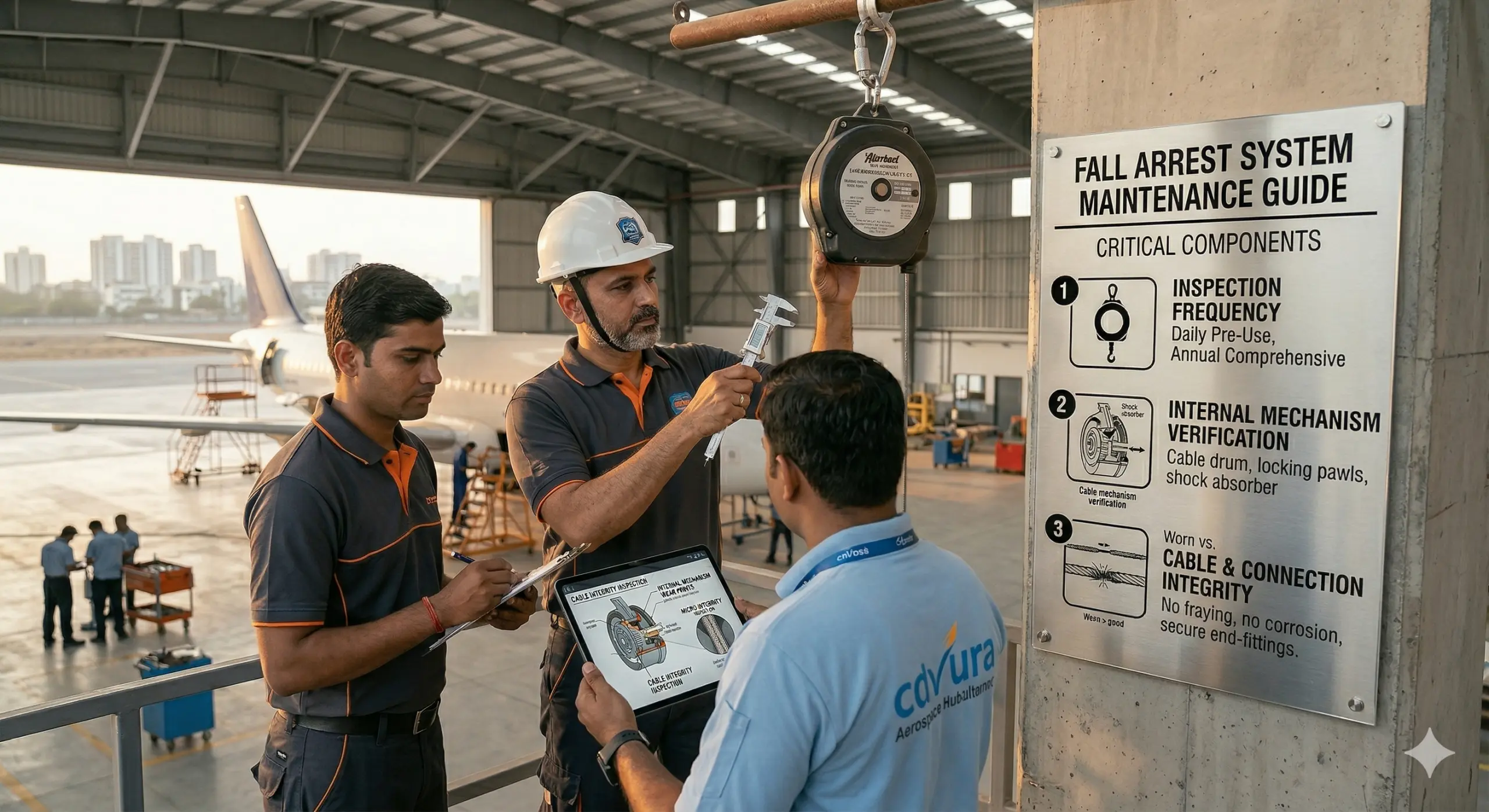
Daily Pre Use Inspection
Before every use, workers must check basic conditions.
- Check harness webbing for cuts or fraying
- Inspect lanyards for damage
- Verify connectors are locking properly
- Ensure anchor points are secure
This inspection helps identify visible issues before work begins.
Periodic Detailed Inspection
A trained safety professional must conduct detailed inspections at defined intervals.
- Check structural integrity of anchor systems
- Inspect lifelines for wear and tension
- Verify shock absorber condition
- Review system installation
This inspection ensures long term reliability.
Annual Certification Inspection
Annual inspections ensure compliance with standards and regulations.
- Load testing of anchor points
- Certification review
- Replacement of worn components
- Documentation updates
This process supports audit readiness and safety compliance.
Fall Arrest System Maintenance Checklist for Safety Managers
A structured checklist helps ensure no component is missed during inspection.
Harness Inspection Checklist
- Check stitching integrity
- Inspect webbing for cuts or burns
- Verify buckles and adjustment points
- Ensure labels are readable
Proper harness condition ensures correct load distribution during a fall.
Lanyard and Lifeline Checklist
- Inspect for cuts, abrasion, or wear
- Check shock absorber deployment indicator
- Verify rope or cable condition
- Ensure connectors are intact
Any damaged lanyard must be removed from use immediately.
Anchorage System Checklist
- Verify anchor strength and stability
- Inspect mounting bolts and fixtures
- Check for corrosion or deformation
- Ensure correct installation
Anchor failure can result in complete system failure.
Connector and Hardware Checklist
- Check carabiners and hooks for cracks
- Ensure locking mechanisms function properly
- Inspect for corrosion
- Verify alignment and fit
Hardware integrity is essential for secure connections.
Horizontal and Vertical Lifeline Checklist
- Inspect cable tension
- Check intermediate supports
- Verify end anchors
- Inspect energy absorbers
These systems require regular checks due to continuous use.
Maintenance Frequency Guidelines
Maintenance frequency depends on usage intensity and environmental conditions.
Recommended Schedule
| Component | Inspection Frequency |
| Harness | Before each use |
| Lanyard | Before each use |
| Anchor system | Monthly |
| Lifeline system | Quarterly |
| Full system audit | Annually |
This schedule ensures consistent monitoring and timely action.
Common Maintenance Mistakes to Avoid
Even with checklists, some common errors reduce system effectiveness.
Frequent Issues Observed
- Skipping pre use inspection
- Continuing to use damaged equipment
- Lack of documentation
- Ignoring anchor condition
Resulting Risks
- Equipment failure during fall
- Increased injury severity
- Non compliance during audits
Correcting these mistakes improves safety performance.
Role of Safety Managers in System Maintenance
Safety managers play a key role in ensuring system reliability.
Key Responsibilities
- Implement inspection schedules
- Train workers on equipment checks
- Maintain inspection records
- Ensure defective equipment is removed
Best Practices
- Conduct regular safety audits
- Use checklists consistently
- Monitor usage patterns
- Coordinate with suppliers for replacement
A structured approach ensures consistent safety outcomes.
Use Cases Across Industrial Projects
Maintenance practices vary based on industry and site conditions.
Manufacturing Plant Scenario
Frequent use of lifelines requires regular inspection.
Safety teams perform monthly checks to ensure system integrity.
Construction Site Scenario
Dynamic work conditions increase wear on equipment.
Daily inspections help identify issues early.
Infrastructure Project Scenario
Long duration projects require periodic audits.
Annual certification ensures compliance and safety.
Each scenario highlights the importance of consistent maintenance.
Indian Inovatix Support for Maintenance and Safety
Indian Inovatix provides fall protection systems designed for durability and compliance.
Support Offered
- System inspection guidance
- Maintenance planning
- Replacement components supply
- Site specific recommendations
Product Capabilities
- Lifeline systems for industrial structures
- Shock absorbing lanyards
- Anchorage systems
- Roof safety systems
Industry Coverage
- Construction and infrastructure
- Manufacturing plants
- Warehousing operations
- Energy projects
Each solution supports long term safety and reliability.
Compliance and Documentation Requirements
Maintenance must be documented for audit and compliance purposes.
Required Records
- Inspection logs
- Equipment history
- Certification reports
- Replacement records
Benefits of Proper Documentation
- Easy audit compliance
- Traceability of equipment
- Improved safety management
Proper documentation supports transparency and accountability.
FAQs: Fall Arrest System Maintenance Checklist
What is a fall arrest system maintenance checklist?
It is a structured list used to inspect and maintain fall protection equipment regularly.
Why is maintenance required for fall arrest systems?
Maintenance ensures equipment performs correctly during a fall and prevents failure.
How often should fall arrest systems be inspected?
Basic inspections should be done before each use, with detailed inspections periodically.
What should be checked in a harness?
Check webbing, stitching, buckles, and labels for damage or wear.
Can damaged equipment be repaired?
Damaged equipment should not be used. It must be replaced or repaired by authorized personnel.
Who is responsible for maintenance?
Safety managers and trained personnel are responsible for inspection and maintenance.
Does maintenance affect compliance?
Yes, proper maintenance ensures compliance with safety standards and regulations.
How does fall arrest system maintenance checklist help safety managers?
It ensures all components are inspected systematically, reducing risk and improving compliance.
What happens if maintenance is ignored?
Ignoring maintenance can lead to equipment failure and serious injury.
Final Word
A fall arrest system is only as reliable as its maintenance. The fall arrest system maintenance checklist helps safety managers ensure that every component functions correctly during a fall event.
Consistent inspection, proper documentation, and timely replacement reduce risk and support safe operations. Indian Inovatix stands as a manufacturer, supplier, and specialist delivering fall protection systems designed for industrial reliability.
Maintaining safety systems is a continuous responsibility, not a one time task.
Safe systems require regular inspection and timely action.
Connect with Indian Inovatix to request a quote, schedule a maintenance consultation, or get customized fall protection solutions for your project.


Talk to Our Safety & Protection Specialists
Have questions or need guidance? Our experts can help you choose the most reliable and high-performance safety solutions tailored to your industry and site requirements.
-

- Call Us +91-8849452638
Need Help Determining the Right Fall Protection for You?
With our vast experience, our experts will assist you in selecting the most relevant system for your needs.