June 24, 2026
Fire emergencies in high-rise buildings create unique evacuation challenges. Stairwells may become congested, smoke can reduce visibility, and rescue operations often take time to reach upper floors. In these situations, occupants need reliable alternatives when conventional escape routes become inaccessible.
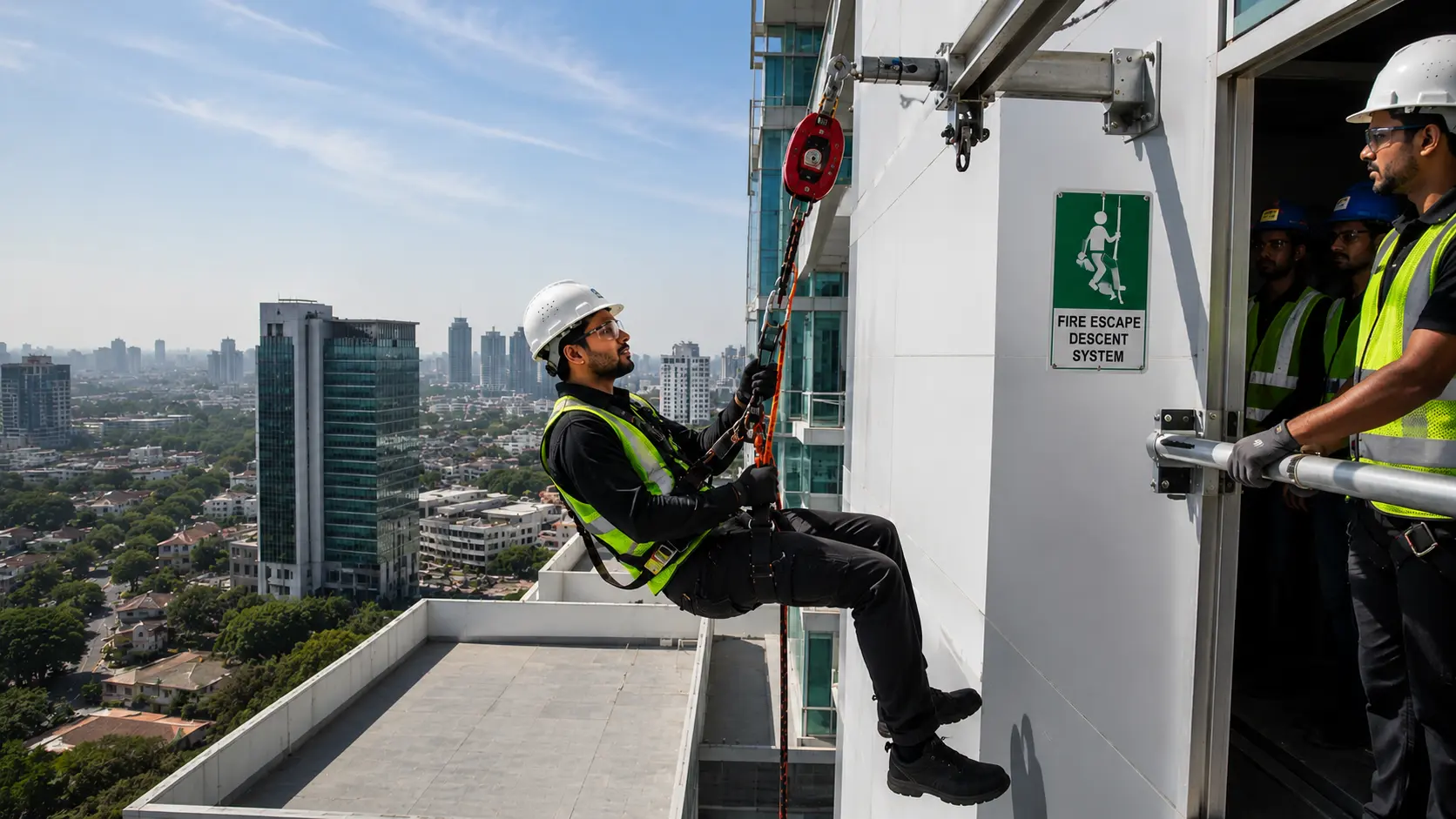
A fire escape descent device provides a controlled means of evacuation from elevated locations. These systems allow individuals to descend safely from a building using engineered braking mechanisms that regulate speed throughout the evacuation process. Indian Inovatix Ltd., Ahmedabad, Gujarat, India, manufactures and supplies safety solutions designed to support emergency preparedness across industrial and commercial facilities.
Key Takeaways
- A fire escape descent device enables controlled evacuation from elevated locations during emergencies.
- Modern descent devices use automatic braking systems to maintain a safe descent speed.
- High rise fire evacuation device systems provide an alternative escape method when stairways become unusable.
- Proper installation, inspection, and training are essential for safe operation.
- Certified evacuation equipment helps organizations strengthen emergency response planning and compliance.
What Is a Fire Escape Descent Device?
A fire escape descent device is an emergency evacuation system that allows occupants to descend safely from a building using a controlled mechanical braking mechanism.
Unlike traditional rescue equipment, these systems are specifically designed for self-evacuation or assisted evacuation during emergencies. The device controls descent speed automatically, reducing the risk of injury caused by uncontrolled movement.
These systems are commonly installed in:
- High-rise buildings
- Hotels
- Hospitals
- Industrial facilities
- Offshore platforms
- Residential towers
As buildings grow taller, emergency evacuation planning increasingly includes alternative escape solutions beyond staircases.
Why are descent devices used in high-rise buildings?
High-rise structures present evacuation challenges that do not exist in low-rise buildings.
Common concerns include:
- Smoke-filled stairwells
- Power failures
- Structural access restrictions
- Large occupant populations
- Delayed rescue access to upper floors
A descent device provides an additional evacuation option when primary escape routes are compromised.
How Does a Fire Escape Device Work?
A fire escape device works by combining a secure harness or attachment system with a controlled braking mechanism that regulates descent speed.
The system allows users to descend from a designated anchor point while maintaining a steady and predictable rate of movement.
What are the main components?
Most systems include:
| Component | Function |
| Anchorage System | Secures the device to the structure |
| Descent Rope or Cable | Supports user movement |
| Brake Mechanism | Controls descent speed |
| Harness or Connector | Attaches the user safely |
| Housing Unit | Protects and stores components |
Each component plays an important role in maintaining safety during evacuation.
Modern devices are engineered to function without external power sources, making them suitable for emergency conditions.
Step-by-step evacuation process
A typical evacuation sequence includes:
- Connect the device to the designated anchor point.
- Secure the harness or attachment system.
- Verify equipment engagement.
- Move carefully beyond the evacuation point.
- Allow the braking system to control descent.
- Reach ground level safely.
- Clear the landing zone for subsequent users.
This process allows controlled evacuation while minimizing panic and unsafe movements.
The Mechanics Behind Controlled Descent
Controlled descent systems use mechanical braking technology that automatically regulates speed regardless of user weight.
This braking action distinguishes a professional evacuation system from a simple rope arrangement.
How does the braking system maintain safety?
The brake mechanism creates controlled resistance during descent.
Benefits include:
- Consistent descent speed
- Reduced free-fall risk
- Improved user confidence
- Lower impact forces
- Predictable operation
Most certified systems are designed to accommodate a specified range of user weights while maintaining controlled performance.
Why is speed control important?
Uncontrolled descent can lead to:
- Collision injuries
- Loss of control
- Equipment overload
- Panic-related mistakes
By regulating movement, the system provides a safer evacuation experience during stressful emergency conditions.
What Makes a High Rise Fire Evacuation Device Different?
A high rise fire evacuation device is specifically designed for evacuation from significant building heights while maintaining user safety and operational reliability.
Unlike basic rescue equipment, these systems are engineered to support emergency building evacuation scenarios.
Key design considerations
Manufacturers typically evaluate:
- Load capacity
- Heat resistance
- Corrosion resistance
- Durability
- Ease of deployment
These requirements help ensure dependable performance when emergency conditions arise.
Where are these systems commonly installed?
Applications include:
- Commercial towers
- Residential high rises
- Industrial plants
- Hotels
- Educational campuses
- Data centres
Building owners increasingly integrate evacuation devices into broader emergency preparedness programs.
Personal Escape Device Fire Applications
A personal escape device fire solution is designed for individual evacuation from elevated locations during emergency situations.
These devices are compact and intended for rapid deployment when traditional exits cannot be used.
Who typically uses personal escape devices?
Common users include:
- Maintenance personnel
- Building managers
- Security teams
- Offshore workers
- Industrial operators
These devices provide an additional layer of emergency preparedness for personnel working in elevated environments.
What are the advantages?
Benefits may include:
- Compact storage
- Fast deployment
- Controlled descent
- Minimal infrastructure requirements
- Increased evacuation options
Organizations often include personal escape systems within comprehensive emergency response plans.
Safety Features That Improve Emergency Evacuation
Modern evacuation devices incorporate multiple safety mechanisms designed to reduce user risk during emergency descent.
These features support safe operation under challenging conditions.
Common safety features
| Safety Feature | Purpose |
| Automatic Brake | Controls descent speed |
| Heat Resistant Materials | Improves performance during fire exposure |
| Anti-Panic Function | Reduces user error |
| Load Management System | Supports varying user weights |
| Corrosion Resistant Components | Extends equipment life |
These features contribute to overall system reliability.
Why regular inspections matter
Emergency equipment may remain unused for extended periods.
Regular inspections help verify:
- Mechanical integrity
- Rope condition
- Connector performance
- Anchorage security
- Manufacturer compliance requirements
Inspection programs should be documented and conducted according to manufacturer recommendations.
Industry Standards and Compliance Requirements
Fire evacuation devices should comply with recognized safety standards and certification requirements.
Compliance helps ensure that equipment performs as intended during emergency situations.
What should buyers evaluate?
Before selecting a system, organizations should assess:
- Applicable safety standards.
- Building height requirements.
- Occupancy characteristics.
- Maintenance requirements.
- Training requirements.
Certified equipment provides greater confidence in emergency performance.
Why does training remain important?
Even advanced systems require proper user understanding.
Training helps occupants:
- Recognize evacuation procedures
- Deploy equipment correctly
- Reduce panic responses
- Improve emergency readiness
Well-trained users are more likely to operate evacuation systems effectively during actual emergencies.
How Indian Inovatix Supports Emergency Safety Solutions
Indian Inovatix Ltd., Ahmedabad, Gujarat, India, has more than 50 years of experience designing and manufacturing safety equipment for industrial and infrastructure applications.
The company operates from a 33,000 sq ft manufacturing facility and has helped protect more than 500,000 workers across India. Its safety solutions support organizations seeking dependable equipment, compliance support, and long-term reliability.
As a manufacturer and specialist, Indian Inovatix emphasizes engineered safety systems designed to perform under demanding conditions.
Emergency Evacuation Planning Requires More Than Stairways
High-rise buildings face unique evacuation challenges during fire emergencies. Alternative escape systems provide additional protection when traditional routes become compromised. Understanding how a fire escape descent device operates helps organizations strengthen preparedness and improve occupant safety.
Indian Inovatix Ltd., Ahmedabad, Gujarat, India, continues to support industrial and commercial facilities with engineered safety solutions backed by decades of manufacturing expertise. From emergency evacuation equipment to advanced height safety systems, the company remains a trusted manufacturer, supplier, and specialist serving organizations across India.
When Seconds Matter, Evacuation Equipment Must Perform Reliably
Emergency situations leave little room for equipment failure or uncertainty. A properly selected and maintained evacuation system can provide an additional layer of protection for occupants in high-rise environments.
Request a quote for certified fire escape descent device solutions and emergency evacuation equipment designed for your facility’s specific requirements.
Call us at +91-8849452638 or write to info@indianinovatix.com to get started.
Frequently Asked Questions
What is a fire escape descent device?
A fire escape descent device is a controlled evacuation system that allows people to descend safely from elevated locations during emergencies. It uses a braking mechanism to regulate descent speed.
How does a fire escape device work?
The device uses a secure anchorage, rope or cable system, and an automatic braking mechanism. Together, these components maintain a controlled descent rate throughout evacuation.
Is a high rise fire evacuation device safe to use?
Yes, certified systems are designed with controlled braking mechanisms and engineered safety features. Proper training and maintenance remain important for safe operation.
Can one device be used by multiple occupants?
Some systems are designed for sequential evacuation by multiple users. The specific capability depends on the manufacturer’s design and certification.
What is the difference between a rescue device and a personal escape device fire system?
A rescue device is typically operated by trained rescuers, while a personal escape device fire system is intended for individual emergency evacuation.
How often should evacuation devices be inspected?
Inspection schedules vary by manufacturer requirements. Visual checks and periodic detailed inspections are generally recommended.
Are descent devices suitable for commercial buildings?
Yes. Commercial towers, hotels, and office buildings commonly evaluate these systems as part of emergency preparedness planning.
What safety standards should be considered?
Organizations should evaluate equipment certifications, manufacturer testing data, and compliance with applicable safety standards.
Can descent devices operate without electricity?
Most mechanical descent systems function independently of external power sources, making them suitable for emergency conditions.
Which Indian cities commonly use high-rise evacuation systems?
Demand is increasing in cities such as Mumbai, Ahmedabad, Bengaluru, Hyderabad, Chennai, Pune, and Delhi NCR due to ongoing vertical development.


Talk to Our Safety & Protection Specialists
Have questions or need guidance? Our experts can help you choose the most reliable and high-performance safety solutions tailored to your industry and site requirements.
-

- Call Us +91-8849452638
Need Help Determining the Right Fall Protection for You?
With our vast experience, our experts will assist you in selecting the most relevant system for your needs.