
March 5, 2026
A safety harness is one of the most widely used pieces of fall protection equipment across construction, industrial maintenance, rooftop work, and infrastructure projects. However, accidents continue to occur not because a harness was missing, but because it was used incorrectly.
Understanding the basic rules for using a full body harness is essential for protecting workers at height. A harness only works when it is selected correctly, worn properly, connected to a suitable anchorage, and supported by a complete fall protection system.
What Is a Full Body Harness
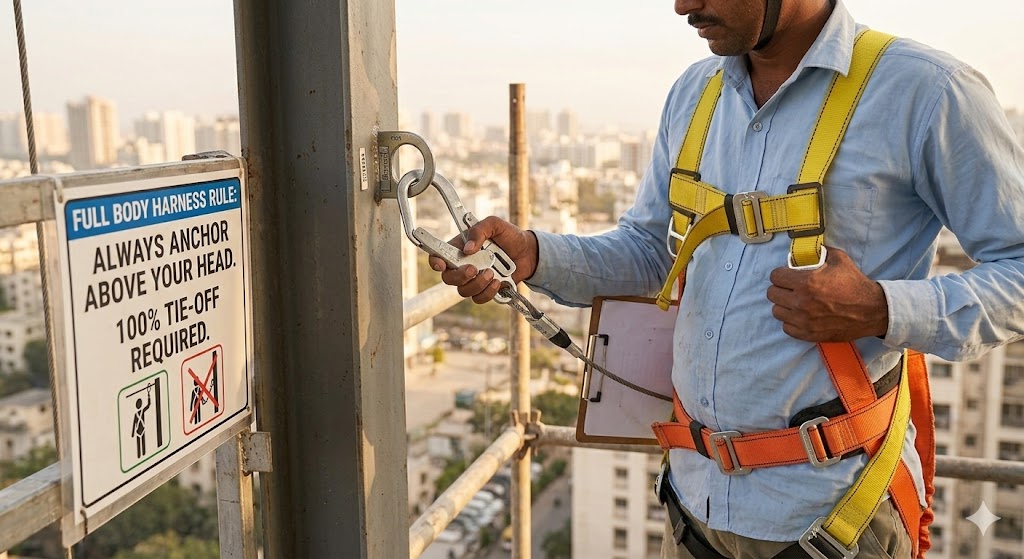
A full body safety harness is a personal protective device designed to stop a fall and distribute arrest forces across the shoulders, thighs, and pelvis. Unlike older safety belts, a full body harness reduces the risk of internal injuries during fall arrest.
Full body harnesses are used as part of a fall protection system that includes anchorage points, connectors, and rescue planning. They are mandatory for most work at height activities where fall arrest is required.
The Most Important Rule for Using a Full Body Harness
The most important rule is simple:
A full body harness must always be connected to a certified fall arrest system.
Wearing a harness without proper anchorage, connectors, or clearance provides a false sense of safety. A harness alone cannot stop a fall. It must work as part of a complete system designed for fall arrest.
Rule 1. Always Use a Full Body Harness for Fall Arrest
A safety harness belt or waist belt must never be used for fall arrest. These belts are not designed to distribute fall forces safely and can cause serious injuries.
Only a full body harness fall protection system is suitable for arresting a fall. The harness should include a dorsal D ring for fall arrest attachment and meet applicable safety standards.
Rule 2. Ensure Correct Fit and Adjustment
A body harness must fit the worker properly to function safely.
Key fitting checks include:
- Shoulder straps adjusted snugly
- Leg straps secure but comfortable
- Chest strap positioned correctly
- D ring centered between the shoulder blades
A poorly fitted safety harness can shift during a fall and increase injury risk.
Rule 3. Inspect the Harness Before Every Use
Inspection is a critical rule that is often ignored.
Before each use, the worker should check:
- Webbing for cuts, fraying, or chemical damage
- Stitching for loose or broken threads
- Buckles and D rings for cracks or deformation
- Labels for legibility
Any damaged body harness must be removed from service immediately.
Rule 4. Connect Only to Certified Anchorage Points
A full body harness must only be connected to anchorage points designed for fall arrest loads.
Improper anchorage is a common cause of system failure. The anchor should be:
- Rated for fall arrest use
- Installed on a stable structure
- Positioned to reduce fall distance and swing hazards
Connecting a safety harness to pipes, handrails, or temporary fixtures is unsafe.
Rule 5. Use Compatible Connecting Devices
The harness must be connected using suitable connectors such as energy absorbing lanyards or self retracting lifelines.
Connecting devices should:
- Lock automatically
- Be compatible with the harness D ring
- Match the type of work and available clearance
Mixing incompatible components can compromise the entire fall protection system.
When Harness Use Often Goes Wrong
Many incidents occur due to basic errors, including:
- Wearing the harness but not connecting it
- Connecting to uncertified anchor points
- Using a safety harness belt instead of a full body harness
- Ignoring fall clearance requirements
- Skipping inspection routines
Following basic rules consistently prevents most harness related accidents.
When to Seek Guidance on Harness Selection
Different tasks require different harness designs. Confined spaces, ladder work, and long duration suspension may need specialized harness features.
Reviewing Harness Requirements
If your site uses multiple types of safety harnesses or work conditions are changing, reviewing harness selection early can prevent compliance issues and unsafe use. Indian Inovatix supports safety teams with guidance on selecting the right harness and fall protection setup for specific applications.
Role of Indian Inovatix as a Safety Harness Manufacturer
Indian Inovatix is among established safety harness manufacturers in India, supplying certified full body safety harnesses designed for industrial and infrastructure use. The focus is on harnesses that integrate correctly with fall arrest systems, lifelines, and rescue equipment.
Indian Inovatix supports organizations with:
- Full body harnesses for fall arrest applications
- Harness designs suitable for confined space and vertical access
- Guidance on inspection, use, and system compatibility
This system level approach helps reduce misuse and improve workplace safety.
Training Is a Core Rule of Harness Use
Even the best equipment fails without proper training.
Workers must be trained to:
- Wear and adjust the harness correctly
- Select correct anchorage points
- Connect using approved devices
- Respond safely after a fall
Training improves compliance and reduces unsafe behavior.
Why Correct Harness Use Matters
Correct use of a full body harness:
- Reduces injury severity during falls
- Supports compliance with safety requirements
- Improves worker confidence at height
- Prevents costly incidents and downtime
Harness rules are simple, but consistency is critical.
Need Help Choosing the Right Safety Harness
Many workplaces use safety harnesses without fully evaluating task requirements, movement, or rescue needs. A short review of harness type and system compatibility can often highlight issues before they lead to incidents.
Indian Inovatix works with safety teams to align harness selection with real work conditions and fall protection requirements.
Conclusion
The primary rule for using a full body harness is to treat it as part of a complete fall protection system, not as a standalone product. Correct selection, proper fit, regular inspection, certified anchorage, and worker training are all essential.
Following these rules consistently helps organizations protect workers and maintain safe operations at height.
If your site relies on safety harnesses for daily operations, reviewing how they are used today can prevent serious risks tomorrow. Indian Inovatix supports safer harness use through certified equipment and practical guidance.
Frequently Asked Questions
1. What is the main rule for using a full body harness
The main rule is that a full body harness must always be connected to a certified fall arrest system with proper anchorage and connectors.
2. Can a safety harness belt be used for fall arrest
No. A safety harness belt or waist belt is not suitable for fall arrest. Only a full body harness is designed to distribute fall forces safely.
3. How should a full body safety harness fit
The harness should fit snugly with adjusted shoulder, leg, and chest straps. The dorsal D ring should be centered between the shoulder blades.
4. Is inspection required before using a safety harness
Yes. A safety harness must be inspected before each use to check webbing, stitching, buckles, and D rings for damage.
5. What anchorage points are safe for connecting a body harness
Only anchorage points rated for fall arrest loads and installed on stable structures should be used.
6. Can different fall protection components be mixed
Components can only be mixed if they are compatible and approved for use together. Incompatible components can cause system failure.
7. When should a full body harness be replaced
A harness must be removed from service if it shows damage, has arrested a fall, or fails inspection.
8. Is training mandatory for using safety harnesses
Yes. Workers must be trained in proper harness use, fitting, connection, inspection, and emergency response.
9. Are full body harnesses required at all heights
A full body harness is required whenever a worker is exposed to a fall hazard and fall arrest protection is necessary.
10. How do safety harness manufacturers in India support safe use
Reputable manufacturers provide certified harnesses, usage guidance, inspection instructions, and system compatibility support.
Latest Post
- March 28, 2026 Why Is Fall Protection Important on Site? A Complete Guide for Industrial Safety
- March 24, 2026 Work at Height Safety: Hazards, Precautions, and What OSHA Defines
- March 18, 2026 Common Mistakes Seen During Safety Audits in Fall Protection Systems
- March 15, 2026 Safety Connector Buying Checklist for Industrial Applications

Corporate Profile
Download CatalogueTalk to Our Safety & Protection Specialists
Have questions or need guidance? Our experts can help you choose the most reliable and high-performance safety solutions tailored to your industry and site requirements.
-

- Call Us +91-8849452638
Need Help Determining the Right Fall Protection for You?
With our vast experience, our experts will assist you in selecting the most relevant system for your needs.