January 18, 2026
Construction and maintenance teams frequently work on rooftops for activities such as structural repairs, equipment installation, inspections, and ongoing facility upkeep. These tasks often place workers close to roof edges, skylights, and elevated surfaces where the risk of falling is high.
A rooftop fall arrest system is a critical safety solution designed to protect workers when other protective measures cannot fully eliminate fall hazards. Understanding how these systems work and when they should be used helps teams maintain safety, meet compliance requirements, and carry out rooftop work with confidence.
What Is a Rooftop Fall Arrest System
A rooftop fall arrest system is a safety arrangement that stops a worker from falling off a roof after a fall begins. Unlike guardrails or restraint systems, it allows workers to access exposed areas while remaining protected.
These systems are commonly used on flat and sloped roofs across construction sites, industrial buildings, warehouses, and commercial facilities. They are especially important during temporary work where permanent edge protection is not installed.
A correctly designed system limits fall distance, absorbs impact forces, and holds the worker securely until rescue.
Why Construction and Maintenance Teams Need Rooftop Fall Arrest Systems
Construction and maintenance work often involves frequent movement, tool handling, and changing work positions. These conditions increase the likelihood of slips or loss of balance.
Rooftop fall arrest systems help teams by:
- Reducing the risk of serious injuries
- Supporting compliance with safety regulations
- Allowing safe access to roof edges and work zones
- Minimizing work stoppages due to accidents
- Improving worker confidence during height related tasks
For teams that regularly operate on rooftops, fall arrest systems are an essential part of daily safety planning.
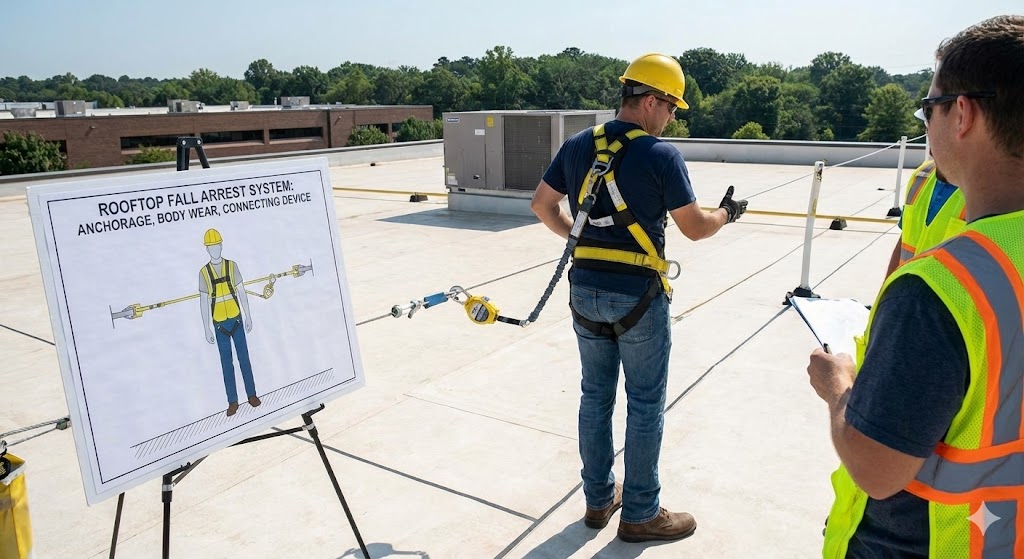
Key Components of a Rooftop Fall Arrest System
A rooftop fall arrest system works only when all components function together as a single unit.
Anchorage Points
Anchorage points are secure locations where the system is attached to the roof structure. These may include fixed roof anchors, structural beams, or end anchors of horizontal lifeline systems.
Anchors must be installed on stable structures and rated to withstand fall arrest loads.
Fall Arrest Cables and Lifelines
Fall arrest cables or lifelines allow workers to move across the roof while staying connected to the system. In many rooftop applications, horizontal lifelines are used to provide lateral movement along edges or work paths.
These systems often include shock absorbing elements to control forces during a fall.
Full Body Harness
Workers must wear a full body harness when using rooftop fall arrest systems. The harness distributes fall forces across the shoulders, thighs, and pelvis, reducing the risk of injury.
Harnesses connect to lifelines or cables using approved connectors.
Connecting Devices and Energy Absorbers
Connecting devices link the harness to the lifeline or anchorage. These include lanyards with shock absorbers and self retracting lifelines.
Energy absorption is critical to reduce the force applied to both the worker and the roof structure during fall arrest.
How a Rooftop Fall Arrest System Works
The system follows a controlled sequence during use.
- The worker wears a properly fitted full body harness.
- The harness connects to a fall arrest cable or lifeline.
- The lifeline is anchored to certified rooftop anchor points.
- During normal work, the system allows free movement.
- If a fall occurs, the system activates immediately.
- Shock absorbing elements deploy or lifeline deflection controls the fall.
- The fall is arrested within a safe distance.
- The worker remains suspended until rescue is completed.
This process prevents workers from reaching ground level and significantly reduces injury risk.
Typical Rooftop Applications
Rooftop fall arrest systems are widely used by construction and maintenance teams for:
- Roof slab and sheet installation
- Equipment servicing such as HVAC units
- Electrical and solar panel work
- Waterproofing and roofing repairs
- Structural inspections
- Cleaning and maintenance activities
These systems provide consistent safety across different phases of a project.
Fall Arrest Systems vs Roof Fall Prevention Systems
It is important to understand the difference between fall arrest and fall prevention.
- Roof fall prevention systems stop workers from reaching a fall hazard. These include guardrails and restraint systems.
- Roof fall arrest systems allow access to hazardous areas but stop a fall after it occurs.
Construction and maintenance teams often rely on fall arrest systems when prevention measures are not practical due to temporary work conditions.
Inspection and Maintenance Responsibilities
Rooftop fall arrest systems must be inspected to remain reliable.
Inspection Requirements
- Visual inspection before each use by the worker
- Periodic inspection by a competent person
- Annual inspection by a qualified safety inspector
Cables, anchors, connectors, and harnesses must be checked for wear, corrosion, deformation, or damage. Any defective component must be removed from service immediately.
Importance of Rescue Planning for Rooftop Work
Stopping a fall is only part of the safety process. After fall arrest, the worker must be rescued promptly to prevent suspension related injuries.
Construction and maintenance teams should have:
- A documented rescue plan
- Trained personnel for rescue operations
- Access to descent or rescue equipment
- Clear communication procedures
Rescue planning ensures that fall protection systems provide complete safety coverage.
Choosing the Right Rooftop Fall Arrest System
Selecting the right system depends on:
- Roof structure and material
- Frequency of access
- Number of workers using the system
- Distance from roof edges
- Environmental conditions such as weather exposure
A site specific assessment helps ensure the system meets safety and operational needs.
Conclusion
A rooftop fall arrest system is a critical safety solution for construction and maintenance teams working at height. By combining secure anchorage, fall arrest cables, full body harnesses, and energy absorbing connectors, these systems protect workers from serious fall injuries.
Understanding how rooftop fall arrest systems work helps teams operate safely, meet compliance requirements, and maintain productivity during roof based tasks.
Every worker deserves safety. Contact or enquire now with Indian Inovatix for certified rooftop fall arrest systems, technical guidance, and customized roof safety solutions.
Frequently Asked Questions
1. What is a rooftop fall arrest system
A rooftop fall arrest system is a safety setup that stops a worker from falling off a roof after a fall begins. It limits fall distance and reduces injury risk.
2. Who should use rooftop fall arrest systems
Construction workers, maintenance teams, technicians, and contractors who work on rooftops near unprotected edges should use these systems.
3. How is rooftop fall protection different from fall prevention
Rooftop fall protection includes both prevention and arrest methods. Fall prevention restricts access to hazards, while fall arrest allows access but stops a fall if it occurs.
4. What components are required in a rooftop fall arrest system
A complete system includes anchorage points, fall arrest cables or lifelines, connectors with energy absorbers, and a full body harness.
5. Can rooftop fall arrest systems be used for maintenance work
Yes. These systems are widely used for HVAC servicing, solar installation, inspections, waterproofing, and general roof maintenance.
6. Are rooftop fall arrest systems suitable for all roof types
They can be designed for flat roofs, sloped roofs, metal sheet roofs, and concrete roofs when properly engineered for the structure.
7. How often should rooftop fall arrest systems be inspected
They should be checked before each use, inspected periodically by a competent person, and inspected annually by a qualified safety inspector.
8. Is rescue planning required when using fall arrest systems
Yes. A rescue plan is essential to safely retrieve a worker after a fall and prevent suspension related injuries.
9. What happens if a fall arrest system is involved in a fall
Any component involved in arresting a fall must be removed from service and inspected or replaced as per safety guidelines.
10. Are rooftop fall arrest systems mandatory
They are required wherever workers are exposed to fall hazards and fall prevention measures cannot eliminate the risk.

Categories
Latest Post
- September 12, 2026 Work at Height Rules India: What Employers Need to Know in 2026
- September 5, 2026 Coconut Tree Climber Machine Buying Guide for Indian Farmers
- August 29, 2026 Best Safety Harness for Construction: How to Choose the Right One

Corporate Profile
Download CatalogueTalk to Our Safety & Protection Specialists
Have questions or need guidance? Our experts can help you choose the most reliable and high-performance safety solutions tailored to your industry and site requirements.
-

- Call Us +91-8849452638
Need Help Determining the Right Fall Protection for You?
With our vast experience, our experts will assist you in selecting the most relevant system for your needs.