April 16, 2026
A safety harness is often the last line of defense in a fall situation. Yet many industries continue using harnesses beyond their safe working life, increasing the risk of failure and non-compliance. Understanding full body harness lifespan is essential for preventing accidents and ensuring worker safety.
Incorrect usage, environmental exposure, and lack of inspection can weaken harness components over time. This leads to hidden risks that may not be visible during routine checks.
What Is the Typical Full Body Harness Lifespan
A full body harness lifespan typically ranges from 3 to 5 years, depending on usage conditions, environmental exposure, and inspection frequency.
Manufacturers define lifespan based on material durability, load-bearing capacity, and compliance with standards such as EN 361 and IS 3521. However, actual lifespan varies based on site conditions.
Factors influencing lifespan include:
- Frequency of use in daily operations
- Exposure to chemicals, UV rays, and moisture
- Load stress and fall incidents
- Storage and handling conditions
- Maintenance and inspection practices
In a large EPC project monitored by Indian Inovatix Ltd., harnesses used in outdoor environments showed wear 40% faster due to UV exposure compared to indoor use.
This shows lifespan is condition-based, not fixed.
When to Replace Safety Harness Immediately
A safety harness must be replaced immediately if it shows signs of damage, has been involved in a fall, or fails inspection criteria.
Delaying replacement increases the risk of failure during critical moments. Standards such as EN 361 and OSHA require immediate removal under certain conditions.
Replace the harness if:
- It has arrested a fall
- Webbing shows cuts, fraying, or burns
- Stitching is loose or broken
- Metal components are deformed or corroded
- Labels and identification tags are missing
Indian Inovatix Ltd. follows strict inspection protocols to ensure harnesses meet compliance requirements before use.
Immediate replacement is always safer than risk-based continuation.
Why Harness Lifespan Varies Across Industries
Harness lifespan varies because different industries expose equipment to different levels of stress, environment, and usage frequency.
In construction, harnesses face dust, abrasion, and frequent movement. In oil and gas, exposure to chemicals and extreme conditions accelerates wear.
Industry-based differences:
- Construction: High wear due to rough handling
- Oil and Gas: Chemical and environmental exposure
- Telecom: Moderate wear with vertical climbing stress
- Manufacturing: Lower wear in controlled environments
At ISRO-supported installations, Indian Inovatix Ltd. observed longer harness life due to controlled usage and strict inspection schedules.
This highlights the importance of environment-specific evaluation.
How to Inspect a Safety Harness for Lifespan Assessment
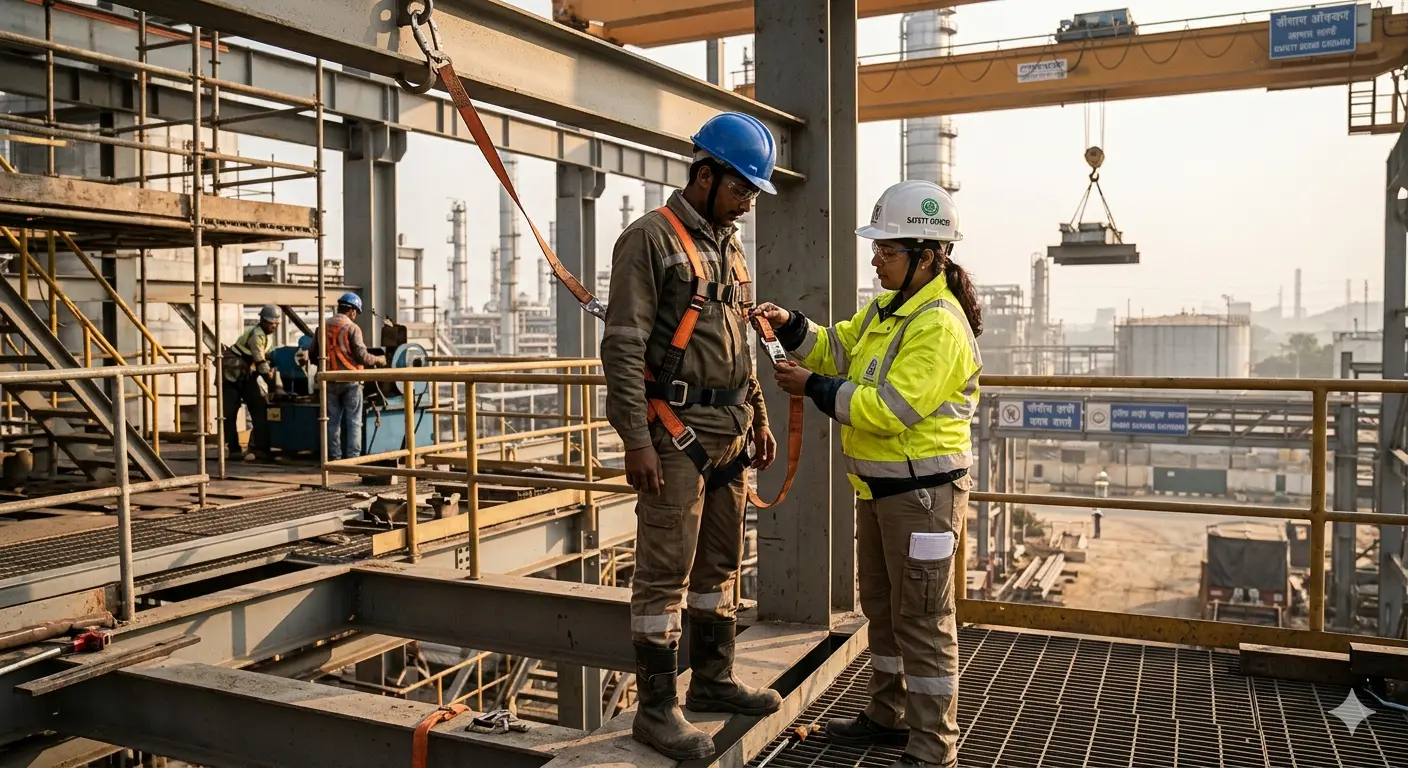
A safety harness must be inspected regularly to determine if it is still safe for use.
Follow this inspection process:
- Check webbing for cuts, abrasion, or discoloration
- Inspect stitching for loosening or breakage
- Examine D-rings and buckles for deformation
- Verify label readability and certification details
- Check for chemical or heat damage
- Confirm no previous fall impact
According to IS 3521 and EN standards, inspections must be conducted by a competent person at regular intervals.
Indian Inovatix Ltd., Ahmedabad, provides guidance to ensure inspection compliance across industries.
Proper inspection extends safe usage and prevents unexpected failures.
Harness vs Other Fall Protection Equipment Lifespan
Different fall protection components have different lifespans based on their function and exposure.
| Equipment | Typical Lifespan | Replacement Trigger |
| Full Body Harness | 3 to 5 years | Damage or fall event |
| Lanyard | 2 to 3 years | Energy absorber deployment |
| Retractable Fall Arrester | 5 to 10 years | Fall event or internal damage |
| Anchor System | 10+ years | Structural inspection failure |
While harnesses may last several years, their lifespan depends heavily on inspection and usage conditions.
Selecting compatible systems improves overall safety performance.
Real Use Case: Construction Site Safety Audit
A high-rise construction project in Gujarat conducted a safety audit after minor wear issues were reported.
Challenge:
Several harnesses appeared usable but had faded webbing and minor abrasion.
Solution:
Indian Inovatix Ltd. performed detailed inspection and recommended replacement of 60% of harnesses due to compromised integrity.
Result:
- Improved compliance with EN standards
- Reduced risk of equipment failure
- Successful audit clearance
This case shows that early replacement prevents major safety incidents.
Key Takeaways
- full body harness lifespan depends on usage, environment, and inspection
- Typical lifespan is 3 to 5 years under normal conditions
- Harness must be replaced immediately after a fall or visible damage
- Regular inspection ensures compliance with EN and IS 3521 standards
- Indian Inovatix Ltd., Ahmedabad, provides certified safety solutions
FAQs
How long does a full body harness last
A full body harness typically lasts 3 to 5 years under normal conditions. Lifespan depends on usage and environment. Regular inspection is essential.
When to replace safety harness equipment
A safety harness should be replaced after a fall or if damage is detected. Inspection failures also require replacement. This ensures safety compliance.
Can a harness be used after a fall
No, a harness must not be used after a fall. Internal damage may not be visible. Replacement is mandatory.
What standards apply to safety harness lifespan
Standards such as EN 361, IS 3521, and OSHA define safety requirements. These include inspection and replacement guidelines.
How often should harness inspection be done
Inspection should be done before each use and periodically by a competent person. This ensures early detection of damage.
Do harnesses last longer indoors
Yes, indoor use reduces exposure to UV and harsh conditions. This can extend lifespan compared to outdoor use.
What should companies in Ahmedabad follow for harness safety
Companies in Ahmedabad should follow IS standards and consult certified manufacturers like Indian Inovatix Ltd. for compliance and replacement planning.
Is expiry date enough to decide replacement
No, expiry date alone is not enough. Condition-based inspection is equally important for safety decisions.
Conclusion
A safety harness is a critical component of any fall protection system. Understanding its lifespan and replacement criteria ensures worker safety and compliance with regulations.
Indian Inovatix Ltd., Ahmedabad, Gujarat, India, combines manufacturing expertise with certified systems to deliver reliable fall protection solutions across industries.
Protect Your Workforce with Timely Harness Replacement
A worn harness can fail when it matters most.
Connect with Inovatix to schedule inspection support or request certified replacement harness systems today.

Categories
Latest Post
- September 12, 2026 Work at Height Rules India: What Employers Need to Know in 2026
- September 5, 2026 Coconut Tree Climber Machine Buying Guide for Indian Farmers
- August 29, 2026 Best Safety Harness for Construction: How to Choose the Right One

Corporate Profile
Download CatalogueTalk to Our Safety & Protection Specialists
Have questions or need guidance? Our experts can help you choose the most reliable and high-performance safety solutions tailored to your industry and site requirements.
-

- Call Us +91-8849452638
Need Help Determining the Right Fall Protection for You?
With our vast experience, our experts will assist you in selecting the most relevant system for your needs.