April 23, 2026
Confined space work remains one of the highest-risk operations across Indian industries. Workers entering tanks, manholes, and silos face limited access, poor ventilation, and difficult rescue conditions. Without proper equipment, a single incident can escalate into a fatal emergency.
The cost of unsafe confined space entry includes regulatory penalties under the Factories Act 1948, project shutdowns, and serious injury risks. Rescue delays often occur because access systems are not designed for quick retrieval.
The solution lies in selecting the right system. A confined space tripod selection ensures safe entry, stable anchorage, and efficient rescue. Indian Inovatix Ltd., Ahmedabad, Gujarat, India, designs and manufactures certified tripod systems used across industrial and infrastructure projects nationwide.
What is a Confined Space Tripod and Why is it Required
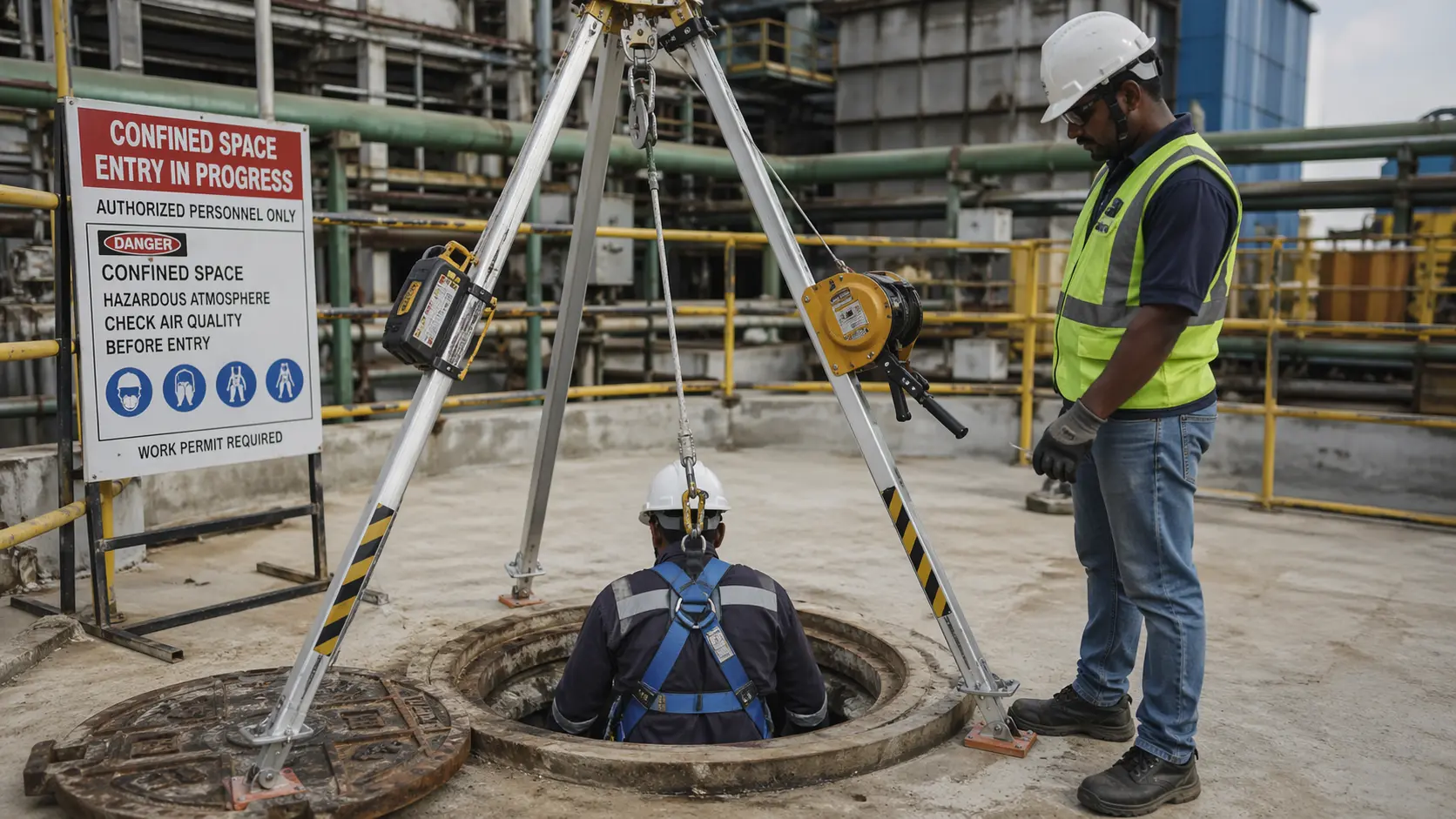
A confined space tripod is a portable anchorage system that supports safe entry, fall arrest, and rescue operations in vertical confined spaces such as manholes, tanks, and shafts.
Tripods act as primary anchorage points for lifelines, winches, and retrieval systems. According to EN 795 and IS safety guidelines, anchorage systems must handle dynamic loads during fall arrest and rescue operations.
A properly selected tripod ensures:
- Stable positioning over confined openings
- Load-bearing support for workers and rescue equipment
- Quick deployment during emergency retrieval
- Compliance with IS 3521 and EN 1496 standards
In a recent refinery maintenance project supported by Indian Inovatix Ltd., tripod-based rescue systems reduced emergency retrieval time by 40 percent during simulated drills.
A well-chosen tripod directly improves rescue efficiency and compliance readiness.
How to Choose the Right Confined Space Tripod
Selecting the correct tripod depends on load requirements, site conditions, and compliance standards. The system must match both operational and emergency scenarios.
What load capacity should a confined space tripod support
A confined space tripod must support combined loads of the worker, equipment, and dynamic forces during fall arrest or rescue, typically ranging between 500 kg to 1000 kg depending on certification standards.
Load capacity must consider:
- Worker weight with PPE
- Attached equipment like winches or SRLs
- Dynamic arrest forces measured in kN
- Safety factor as per EN and ANSI standards
Ignoring load calculations leads to system failure during rescue operations.
Which material is best for tripod durability
Tripods are commonly made from aluminium alloy or steel, with aluminium preferred for portability and corrosion resistance in Indian industrial environments.
Material selection impacts:
- Weight and ease of transport
- Resistance to corrosion in chemical plants
- Long-term durability in outdoor conditions
Indian Inovatix Ltd. uses high-grade aluminium alloys tested for industrial environments across India.
What height and adjustability features are required
Tripods must have adjustable legs to accommodate different confined space openings and uneven surfaces.
Key considerations include:
- Adjustable height range for varied depths
- Locking mechanisms for stability
- Anti-slip rubber feet for uneven ground
In infrastructure projects, adjustable tripods ensure proper alignment over irregular manhole openings.
Which safety standards should the tripod comply with
Tripods must comply with EN 795, EN 1496, ANSI Z359, and relevant IS standards for confined space safety systems.
Compliance ensures:
- Certified load testing
- Reliable performance under stress
- Audit readiness for safety inspections
Indian regulations under the Factories Act 1948 require proper safety systems for confined space entry.
Confined Space Tripod vs Other Anchorage Systems
A confined space tripod is ideal for vertical entry rescue, while other systems may suit different applications.
| Feature | Tripod System | Davit Arm System | Fixed Anchorage |
| Portability | High | Medium | Low |
| Setup Time | Quick | Moderate | Fixed installation |
| Best Use Case | Temporary confined space entry | Frequent industrial use | Permanent sites |
| Load Capacity | High | Very High | Depends on structure |
| Flexibility | Adjustable | Semi-adjustable | None |
Tripods are preferred for mobile operations across multiple sites, especially in construction and municipal maintenance.
Key Specifications to Check Before Buying a Tripod
A confined space tripod must meet specific technical parameters to ensure safe operation.
Specification Callout
| Parameter | Typical Value |
| Load Capacity | Up to 1000 kg |
| Material | Aluminium alloy |
| Height Range | 1.5 m to 2.5 m |
| Weight | 15 kg to 25 kg |
| Standards | EN 795, EN 1496 |
| Accessories | Winch, SRL, pulley system |
These specifications directly impact safety and usability in real conditions.
Indian Inovatix Ltd., Ahmedabad, Gujarat, India manufactures tripod systems tested for high-load rescue scenarios and harsh industrial environments.
Real Use Case: Tripod Rescue System in Oil and Gas Site
A confined space tripod system is critical in oil and gas tank maintenance where vertical entry and rapid rescue are required.
In an oil storage facility project, Indian Inovatix Ltd. supplied tripod systems for tank entry operations. The challenge involved deep vertical access and hazardous gas exposure.
Solution implemented:
- Aluminium tripod with 1000 kg load capacity
- Integrated winch system for controlled descent
- Full body harness compliant with EN 361
- Rescue retrieval setup for emergency extraction
Result:
- Faster entry and exit operations
- Improved compliance during safety audits
- Zero incident record during maintenance period
This demonstrates how proper tripod selection directly impacts worker safety.
Key Takeaways
- confined space tripod selection is critical for safe entry and rescue operations
- Always verify load capacity, material, and certification standards
- Aluminium tripods offer portability and durability in Indian conditions
- Compliance with EN, ANSI, and IS standards ensures audit readiness
- Indian Inovatix Ltd. provides tested and certified confined space solutions
Choosing Safety Over Risk Starts Here
Confined space operations demand reliable rescue systems. The right tripod ensures safe entry and quick emergency response.
Connect with Indian Inovatix Ltd., Ahmedabad, Gujarat, India to request a site-specific tripod recommendation or bulk pricing for industrial applications.
FAQs
What is the ideal load capacity for a confined space tripod
A confined space tripod should support at least 500 kg to 1000 kg depending on application and standards. This includes worker weight and dynamic rescue loads. Always select systems certified under EN or ANSI standards.
Which standards apply to tripod for confined space India
Tripods used in India should comply with EN 795, EN 1496, and relevant IS safety guidelines. The Factories Act 1948 mandates safe systems for confined space entry and rescue operations.
Can one tripod be used across multiple sites
Yes, aluminium tripods are portable and designed for multi-site use. They are widely used in construction, municipal work, and industrial maintenance across India.
What accessories are required with a tripod system
A complete system includes a winch, self-retracting lifeline, pulley, and full body harness. These components ensure safe entry and emergency retrieval.
How long does it take to install a confined space tripod
A standard tripod can be deployed within 5 to 10 minutes by trained personnel. Quick setup is essential for emergency response readiness.
Is tripod better than fixed anchorage systems
Tripods are better for temporary and mobile operations. Fixed systems are suitable for permanent installations but lack flexibility.
Where are confined space tripods commonly used in India
They are used in manholes, tanks, silos, sewage systems, and oil and gas facilities across cities like Ahmedabad, Mumbai, and Chennai.
How often should tripod systems be inspected
Tripods should be inspected before every use and undergo periodic checks as per EN standards. Regular inspection ensures reliability and compliance.


Talk to Our Safety & Protection Specialists
Have questions or need guidance? Our experts can help you choose the most reliable and high-performance safety solutions tailored to your industry and site requirements.
-

- Call Us +91-8849452638
Need Help Determining the Right Fall Protection for You?
With our vast experience, our experts will assist you in selecting the most relevant system for your needs.