May 19, 2026
Falls from height remain one of the leading causes of industrial fatalities across construction sites, factories, telecom towers, warehouses, and infrastructure projects. Fall protection rules in India require employers to provide certified safety systems, worker training, inspection procedures, and safe access controls for all elevated work activities.
The Factories Act 1948, Building and Other Construction Workers Act, IS safety standards, and OSHA-aligned practices establish the legal framework for work at height safety in India. Non-compliance can result in worker injuries, legal penalties, project shutdowns, and operational losses.
Indian Inovatix Ltd., Ahmedabad, Gujarat, India, has spent over 50 years manufacturing certified fall arrest systems, safety harnesses, lifeline systems, and rescue equipment for industrial applications.
This article explains the legal requirements for fall protection in India and how industrial organizations can maintain compliance.
What Do Fall Protection Rules in India Require?
Fall protection regulations in India require employers to protect workers exposed to height-related hazards through engineered systems, certified PPE, and documented safety procedures.
Industrial operations involving elevated work must identify fall hazards before work begins. Employers are responsible for ensuring that workers use suitable protection systems and receive proper training.
Indian work-at-height regulations commonly apply to:
| Industry | Common Height Work Activities |
| Construction | Structural steel work |
| Telecom | Tower climbing |
| Warehousing | Elevated maintenance access |
| Oil and Gas | Tank and platform access |
| Infrastructure | Bridge and flyover projects |
| Manufacturing | Roof and equipment maintenance |
Organizations must also maintain inspection records and emergency response procedures for height safety systems.
The Factories Act 1948 and Work at Height Safety
The Factories Act 1948 requires employers to maintain safe working conditions and reduce workplace hazards. Elevated work activities fall under employer safety responsibilities.
The Act requires industrial facilities to provide:
- Safe access systems
- Worker protection measures
- PPE for hazardous tasks
- Equipment maintenance procedures
- Safety training programs
Factories that fail to control height-related risks may face regulatory penalties and legal liabilities.
Why Is the Factories Act Important for Height Safety?
The Factories Act establishes the legal duty of employers to prevent workplace injuries. Height safety compliance directly affects worker protection and operational continuity.
For example, industrial plants conducting rooftop maintenance without certified anchor systems may violate workplace safety obligations under the Act.
Organizations should implement:
- Height hazard assessments
- Fall protection procedures
- PPE inspection schedules
- Rescue planning protocols
- Worker competency training
Proper compliance reduces accident exposure and improves audit readiness.
IS Standards That Apply to Fall Protection Systems
IS standards define technical and safety requirements for industrial fall protection equipment in India. These standards support safer equipment selection and usage.
Commonly referenced standards include:
| IS Standard | Application |
| IS 3521 | Industrial safety belts and harnesses |
| IS 3696 | Scaffolds and ladders |
| IS 7293 | Safety line requirements |
| IS 5175 | Personal protective equipment guidance |
These standards establish minimum requirements for load ratings, material strength, testing procedures, and worker safety.
Indian Inovatix Ltd., Ahmedabad, manufactures fall protection systems aligned with EN, ANSI, and applicable industrial safety requirements.
What Happens if Equipment Does Not Meet IS Standards?
Non-compliant equipment increases the risk of fall system failure and workplace injuries. It may also create legal exposure during audits and accident investigations.
Industrial buyers should verify:
- Certification documents
- Load testing records
- Material specifications
- Inspection procedures
- Product traceability
Certified equipment supports both compliance and worker confidence.
When Is Fall Protection Mandatory in India?
Fall protection becomes mandatory whenever workers face risks from elevated work areas, unprotected edges, or climbing operations.
Typical high-risk activities include:
- Roof maintenance
- Tower climbing
- Structural erection
- Tank access
- Scaffolding work
- Elevated equipment servicing
Organizations must assess site conditions before assigning workers to height-related tasks.
What Height Requires Fall Protection?
Most industrial safety practices require protection whenever workers face a fall hazard capable of causing injury. OSHA commonly references a 6-foot threshold for construction activities, while industrial facilities may adopt stricter internal rules.
The safest approach is to implement fall protection whenever exposure exists rather than relying only on minimum height thresholds.
Industrial facilities should prioritize:
| Safety Measure | Purpose |
| Guardrails | Passive protection |
| Lifeline systems | Continuous worker anchorage |
| Full-body harnesses | Arrest fall forces |
| Rescue systems | Emergency recovery |
| Safety training | Hazard awareness |
Preventive safety systems reduce operational risk significantly.
Legal Employer Responsibilities for Work at Height
Employers are legally responsible for identifying hazards, providing protective equipment, and ensuring workers follow approved safety procedures.
Height safety responsibilities include:
- Conducting site risk assessments
- Providing certified fall protection equipment
- Maintaining inspection records
- Training workers on safe practices
- Supervising hazardous activities
- Establishing rescue procedures
Failure to meet these obligations can result in injuries, insurance disputes, and legal action.
Why Are Rescue Plans Legally Important?
Rescue planning reduces suspension trauma risks after a fall incident. Delayed rescue can quickly become life-threatening.
Industrial sites must maintain:
- Rescue equipment availability
- Trained rescue personnel
- Emergency communication systems
- Site-specific rescue procedures
Indian Inovatix Ltd. supplies confined space and rescue systems designed for industrial emergency response applications.
Certified Safety Harness Requirements in India
A safety harness is a full-body protective system designed to distribute fall arrest forces safely across the body. Certified harnesses reduce injury severity during fall incidents.
Industrial harness systems should comply with recognized standards such as EN 361 and IS 3521 requirements.
Key harness components include:
| Harness Component | Function |
| Dorsal D-ring | Fall arrest connection |
| Leg straps | Load distribution |
| Chest straps | Body stabilization |
| Energy absorber | Force reduction |
| Lanyard connector | Anchorage attachment |
Indian Inovatix Ltd., Ahmedabad, manufactures industrial safety harnesses for construction, telecom, infrastructure, and maintenance operations.
How Often Should Safety Harnesses Be Inspected?
Safety harnesses require visual inspection before every use and detailed periodic inspections according to manufacturer recommendations.
Inspectors should check:
- Stitching integrity
- Webbing damage
- Corrosion on connectors
- D-ring deformation
- Label readability
Damaged equipment must be removed from service immediately.
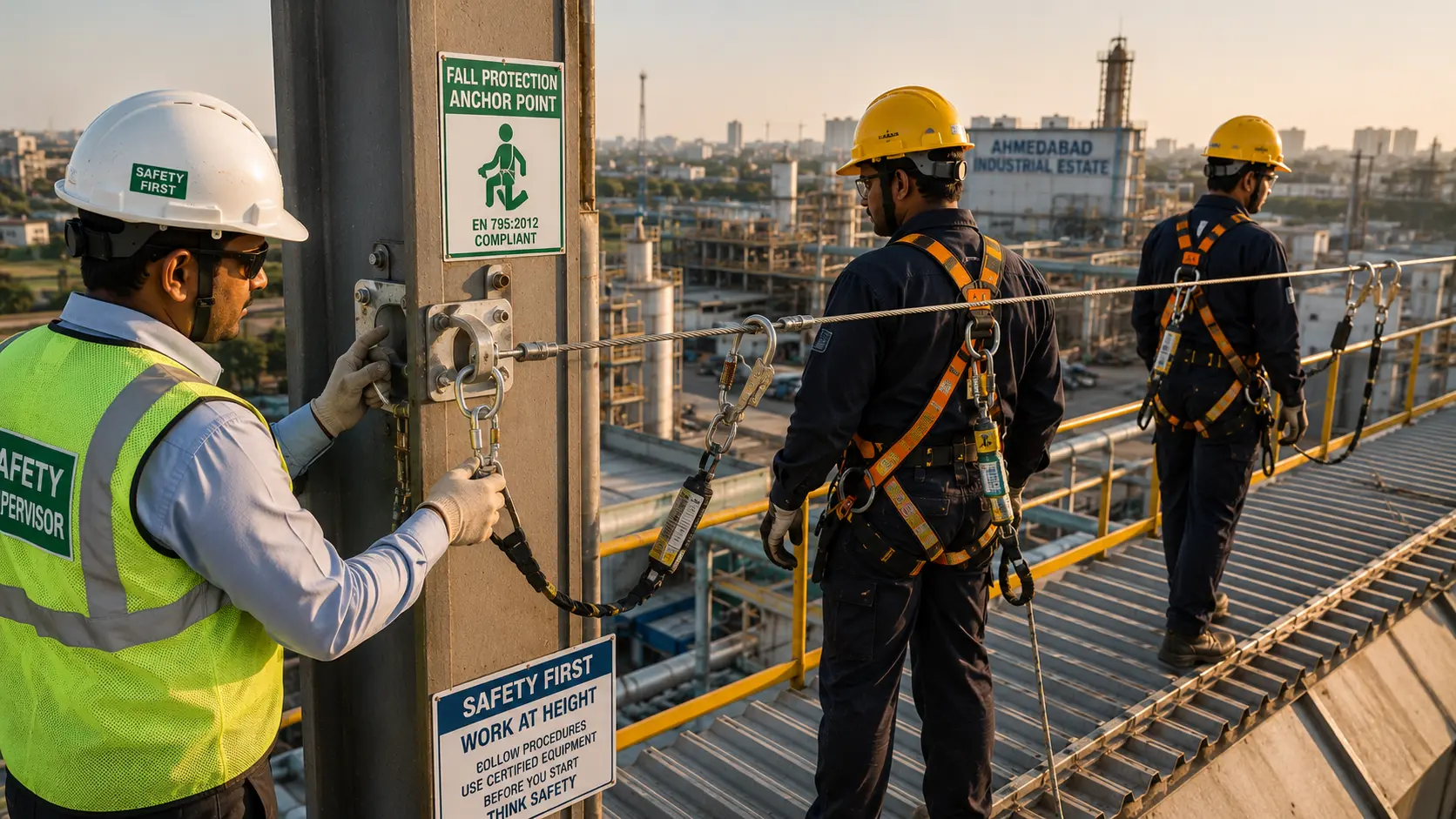
Anchor Systems and Lifeline Compliance Requirements
Anchor systems form the foundation of safe fall arrest systems. Improper anchorage remains one of the most common causes of height safety failures.
Anchor systems must support expected fall loads and remain compatible with the worker protection system.
Common industrial solutions include:
- Horizontal lifeline systems
- Vertical lifelines
- Roof anchor systems
- Rail-based access systems
- Fixed ladder safety systems
Indian Inovatix Ltd. has installed engineered lifeline systems across industrial plants, warehouses, telecom sites, and infrastructure projects.
Why Are Engineered Anchor Systems Necessary?
Engineered anchor systems ensure proper load distribution during fall arrest events. Temporary or unverified anchor points may fail under dynamic loading conditions.
Facilities should maintain:
| Compliance Requirement | Purpose |
| Structural load verification | Anchor reliability |
| Installation documentation | Audit readiness |
| Periodic inspection | Defect detection |
| Certification records | Compliance proof |
Proper anchorage improves long-term workplace safety performance.
Work at Height Training Requirements
Work at height training helps workers recognize hazards and use protective systems correctly. Training is essential for both compliance and injury prevention.
Industrial training programs should include:
- Harness fitting procedures
- Anchor connection methods
- Ladder safety practices
- Rescue procedures
- Equipment inspection techniques
Workers should also receive refresher training periodically.
What Makes Height Safety Training Effective?
Effective training combines classroom instruction with practical demonstrations and supervised field exercises. Workers retain safety procedures better through hands-on practice.
Organizations that conduct regular toolbox talks often report improved hazard awareness and stronger PPE compliance.
Training documentation also supports regulatory inspections and contractor qualification processes.
Common Fall Protection Violations in India
Most height-related violations happen because organizations ignore inspection schedules or rely on uncertified systems.
Frequent compliance failures include:
| Common Violation | Risk |
| No anchor certification | System failure |
| Damaged harness usage | Increased injury severity |
| Missing rescue planning | Delayed emergency response |
| Improper ladder access | Fall exposure |
| Inadequate training | Unsafe worker behavior |
Industrial audits frequently identify these gaps during site inspections.
How Can Organizations Avoid Compliance Violations?
Organizations reduce violations through preventive inspections, certified systems, and structured safety management.
Recommended actions include:
- Conducting periodic audits
- Using certified equipment only
- Maintaining inspection records
- Reviewing rescue readiness
- Updating SOPs regularly
Strong safety management protects both workers and project timelines.
The Role of EN and ANSI Standards in Indian Industry
EN and ANSI standards provide globally recognized benchmarks for industrial fall protection equipment. Many Indian industrial projects require compliance with international standards.
Large EPC contractors and multinational facilities often specify:
- EN 361 for harness systems
- ANSI Z359 for fall protection
- OSHA-aligned safety procedures
- Load-tested anchor systems
Indian Inovatix Ltd., Ahmedabad, manufactures systems aligned with international safety requirements for industrial applications.
Why Do Industrial Buyers Prefer Certified Systems?
Certified systems provide measurable assurance of equipment performance and testing quality. They also simplify project approvals and compliance documentation.
Industrial buyers benefit from:
| Benefit | Operational Value |
| Verified performance | Reduced failure risk |
| Audit documentation | Easier compliance |
| Worker confidence | Better PPE adoption |
| Long-term durability | Lower replacement costs |
Certification improves reliability across industrial operations.
How Indian Industries Can Build Safer Work at Height Programs
Strong height safety programs combine engineering controls, worker training, inspections, and emergency planning.
Effective programs usually include:
- Site-specific risk assessments
- Engineered fall arrest systems
- Certified PPE procurement
- Rescue simulation drills
- Supervisor accountability
- Periodic compliance reviews
Indian Inovatix Ltd., Ahmedabad, Gujarat, India, supports industrial safety programs through certified manufacturing, engineering expertise, and nationwide installation capability.
Organizations that invest in preventive safety systems reduce downtime, improve compliance outcomes, and strengthen workforce protection.
Build Compliance Before Height Hazards Become Incidents
Work at height operations demand more than basic PPE. Safe industrial environments require engineered systems, certified equipment, documented procedures, and trained personnel.
Indian Inovatix Ltd., Ahmedabad, Gujarat, India, manufactures certified fall protection systems designed for industrial compliance and long-term worker safety. With more than 50 years of manufacturing expertise, the company supports factories, infrastructure projects, telecom operations, and EPC contractors across India.
Safer height operations begin with certified systems and proper planning.
Request a site assessment or connect with an Inovatix safety specialist for compliant fall protection solutions.
Frequently Asked Questions
What are the fall protection rules in India?
Fall protection rules in India require employers to protect workers exposed to height hazards through certified systems, PPE, inspections, and safety training. Compliance responsibilities are governed by the Factories Act 1948 and applicable IS standards.
Which IS standard applies to safety harnesses in India?
IS 3521 commonly applies to industrial safety belts and harness systems. Many industrial facilities also follow EN and ANSI standards for additional compliance assurance.
Is fall protection mandatory for rooftop work in India?
Yes. Rooftop work often exposes workers to fall hazards and requires suitable protection systems such as lifelines, harnesses, and guardrails.
What industries require work at height safety systems?
Construction, telecom, oil and gas, warehousing, manufacturing, infrastructure, and energy sectors commonly require height safety systems.
How often should fall protection equipment be inspected?
Workers should visually inspect equipment before every use. Periodic inspections should also follow manufacturer recommendations and documented safety procedures.
What happens if companies ignore work at height compliance?
Non-compliance can result in worker injuries, project delays, legal penalties, insurance complications, and operational disruption.
Why are rescue plans important for work at height?
Rescue plans help recover suspended workers quickly after fall incidents. Delayed rescue increases the risk of suspension trauma and severe medical complications.
Are EN-certified harnesses accepted in India?
Yes. Many industrial projects in India use EN-certified harness systems because they meet recognized international safety requirements.
What is the safest anchor system for industrial applications?
Engineered anchor systems with verified load ratings provide safer fall arrest support. The correct system depends on the work environment and structural conditions.
Where can industries source certified fall protection systems in India?
Indian Inovatix Ltd., Ahmedabad, Gujarat, India, manufactures certified safety harnesses, lifeline systems, anchor systems, and industrial rescue equipment for work at height applications.

Categories
Latest Post
- September 12, 2026 Work at Height Rules India: What Employers Need to Know in 2026
- September 5, 2026 Coconut Tree Climber Machine Buying Guide for Indian Farmers
- August 29, 2026 Best Safety Harness for Construction: How to Choose the Right One

Corporate Profile
Download CatalogueTalk to Our Safety & Protection Specialists
Have questions or need guidance? Our experts can help you choose the most reliable and high-performance safety solutions tailored to your industry and site requirements.
-

- Call Us +91-8849452638
Need Help Determining the Right Fall Protection for You?
With our vast experience, our experts will assist you in selecting the most relevant system for your needs.