June 3, 2026
Every construction site in India carries daily risk. Falls from height, scaffold collapses, electrical faults, and excavation failures cause serious injuries and project shutdowns. Most of these accidents share one root cause: no structured construction site safety audit checklist India teams follow consistently.
For safety officers, EPC contractors, and compliance heads, a well-built checklist is not paperwork. It is an operational discipline. Indian Inovatix, as a certified manufacturer and supplier of fall protection systems, helps construction teams build audit-ready sites with certified equipment, documented processes, and trained people.
This guide gives you the exact checklist and the regulations behind it.
Why a Construction Safety Audit Checklist Matters in India
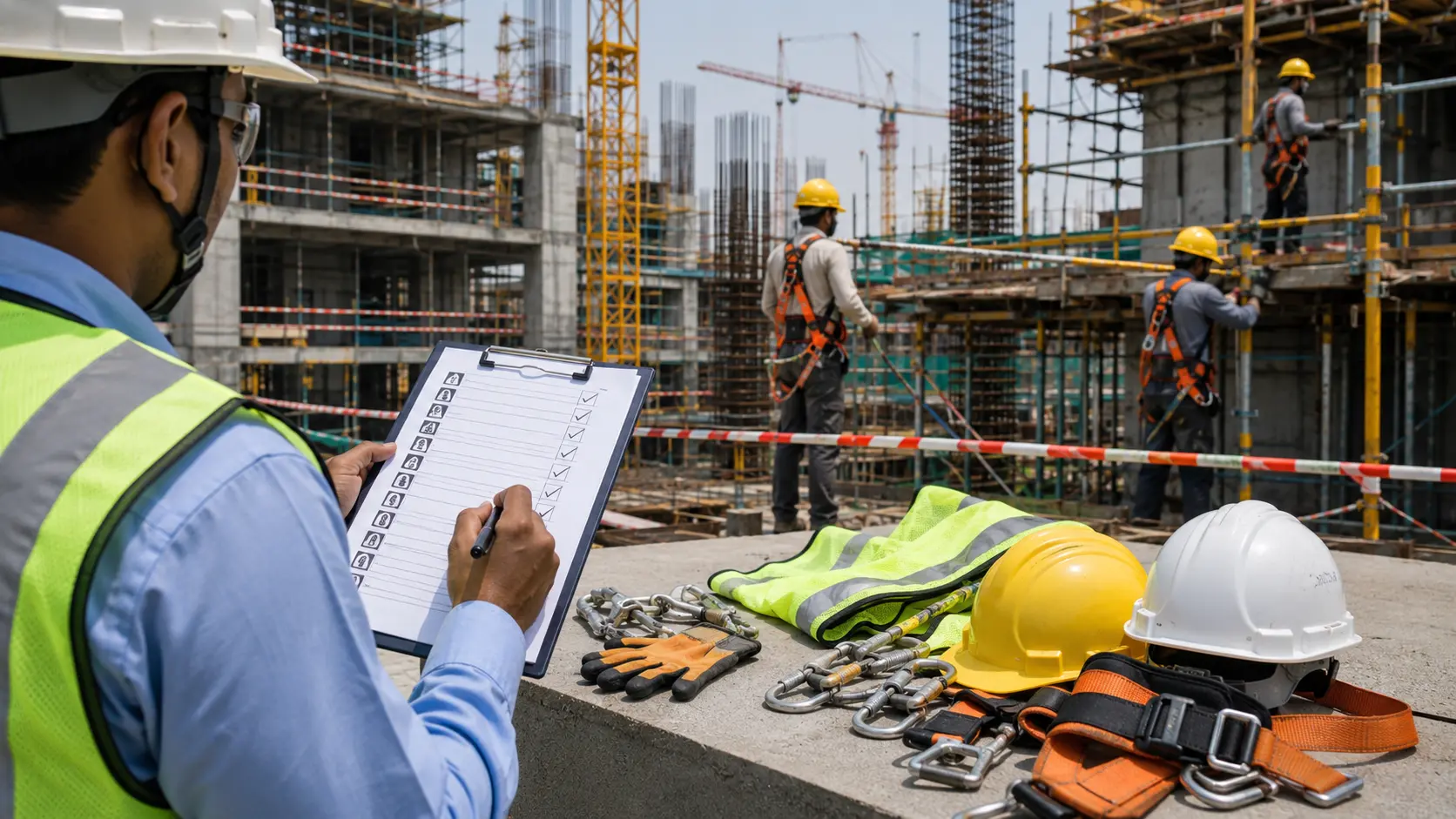
A well-crafted checklist acts as both a preventive and corrective tool. It ensures inspections are systematic, not dependent on memory or individual interpretation. By following a set sequence, safety officers can proactively spot potential hazards before they cause harm.
Beyond prevention, compliance carries real legal weight. Non-compliance with safety regulations can lead to severe legal consequences, including hefty fines, project shutdowns, and even criminal charges in cases of gross negligence. Accidents on site can also result in costly delays and increased insurance premiums.
In India, the Building and Other Construction Workers Act 1996 (BOCW Act) and the Occupational Safety, Health, and Working Conditions Code 2020 outline specific safety obligations. A checklist built around these regulations helps avoid penalties, litigation, and project delays.
Regulatory Standards Your Checklist Must Cover
Before using any checklist, align it to the correct legal and technical standards. Audits measured against these frameworks hold up during third-party inspections, client reviews, and labour department visits.
A comprehensive Indian construction safety checklist must ensure compliance with the BOCW Act 1996, DGFASLI guidelines, and relevant BIS codes. It covers BOCW registration, worker safety training, scaffolding inspection per IS 2750, electrical safety, PPE compliance, and excavation safety.
The core standards are:
- BOCW Act 1996 and Central Rules 1998: Governs worker safety, welfare, and working conditions on all construction sites
- IS 3696 and IS 2750: Indian Standards for scaffolding inspection and safety
- IS 14489:2018: Occupational health and safety audit standards for Indian industries
- National Building Code (NBC) 2016: Structural and safety benchmarks for construction
- OSHWC Code 2020: Updated occupational safety obligations for employers
Construction Site Safety Audit Checklist India: 6 Core Sections
This checklist covers critical inspection points across sections including Registration, Scaffolding, Excavation, PPE, Welfare, PPE Compliance Verification, and Fall Protection and Working at Heights. It is designed for site safety officers and project managers and should be completed daily or weekly.
1. Documentation and Registration
Start every audit at the site office. Missing documentation is an immediate compliance failure.
- BOCW registration certificate displayed at site entry
- Emergency contact numbers posted at key work areas
- SHE plan updated and accessible to all supervisors
- Worker registration and attendance records maintained
- First aid kit inventory signed and current
2. Fall Protection and Working at Heights
This is the highest-risk section on any Indian construction site. Labour departments, safety auditors, and third-party inspectors increasingly insist on documented risk assessments, method statements, and certification of fall protection systems. Compliance is not only a legal requirement but also a prerequisite for project approvals, insurance coverage, and client acceptance.
- Full-body harness provided for every worker above 1.8 meters
- Lanyard connected to a certified anchor point at all times
- Anchorage points load-tested and documented before use
- Lifeline systems installed on rooftops and steel structures
- Safety nets in place below elevated work areas
- Guardrails and toe boards on all open edges and floor openings
- PPE inspection log maintained for harnesses, lanyards, and connectors
- Rescue plan in place before any height work begins
Indian Inovatix manufactures and supplies full-body harnesses, self-retracting lifelines, horizontal lifeline systems, roof anchors, and safety nets for PEB, high-rise, and infrastructure project sites. All products carry valid test certifications ready for audit submission.
3. Scaffolding Safety
Inspect scaffolding against IS 2750 and IS 3696 requirements. Never allow work to begin on an uninspected structure.
- Scaffold erected by trained scaffolders only
- Base plates and sole boards in place under all standards
- Working platform fully boarded with no gaps over 25mm
- Guardrails at minimum 950mm height with mid-rail and toe board
- Scaffold tag system in use: green for safe, red for do not use
- Inspection record signed after every alteration or adverse weather
4. Excavation Safety
Excavation risk increases sharply during monsoon season. Monsoon audits need different focus areas than summer inspections. Adjust your safety audit checklist based on weather conditions and seasonal risks.
- Shoring or batter slopes used for depths over 1.2 meters
- Spoil and materials kept at least 1 meter from excavation edge
- Barriers and warning signs placed around all open excavations
- Underground service drawings reviewed before any digging
- Daily visual inspection of excavation walls for movement or cracking
5. PPE Compliance
Helmets, safety shoes, gloves, and harnesses must be worn by all workers during work at the site. These are required under construction safety rules to prevent fall and heavy equipment injuries.
- Hard hats worn by all persons on site including visitors
- Safety footwear with steel toe-cap and anti-slip sole in use
- High-visibility vests worn in all vehicle movement zones
- PPE issuance register maintained with worker signatures
6. Electrical Safety and Welfare
- All distribution boards fitted with residual current devices (RCDs)
- Lockout/Tagout (LOTO) procedures communicated to all workers
- No work permitted on energized circuits without authorization
- Drinking water, toilet facilities, and rest shelters available as per BOCW rules
- First aid kit accessible with trained first aider present on site
How to Conduct the Audit Correctly
The field-tested audit process starts at the site entrance. Check safety signage, emergency contact displays, and first aid facilities. Move systematically through each work area, following the workflow sequence. This approach ensures you do not miss critical safety connections between activities.
Arrive unannounced when possible. Photograph every hazard found with timestamps. Talk to workers directly. Workers often hesitate to report safety issues to management but will share concerns with approachable engineers. Issue a written report within 24 hours with named corrective action owners and firm deadlines.
Run inspections at defined triggers: start of shift, handover, major activities, and incident follow-up. Map each checklist item to the relevant standard clause for audit traceability.
Frequently Asked Questions
What is a construction site safety audit checklist in India?
It is a structured inspection tool used by safety officers and project managers to check site conditions, PPE usage, fall protection, scaffolding, excavations, and welfare facilities against BOCW Act, IS 3696, and NBC 2016 standards.
How often should a safety audit be done on an Indian construction site?
Daily basic inspections are recommended for active sites. A formal comprehensive audit covering all sections should run weekly. Third-party or client audits typically occur monthly or quarterly.
What fall protection is legally required under the BOCW Act?
Workers above 1.8 meters must be provided full-body harnesses, certified lanyards, and anchorage points. Safety nets, guardrails, and rescue plans are also required where applicable.
Can Indian Inovatix supply fall protection equipment for large project sites?
Yes. Indian Inovatix supplies harnesses, lifelines, safety nets, and anchorage systems for bulk orders. We support EPC contractors and infrastructure teams with site-specific recommendations and complete certification documentation.
Build a Safer Site Starting Today
Every worker on your site deserves certified protection, not improvised safety measures. A structured construction site safety audit checklist India gives your team a repeatable, documented process that protects workers, satisfies regulators, and builds client confidence.
Indian Inovatix designs and supplies fall protection systems trusted by EPC contractors, PEB consultants, and infrastructure companies across India.
Protect your workers with the right equipment. Request a quote, enquire for bulk project pricing, or speak with our safety specialists today.


Talk to Our Safety & Protection Specialists
Have questions or need guidance? Our experts can help you choose the most reliable and high-performance safety solutions tailored to your industry and site requirements.
-

- Call Us +91-8849452638
Need Help Determining the Right Fall Protection for You?
With our vast experience, our experts will assist you in selecting the most relevant system for your needs.