July 4, 2026
Falls, fires, structural failures, and emergency situations at height can leave workers with limited escape options. A properly selected emergency escape device India solution helps workers evacuate safely from elevated work locations when standard access routes become unavailable.
The consequences of inadequate evacuation planning can be severe. Delayed rescue operations, blocked exits, and non-compliant safety systems can lead to injuries, regulatory action, project delays, and operational disruption. These risks are especially significant in construction, telecom, power, infrastructure, and industrial facilities where work at height is common.
Emergency escape devices provide a controlled means of descent during emergencies. Indian Inovatix Limited, Ahmedabad, Gujarat, India manufactures certified height safety and emergency evacuation solutions that help organizations improve worker protection, regulatory compliance, and emergency preparedness.
Key Takeaways
- Emergency escape devices provide controlled evacuation from elevated work locations during emergencies.
- Indian regulations often require evacuation planning and rescue capability for work at height activities.
- Selecting compliant equipment supports worker safety and helps reduce operational risk.
- Understanding emergency escape device india requirements is important for safety officers, EPC contractors, and facility managers.
- Regular inspections, training, and evacuation drills are essential for effective emergency preparedness.
What Is an Emergency Escape Device?
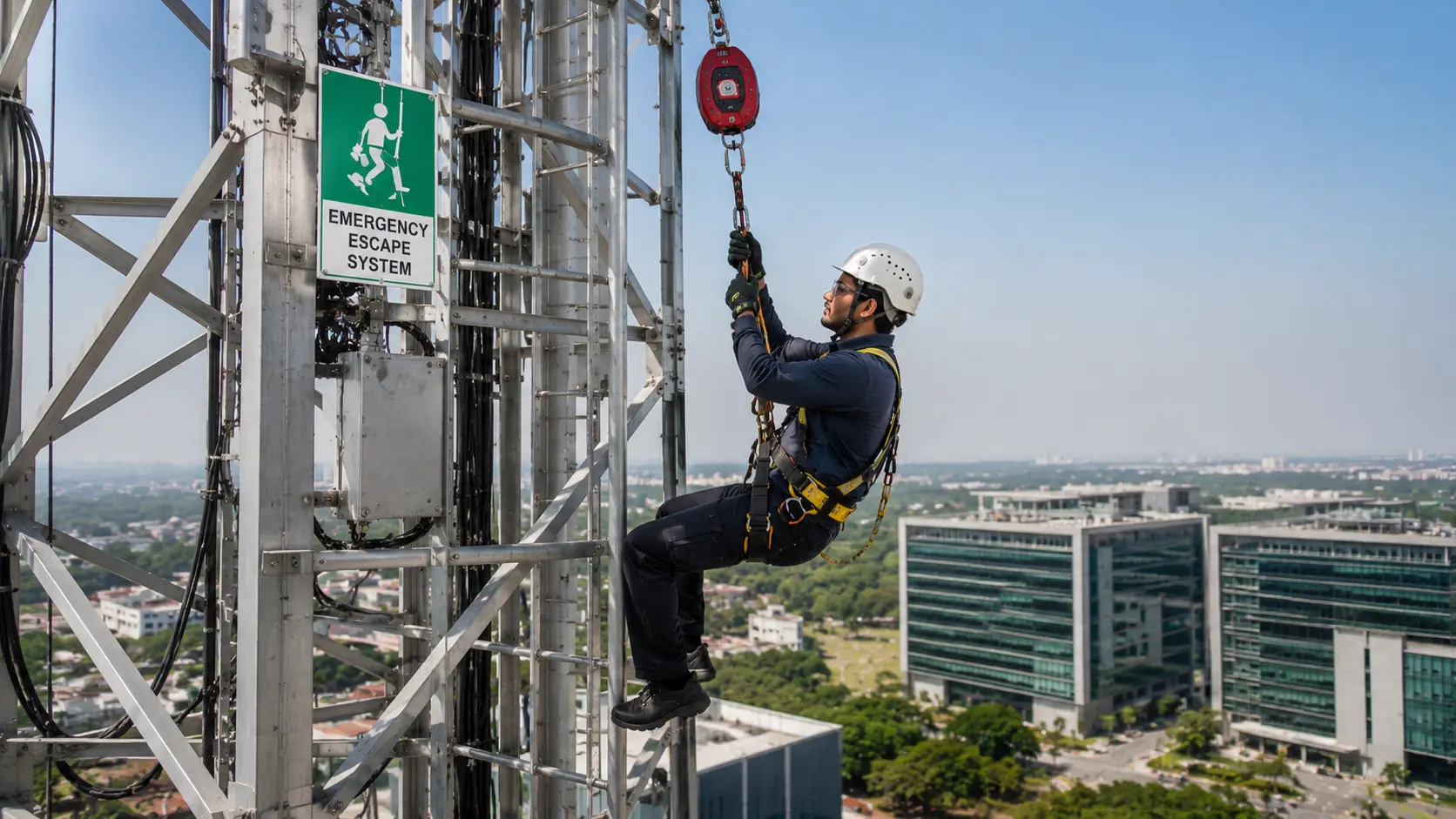
An emergency escape device is a controlled descent system designed to help workers evacuate safely from elevated locations during emergencies when normal access routes are unavailable.
These systems allow users to descend from structures such as towers, industrial platforms, high-rise buildings, wind turbines, chimneys, and elevated workstations.
Common applications include:
- Construction projects
- Telecom towers
- Industrial plants
- Oil and gas facilities
- Power generation sites
- High-rise maintenance operations
- Infrastructure projects
Emergency escape devices are typically designed to control descent speed while minimizing user effort and reducing evacuation risks.
After evacuation, workers can move to designated assembly points for accountability and emergency response coordination.
How Does an Emergency Escape Device Work?
An emergency escape device uses a controlled braking mechanism that regulates descent speed while supporting the user’s weight.
Most systems include:
- Descent device
- Rope or cable assembly
- Anchorage connection
- Harness attachment point
- Protective carrying bag
The worker connects the device to an approved anchor point and follows the manufacturer’s evacuation procedure.
Certified systems are designed to provide predictable and controlled evacuation under emergency conditions.
When Is Escape Device Required in India?
The answer to when is escape device required depends on the work environment, risk assessment findings, and applicable safety regulations governing work at height activities.
Indian regulations may not always explicitly name emergency escape devices. However, they require employers to provide safe means of rescue and evacuation where fall hazards exist.
Several situations commonly require emergency evacuation capability:
High-Risk Work at Height Activities
Work at height operations often require rescue and evacuation arrangements before work begins.
Examples include:
- Telecom tower maintenance
- Wind turbine servicing
- Industrial stack inspections
- Elevated platform operations
- High-rise façade maintenance
- Bridge inspections
- Transmission tower work
If workers cannot be rescued quickly using conventional methods, an emergency escape device may be necessary.
Remote or Difficult Access Locations
Remote elevated locations can delay emergency response teams.
Facilities often install evacuation devices where:
- Emergency access is restricted
- Rescue teams require extended response times
- Elevation exceeds safe ladder evacuation limits
- Environmental hazards increase evacuation urgency
Risk assessments should determine the most suitable evacuation solution.
Escape Device Regulations India: Understanding Compliance Requirements
Escape device regulations india are influenced by multiple safety standards, regulations, and industry practices related to work at height and emergency preparedness.
Organizations should evaluate legal obligations through site-specific risk assessments and applicable industry requirements.
Relevant frameworks include:
| Regulation or Standard | Relevance |
| Factories Act 1948 | Worker safety obligations |
| Occupational Safety, Health and Working Conditions Code | Workplace safety requirements |
| IS Standards | Safety equipment guidance |
| EN Standards | Product certification benchmarks |
| ANSI Standards | Performance requirements |
| Industry-specific safety procedures | Site-specific compliance |
Employers are responsible for ensuring workers can be rescued promptly after an incident.
What Do Indian Safety Regulations Require?
Indian workplace safety regulations require employers to provide safe systems of work and emergency response arrangements.
Key responsibilities include:
- Hazard identification
- Risk assessment
- Emergency planning
- Rescue capability
- Worker training
- Equipment inspection
Failure to establish adequate emergency preparedness measures can expose organizations to regulatory and operational risks.
Evacuation Device Compliance India: What Safety Officers Must Verify
Evacuation device compliance india requires organizations to evaluate equipment certification, inspection records, user training, and compatibility with site conditions.
Compliance involves more than purchasing equipment.
Safety officers should verify:
| Compliance Area | Verification Requirement |
| Certification | EN or ANSI compliance documentation |
| Training | User competency records |
| Inspection | Scheduled equipment inspections |
| Rescue Planning | Documented emergency procedures |
| Anchorage Systems | Verified load ratings |
| Equipment Storage | Proper environmental protection |
Documentation should be maintained for audits and safety reviews.
Which Certifications Should You Look For?
Emergency escape equipment should comply with recognized international standards where applicable.
Common certifications include:
- EN 341 for rescue descenders
- EN 361 for full body harnesses
- EN 362 for connectors
- ANSI Z359 series requirements
- Relevant manufacturer testing certifications
Certified equipment helps ensure predictable performance during emergency situations.
Emergency Escape Device vs Traditional Rescue Systems
Emergency escape devices and traditional rescue systems serve different purposes within a workplace emergency response program.
The following comparison illustrates the differences:
| Feature | Emergency Escape Device | Traditional Rescue System |
| Purpose | Immediate self-evacuation | Assisted rescue |
| Deployment Time | Rapid | May require rescue team |
| User Dependency | Worker operated | Rescuer operated |
| Best Application | Emergency evacuation | Casualty recovery |
| Training Requirement | Moderate | Advanced |
Many facilities use both systems as part of a comprehensive emergency response strategy.
This layered approach improves preparedness across different emergency scenarios.
Industries Where Emergency Escape Devices Are Commonly Used
Emergency escape devices are widely used in industries where workers operate at significant heights or in difficult-to-access locations.
Industries include:
- Telecom infrastructure
- Construction
- Oil and gas
- Petrochemical facilities
- Wind energy
- Power transmission
- Metro rail projects
- Industrial manufacturing
Indian Inovatix Limited, Ahmedabad, Gujarat, India has supplied safety systems across multiple industrial sectors and has contributed to projects requiring advanced height safety solutions.
The company operates a 33,000 sq ft manufacturing facility, has protected more than 500,000 workers, and has installed over 1 lakh metres of fall arrest systems across India.
Learn what an emergency escape device is, when it is legally required in India, key regulations, compliance requirements, and how to select certified evacuation equipment.
Why Are Telecom Towers a Common Use Case?
Telecom technicians frequently work at heights exceeding conventional rescue access limits.
Emergency evacuation systems help reduce dependence on external rescue resources and support faster response during incidents.
This makes evacuation preparedness a critical component of tower safety programs.
How to Select the Right Emergency Escape Device
Selecting the right system requires evaluating site conditions, user requirements, and emergency response objectives.
Follow these steps:
- Conduct a site risk assessment.
- Identify maximum evacuation height.
- Determine user capacity requirements.
- Verify anchor point availability.
- Review certification requirements.
- Assess environmental conditions.
- Confirm training requirements.
Safety officers should involve qualified height safety specialists during equipment selection.
What Technical Specifications Matter Most?
Several technical factors influence system suitability.
Important specifications include:
| Specification | Typical Consideration |
| Maximum Descent Height | Site specific |
| User Capacity | Single or multiple users |
| Rope Material | Environmental suitability |
| Operating Temperature | Site conditions |
| Certification Standard | EN or ANSI compliance |
| Anchorage Requirement | Minimum load rating |
Equipment should always be selected according to manufacturer guidance and site-specific engineering requirements.
Emergency Preparedness Requires More Than Equipment
Emergency evacuation readiness depends on planning, training, inspections, and equipment working together.
Organizations that invest in evacuation planning often improve response times, strengthen compliance programs, and reduce operational risks.
Understanding emergency escape device india requirements helps safety professionals make informed decisions regarding worker protection and emergency preparedness. Indian Inovatix Limited, Ahmedabad, Gujarat, India continues to support industries across the country with certified safety systems, emergency evacuation solutions, and more than five decades of manufacturing expertise.
Your Emergency Plan Must Include a Safe Way Down
An emergency response plan is incomplete if workers cannot evacuate safely from elevated locations. The right emergency escape device helps reduce evacuation risks while supporting compliance and worker protection objectives.
Request a quote for certified emergency escape devices with EN and ANSI compliance documentation tailored to your site requirements.
Call us at +91-8849452638 or write to info@indianinovatix.com to get started.
Frequently Asked Questions
What is an emergency escape device?
An emergency escape device is equipment designed to provide controlled evacuation from elevated work locations during emergencies. It helps workers descend safely when standard exits or access routes are unavailable. These devices are commonly used in construction, telecom, and industrial environments.
When is an escape device required in India?
The requirement depends on site hazards, work at height activities, and rescue planning obligations. If workers operate in locations where conventional rescue may be delayed, emergency evacuation capability may be necessary. Risk assessments determine the specific requirement.
Are emergency escape devices mandatory under Indian law?
Indian regulations generally require safe rescue and evacuation arrangements rather than specifying one equipment type. Employers must provide suitable emergency preparedness measures based on identified risks. Compliance requirements vary by application.
Which industries commonly use emergency escape devices?
Telecom, construction, oil and gas, power transmission, infrastructure, and industrial facilities commonly use these systems. Elevated work locations often require dedicated evacuation planning. Site-specific risk assessments determine equipment needs.
What standards apply to evacuation devices?
Standards such as EN 341, EN 361, EN 362, and ANSI Z359 are commonly referenced. These standards establish performance and testing requirements. Safety professionals should verify applicable certifications before deployment.
What is evacuation device compliance india?
Evacuation device compliance india refers to meeting applicable safety requirements related to equipment certification, inspection, training, and emergency planning. Compliance should be supported by documentation and periodic reviews. Organizations should align equipment with site risks.
Can one emergency escape device support multiple users?
Some systems are designed for multiple users while others are intended for single-person evacuation. Capacity depends on the product specification. Manufacturers provide guidance regarding safe operating limits.
What anchor strength is commonly required?
Many evacuation systems require anchorages capable of supporting significant loads, often exceeding 12 kN depending on system design. Exact requirements vary by product. Engineering verification should always be completed before use.
Are emergency escape devices used in Mumbai and other major cities?
Yes. High-rise buildings, telecom infrastructure, industrial facilities, and construction projects in cities such as Mumbai, Ahmedabad, Bengaluru, Hyderabad, and Delhi NCR frequently use evacuation systems. Requirements depend on project risks and operational conditions.
How often should emergency escape devices be inspected?
Inspection frequency depends on manufacturer recommendations and site conditions. Most organizations perform pre-use checks and periodic formal inspections. Documentation should be maintained for compliance purposes.


Talk to Our Safety & Protection Specialists
Have questions or need guidance? Our experts can help you choose the most reliable and high-performance safety solutions tailored to your industry and site requirements.
-

- Call Us +91-8849452638
Need Help Determining the Right Fall Protection for You?
With our vast experience, our experts will assist you in selecting the most relevant system for your needs.