September 28, 2026
A 5-year fall protection inspection is often discussed as though every personal fall arrest system must undergo a complete recertification exactly five years after manufacture. That is not a universal requirement.
Inspection frequency depends on the equipment type, manufacturer instructions, applicable standards, frequency of use, environmental exposure and inspection history. For many fall protection components, periodic examination is required at least every 12 months, while additional checks may be required before use or after an impact event. EN 365 guidance specifies periodic examination at least every 12 months, and OSHA requires personal fall protection systems to be inspected before initial use during each workshift.
The important distinction is between inspection, periodic examination, recertification and replacement. These are related but not interchangeable terms.
Key Takeaways
- A five-year inspection is not a universal PFAS recertification requirement.
- Many fall protection systems require periodic examination at least every 12 months.
- Users should inspect equipment before use and remove defective equipment from service.
- A PFAS involved in a fall must be removed from service and assessed before reuse.
- Manufacturer instructions determine service life, maintenance and examination requirements.
- A five-year lifecycle review may be useful, but it should not replace required periodic inspections.
Is There Really a 5-Year PFAS Inspection Cycle?
No. A five-year interval should not automatically be treated as the required inspection or recertification period for every personal fall arrest system.
The term “5-year fall protection inspection” can create confusion because equipment age and inspection frequency are separate issues. A harness, lanyard, self-retracting lifeline or other PFAS component may have a manufacturer-defined service life, but it still requires regular inspection during that period.
EN 365 guidance states that periodic examinations should occur at least every 12 months, with frequency influenced by legislation, equipment type, frequency of use and environmental conditions.
Therefore, a five-year date should not be used as a reason to postpone annual inspection.
What Is the PFAS Inspection Cycle?
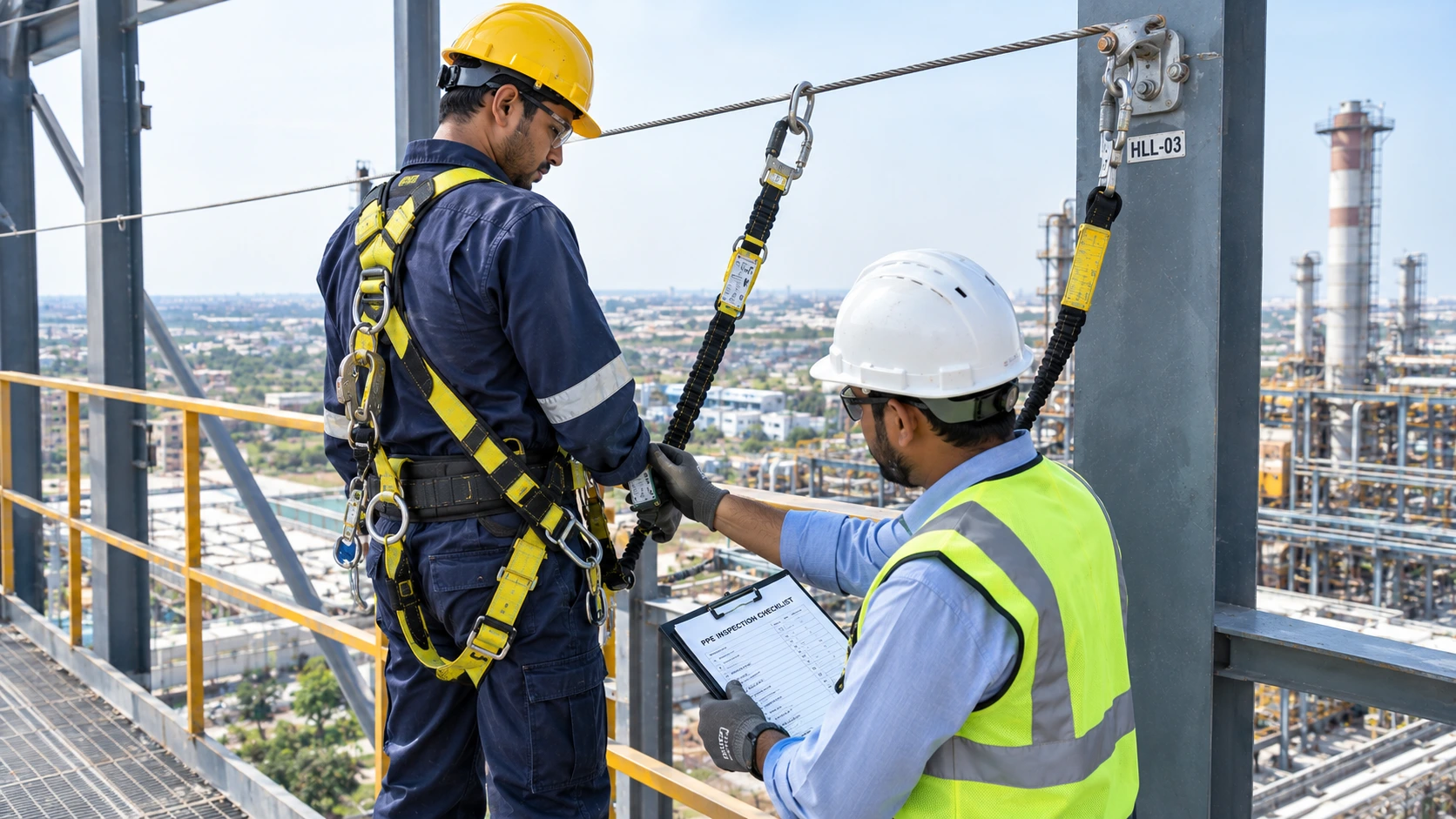
The PFAS inspection cycle should combine user checks, periodic inspections and event-based inspections.
A practical inspection structure is:
- Before use: The user checks the equipment for visible damage and correct operation.
- Periodic examination: A competent person conducts a detailed inspection according to manufacturer instructions and applicable requirements.
- After a fall: The affected equipment is immediately removed from service.
- After exceptional exposure: Equipment exposed to chemicals, excessive heat, severe abrasion or other damaging conditions should be assessed.
- Lifecycle review: Service age and manufacturer-defined service life should be reviewed as part of equipment management.
OSHA requires personal fall protection systems to be inspected before initial use during each workshift for conditions such as mildew, wear, damage and deterioration. Equipment subjected to impact loading must be removed from service until a competent person determines that it is safe for reuse.
When Should Personal Fall Protection Equipment Be Inspected?
Personal fall protection equipment should be inspected before use, periodically by a competent person, and immediately after an event that could affect its integrity.
The inspection should cover the complete system rather than only the harness.
| Inspection stage | What it means | Typical focus |
| Before use | User check | Webbing, stitching, connectors, labels |
| Periodic examination | Detailed competent person inspection | Equipment condition and function |
| After fall | Immediate removal | Impact damage and manufacturer assessment |
| After chemical or heat exposure | Condition assessment | Material and hardware deterioration |
| Lifecycle review | Service-life management | Age, history and manufacturer limits |
For systems containing mechanical devices such as self-retracting lifelines, functional checks and manufacturer-specific servicing requirements may also apply.
Indian Inovatix’s published inspection guidance recommends pre-use checks, periodic inspections and annual competent person inspections for fall arrest equipment.
What Does Personal Fall Arrest System Recertification Mean?
Personal fall arrest system recertification should not be confused with simply placing a new inspection sticker on old equipment.
A competent inspection normally involves examining the condition and function of the relevant components and confirming whether the equipment remains suitable for use under the applicable procedures.
Depending on the PFAS, inspection can include:
- Full body harness webbing and stitching
- D-rings and attachment points
- Buckles and connectors
- Energy absorbers
- Lifelines and ropes
- Self-retracting devices
- Guided fall arresters
- Anchorage components
- Identification labels and records
- Evidence of previous fall arrest
- Chemical, heat, UV or abrasion exposure
The precise inspection procedure should follow the manufacturer’s instructions for the specific product.
Indian Inovatix fall arrest systems
Does a PFAS Need a Full Recertification After Five Years?
Not automatically. A five-year age does not by itself establish that every PFAS requires a full recertification.
Some manufacturers define a specific service life, while others rely more heavily on condition, inspection history and continued compliance with their instructions. Indian Inovatix’s published guidance notes that fall protection equipment lifespan varies according to material, usage and environmental exposure.
A five-year review can therefore be useful for companies managing older equipment. At that point, safety teams can review:
- Equipment age and identification.
- Complete inspection history.
- Number and frequency of uses.
- Environmental exposure.
- Repairs or servicing.
- Any fall or impact events.
- Manufacturer’s stated service life.
- Current condition and applicable requirements.
If the manufacturer specifies a maximum service life, equipment should not remain in use beyond that limit unless the manufacturer provides an applicable documented procedure.
What Happens After a PFAS Arrests a Fall?
A PFAS or component subjected to a fall should be removed from service immediately.
This requirement is more important than the equipment’s age. A relatively new harness can require removal after a fall, while an older item may still require assessment based on its manufacturer-defined service life and inspection results.
OSHA states that personal fall protection systems or components subjected to impact loading must be removed from service and not reused until inspected by a competent person and determined to be undamaged and safe.
Do not return equipment to service simply because there is no visible damage.
What Should a 5-Year Fall Protection Inspection Check?
If a company is conducting a five-year lifecycle review, it should be more than a quick visual check.
The inspection program should review:
- Equipment identification and traceability
- Manufacturer instructions
- Service-life requirements
- Inspection records
- Webbing and stitching
- Metal components
- Connectors and locking mechanisms
- Energy absorbers
- Lifeline condition
- Mechanical device function
- Corrosion and deformation
- Chemical and UV exposure
- Previous fall events
- Storage and maintenance history
The purpose is to determine whether the equipment remains within its permitted service life and inspection requirements.
For equipment that cannot be positively identified, has an unknown history or fails the manufacturer’s inspection criteria, continued use should not be assumed.
5-Year Inspection vs Annual PFAS Inspection
The following distinction helps prevent a common safety management mistake:
| Factor | Annual or periodic inspection | Five-year lifecycle review |
| Main purpose | Verify current condition | Review long-term equipment status |
| Frequency | Often at least annually under applicable guidance | Only where required or adopted by manufacturer/company policy |
| Person | Competent person as required | Competent or manufacturer-authorized person where applicable |
| Focus | Wear, damage and function | Condition, history and service life |
| Replaces routine inspection? | No | No |
| Replacement decision | If equipment fails inspection | If service life or condition requires replacement |
EN 365 specifically addresses periodic examination of fall protection PPE and indicates a maximum interval of 12 months between examinations, subject to the applicable requirements and manufacturer’s instructions.
How Should Companies Manage an Older PFAS?
Companies should manage PFAS equipment using documented inspection and lifecycle records rather than relying only on a manufacturing date.
A practical system is:
- Assign each harness and critical PFAS component a unique identification record.
- Record purchase or manufacturing information where available.
- Complete pre-use checks.
- Schedule periodic competent person inspections.
- Record inspection findings and corrective actions.
- Remove equipment immediately after a fall or serious damage.
- Track environmental exposure and servicing.
- Review manufacturer-defined service life.
- Conduct a documented lifecycle review for older equipment.
- Dispose of equipment that no longer meets the required criteria.
This approach makes it easier for safety teams to demonstrate inspection history during internal reviews and external audits.
Why Environment Matters to the PFAS Inspection Cycle
Inspection frequency should reflect the conditions in which equipment operates.
Heat, chemicals, moisture, UV radiation, dust, abrasion and outdoor weather can accelerate deterioration. EN 365 guidance specifically identifies frequency of use and environmental conditions as factors when determining periodic examination frequency.
For example, equipment used frequently in a chemical processing area may need closer monitoring than equipment used occasionally in a controlled indoor environment.
The manufacturer’s instructions should remain the starting point when setting the inspection program.
What Standards Apply to PFAS Inspection?
Several standards and regulations may be relevant depending on the country, workplace and equipment.
IS 3521: Indian requirements for industrial safety belts and harnesses include instructions for inspection and periodic examination. BIS material for IS 3521 includes periodic inspection guidance and product testing requirements.
EN 365: Covers general requirements for fall protection PPE, including instructions, maintenance and periodic examination. Periodic examination is generally required at least every 12 months under the standard’s guidance.
OSHA 1910.140: Requires personal fall protection systems to be inspected before initial use during each workshift and establishes requirements for equipment affected by impact loading.
ANSI/ASSP Z359: Provides a framework for managed fall protection programs, including inspection and training considerations.
The applicable requirement should always be confirmed against the specific equipment, workplace rules, manufacturer instructions and jurisdiction.
FAQ
How often should a PFAS be inspected?
Inspect PFAS equipment before use and conduct periodic examination according to applicable requirements and manufacturer instructions. EN 365 guidance uses a maximum 12-month interval.
Is a 5-year fall protection inspection mandatory?
Not universally. A five-year interval is not a blanket requirement for all PFAS equipment.
What is personal fall arrest system recertification?
It is a documented assessment of equipment condition and suitability when required by the manufacturer, workplace program or applicable requirements.
When should personal fall protection equipment be inspected?
Before use, periodically by a competent person, and immediately after a fall or damaging event.
Does every harness need replacement after five years?
Not necessarily. Follow the manufacturer’s specified service life and inspection requirements.
What happens after a fall arrest?
Remove the affected equipment from service immediately and follow the manufacturer’s assessment or replacement procedure.
Who should conduct a periodic PFAS inspection?
A competent person with the knowledge and skills required by the applicable standard and manufacturer’s inspection procedure.
Can damaged PFAS equipment be recertified?
Only where the manufacturer and applicable procedures permit assessment or repair. Defective equipment should remain out of service until properly evaluated.
Does environmental exposure change inspection frequency?
Yes. Chemicals, heat, UV, moisture, abrasion and heavy use can require more frequent inspection.
Is annual inspection enough?
Not by itself. Pre-use checks and event-based inspections are also necessary.
Conclusion
A 5-year fall protection inspection should not be treated as a universal substitute for annual or periodic PFAS examination. The inspection cycle should combine pre-use checks, competent person examinations, immediate post-incident removal and manufacturer-defined service-life controls.
For many fall protection products, the important question is not simply “Has this equipment reached five years?” It is “Does this equipment remain within its permitted service life, pass the required inspection and comply with the manufacturer’s instructions?”
Indian Inovatix manufactures fall protection equipment and systems for industrial and work-at-height applications. Its published guidance supports documented inspections, regular maintenance and timely removal of equipment that fails inspection requirements.
For guidance on fall arrest equipment, inspection planning or a suitable system for your application, contact Indian Inovatix:

Categories
Latest Post
- September 28, 2026 How Often Should a PFAS Be Fully Recertified? Understanding the 5-Year Inspection Cycle
- September 24, 2026 How to Choose the Best Coconut Tree Climber Machine in India (2026 Buyer’s Guide)
- September 23, 2026 How Long Does a Safety Harness Last? Expiry, Validity & Replacement Rules

Corporate Profile
Download CatalogueTalk to Our Safety & Protection Specialists
Have questions or need guidance? Our experts can help you choose the most reliable and high-performance safety solutions tailored to your industry and site requirements.
-

- Call Us +91-8849452638
Need Help Determining the Right Fall Protection for You?
With our vast experience, our experts will assist you in selecting the most relevant system for your needs.