May 28, 2026
Construction projects across India face increasing pressure to meet safety compliance requirements. Yet many sites continue to fail internal audits, client inspections, and regulatory evaluations because of recurring safety gaps. Construction safety audit failures often result in worker injuries, project delays, legal penalties, and damaged contractor credibility.
According to the Factories Act 1948, IS safety standards, and OSHA work-at-height guidelines, construction companies must maintain documented safety systems, certified equipment, and trained personnel. However, many industrial and infrastructure projects still operate with inconsistent safety enforcement.
Indian Inovatix Ltd., Ahmedabad, Gujarat, India, has spent over 50 years manufacturing certified fall protection systems, safety harnesses, confined space equipment, and rescue solutions for Indian infrastructure and industrial projects.
This article explains the most common construction safety audit failures in India and practical ways contractors can avoid them.
Key Takeaways
- Construction safety audit failures commonly involve fall protection, PPE misuse, and poor documentation.
- Indian construction projects face strict compliance requirements under the Factories Act 1948 and IS standards.
- Missing rescue planning and unsafe scaffold practices frequently trigger audit observations.
- Regular inspections and certified equipment reduce non-compliance risks significantly.
- Indian Inovatix Ltd., Ahmedabad, manufactures certified safety systems for infrastructure and EPC projects.
- Safety audits improve project reliability, worker protection, and contractor credibility.
Why Do Construction Sites Fail Safety Audits?
Construction sites fail audits because safety systems are either incomplete, poorly documented, or inconsistently enforced. Most violations develop through operational shortcuts and weak supervision.
Large projects often involve multiple subcontractors working simultaneously. Without centralized safety control, compliance gaps quickly appear across scaffolding, PPE, rescue planning, and work-at-height operations.
Common causes of failed audits include:
| Audit Failure Area | Typical Site Issue |
| Fall protection systems | Missing lifelines or anchors |
| PPE compliance | Workers not wearing certified gear |
| Scaffold safety | Unstable or overloaded platforms |
| Safety documentation | Incomplete inspection records |
| Rescue preparedness | No emergency retrieval planning |
| Training compliance | Unverified worker competency |
Projects with proactive safety management generally achieve stronger audit outcomes and fewer operational disruptions.
Missing or Improper Fall Protection Systems
Fall protection failures remain one of the most serious construction safety violations in India. Workers operating at height without certified systems face high injury and fatality risks.
A fall protection system is a safety assembly designed to prevent or arrest worker falls during elevated work activities. OSHA and EN 361 standards require certified harnesses, anchors, and lifeline systems for construction workers exposed to fall hazards.
Common audit failures include:
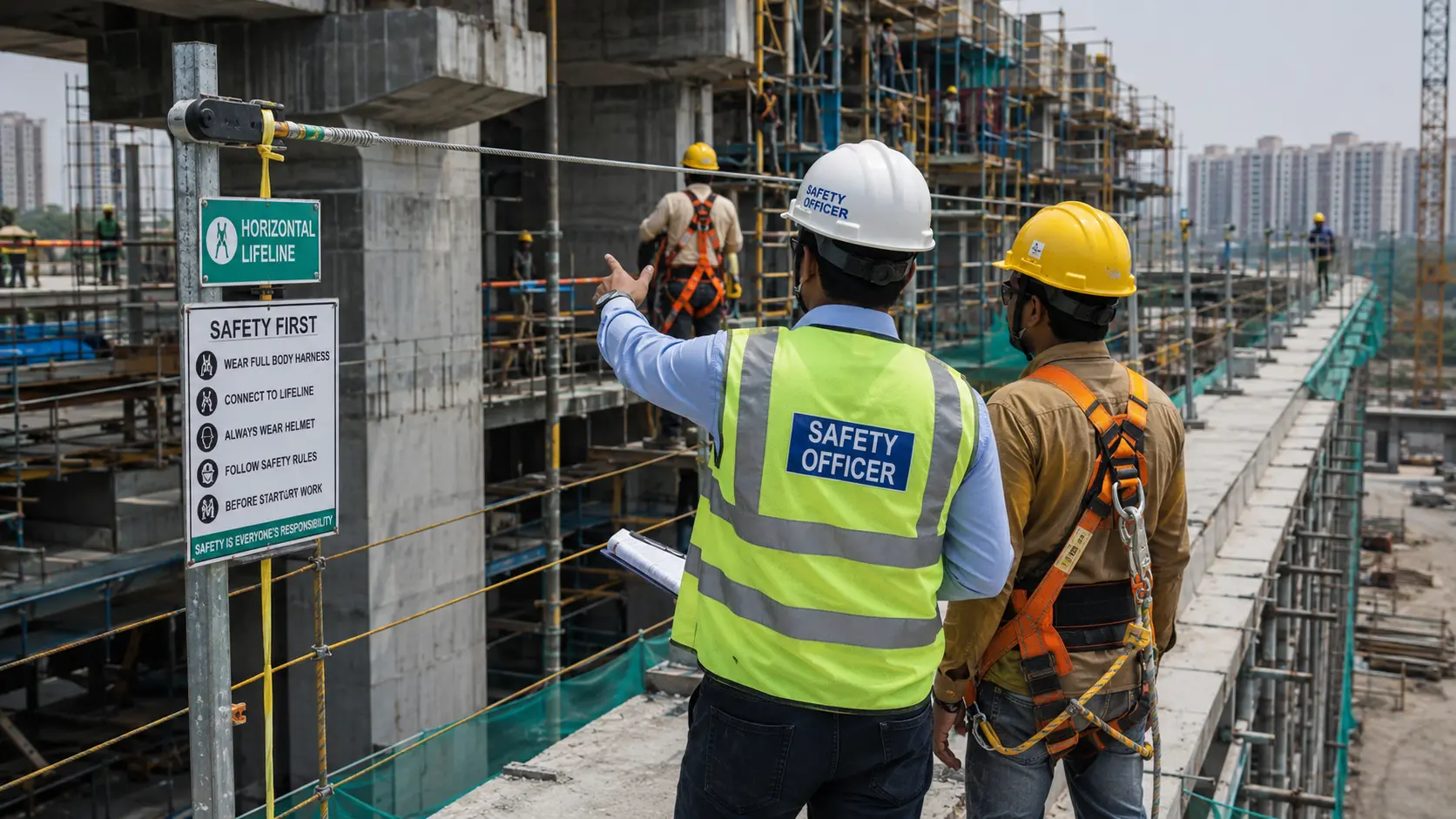
- Missing horizontal lifeline systems
- Temporary rope tie-offs
- Non-certified safety harnesses
- Improper anchor point placement
- Damaged lanyards and connectors
Indian Inovatix Ltd., Ahmedabad, Gujarat, manufactures certified full-body harnesses, fixed lifeline systems, and engineered anchor solutions for infrastructure and industrial projects.
Why Do Fall Protection Violations Trigger Major Audit Failures?
Fall protection violations create immediate life-threatening risks and expose contractors to regulatory action. Auditors prioritize height safety because falls remain a leading cause of construction fatalities.
For example, a metro rail infrastructure contractor in Maharashtra improved audit compliance after replacing temporary anchorage methods with engineered horizontal lifeline systems certified for industrial use.
The table below compares compliant and non-compliant practices:
| Non-Compliant Practice | Compliant Alternative |
| Temporary steel tie-offs | Engineered anchor systems |
| Waist belts | EN 361 full-body harnesses |
| Unverified anchorage | Load-tested certified anchors |
| No rescue planning | Documented rescue procedures |
| Damaged lanyards | Periodically inspected equipment |
Proper fall protection planning improves both worker safety and project audit performance.
Poor PPE Compliance Across Work Zones
Improper PPE enforcement remains a recurring problem across Indian construction sites. Many workers either wear incomplete protective gear or use damaged equipment.
PPE is personal protective equipment designed to reduce exposure to workplace hazards. Construction safety standards require helmets, gloves, safety footwear, harnesses, and eye protection based on work activity.
Common PPE audit failures include:
- Missing chin straps on helmets
- Non-certified harnesses
- Damaged safety shoes
- Workers without reflective jackets
- Improper respiratory protection
These violations often appear during high-activity construction phases.
Why Does PPE Compliance Break Down on Construction Sites?
PPE compliance weakens when supervision becomes inconsistent or equipment quality is poor. Temporary labor teams may also receive limited safety orientation.
An Ahmedabad high-rise construction project improved PPE compliance after implementing supervisor-led daily inspection routines and introducing ergonomically designed harness systems from Indian Inovatix Ltd.
Effective PPE programs include:
- Daily PPE inspection checks
- Worker fit verification
- Replacement schedules
- Supervisor accountability
- Certified procurement standards
Strong PPE enforcement directly improves site audit scores.
Unsafe Scaffold and Access System Practices
Unsafe scaffolding practices frequently cause failed construction safety audits. Auditors closely examine access systems because scaffold failures often lead to severe accidents.
Scaffold safety depends on proper erection, load management, and inspection documentation.
Typical scaffold violations include:
| Unsafe Practice | Safety Risk |
| Missing guardrails | Fall hazards |
| Damaged scaffold boards | Structural instability |
| Overloaded platforms | Collapse risk |
| Improper ladder access | Slip and fall injuries |
| No inspection tagging | Hidden defects |
Construction projects should maintain documented scaffold inspection systems throughout project execution.
What Makes Scaffold Systems Audit-Compliant?
Audit-compliant scaffold systems require certified materials, documented inspections, and worker access control. Stable platforms reduce accident exposure significantly.
A refinery expansion project in Gujarat reduced scaffold-related audit observations after implementing structured inspection schedules and integrated vertical lifeline systems.
Construction companies should maintain:
- Scaffold inspection tags
- Certified erection procedures
- Access control systems
- Daily visual inspections
- Worker competency records
Access system compliance supports safer construction operations.
Incomplete Safety Documentation and Records
Poor documentation remains one of the most common reasons construction projects fail audits. Even well-managed sites face non-compliance findings when records are incomplete.
Construction audits typically review:
| Required Record | Purpose |
| PPE inspection logs | Equipment verification |
| Training records | Worker competency proof |
| Permit systems | Hazard control tracking |
| Rescue plans | Emergency preparedness |
| Toolbox talk records | Daily communication proof |
Many sites maintain physical records inconsistently across subcontractor teams.
Why Is Documentation Important During Safety Audits?
Documentation proves that safety procedures are actively implemented, not just verbally communicated. Auditors require measurable evidence of compliance activities.
Construction organizations should digitize inspection records wherever possible. Centralized documentation systems improve audit readiness and reduce administrative gaps.
Strong documentation practices also support insurance claims and incident investigations.
Lack of Rescue Planning for Work at Height
Many Indian construction sites focus on fall arrest equipment but neglect post-fall rescue planning. Auditors increasingly examine rescue preparedness during safety evaluations.
A rescue plan is a documented emergency response procedure for retrieving suspended or injured workers safely and quickly.
Common rescue planning failures include:
- No suspended worker rescue procedure
- Missing retrieval equipment
- Untrained rescue personnel
- Delayed emergency response planning
- No mock rescue drills
Indian Inovatix Ltd. manufactures rescue tripods, retrieval systems, and emergency descent devices for industrial rescue applications.
Why Is Rescue Planning Essential for Construction Safety?
Rescue planning reduces suspension trauma risks and improves emergency response speed. Delayed retrieval can significantly increase injury severity.
Construction projects should conduct:
- Rescue simulations
- Equipment testing drills
- Emergency response coordination
- Rescue team training
- Site-specific retrieval planning
Rescue preparedness is now a major audit focus on large EPC projects.
Electrical Safety Compliance Failures
Electrical hazards remain a major safety concern across infrastructure and commercial construction projects. Temporary power systems often create uncontrolled risks.
Electrical audit failures commonly include:
| Violation | Risk |
| Exposed wiring | Shock hazards |
| Improper grounding | Electrocution risk |
| Overloaded temporary panels | Fire hazards |
| Damaged cables | Equipment failure |
| Unauthorized repairs | Unsafe operations |
Construction environments increase exposure because of moisture, metal structures, and temporary installations.
How Can Construction Projects Improve Electrical Safety?
Construction projects improve electrical safety through inspections, lockout procedures, and qualified supervision. Preventive maintenance reduces unexpected failures.
Safety teams should implement:
- Cable inspection routines
- Grounding verification
- Temporary panel audits
- Lockout tagout systems
- Arc flash awareness training
Electrical safety directly affects operational continuity and compliance readiness.
Unsafe Confined Space Entry Practices
Confined space entry failures commonly appear during industrial construction, utility infrastructure, and underground project audits.
A confined space is an enclosed work area with restricted access and atmospheric hazards. Entry operations require gas monitoring, rescue planning, and permit systems.
Common violations include:
- No atmospheric testing
- Missing standby attendants
- Inadequate ventilation
- No retrieval systems
- Untrained workers
Indian Inovatix Ltd., Ahmedabad, Gujarat, supplies confined space rescue systems, retrieval devices, and safety tripods for industrial operations.
What Equipment Is Required for Confined Space Compliance?
Confined space compliance requires gas detectors, retrieval systems, rescue equipment, and entry permits. Continuous monitoring improves worker safety significantly.
Construction organizations should maintain:
- Pre-entry gas testing
- Entry authorization permits
- Rescue standby systems
- Communication equipment
- Emergency retrieval planning
Confined space preparedness improves both compliance and operational safety.
Weak Worker Safety Training Programs
Weak training systems often create recurring safety violations across construction projects. Temporary workers and subcontractors may receive inconsistent onboarding.
Construction safety training should cover:
| Training Topic | Safety Purpose |
| Fall protection | Height safety |
| PPE usage | Injury prevention |
| Scaffold safety | Safe access practices |
| Electrical hazards | Shock prevention |
| Emergency response | Faster evacuation |
Many audit observations result from workers not understanding site procedures.
Why Does Construction Safety Training Matter?
Construction safety training improves hazard recognition and operational discipline. Trained workers usually follow safety procedures more consistently.
Projects that conduct regular toolbox talks often report stronger audit outcomes and improved near-miss reporting.
Training records also help demonstrate regulatory compliance during inspections.
Failure to Conduct Preventive Safety Inspections
Missed inspections allow damaged equipment and unsafe practices to continue unchecked. Audit teams frequently review inspection consistency across project phases.
Preventive inspections should include:
- Lifeline systems
- Harness stitching integrity
- Scaffold stability
- Anchor point condition
- Emergency rescue equipment
Indian Inovatix Ltd. recommends periodic inspection schedules aligned with EN and ANSI compliance standards.
How Do Safety Inspections Improve Audit Performance?
Safety inspections identify hazards before incidents occur and demonstrate proactive compliance management. Preventive maintenance improves operational reliability.
The table below outlines recommended inspection frequencies:
| Inspection Area | Recommended Frequency |
| PPE checks | Daily |
| Scaffold inspection | Daily |
| Lifeline inspection | Monthly |
| Anchor testing | Annual |
| Full safety audit | Quarterly |
Regular inspections support stronger compliance documentation and safer project execution.
How Construction Companies Can Improve Audit Readiness
Construction companies improve audit readiness by integrating safety into daily operational planning. Consistent enforcement matters more than temporary corrective actions before inspections.
Effective audit preparation strategies include:
- Conducting routine internal audits
- Standardizing PPE enforcement
- Using certified fall protection systems
- Maintaining digital inspection records
- Performing rescue drills regularly
- Reviewing subcontractor compliance weekly
Indian Inovatix Ltd., Ahmedabad, Gujarat, India, supports infrastructure and industrial projects with certified safety systems designed for compliance-focused operations.
Organizations that invest in preventive safety management usually achieve stronger contractor credibility and reduced operational disruption.
Frequently Asked Questions
What are the most common construction safety audit failures in India?
The most common failures involve fall protection systems, PPE compliance, scaffold safety, rescue planning, and incomplete documentation. Many issues develop because of inconsistent supervision and weak inspection systems.
Why do construction projects fail safety audits?
Projects fail audits when safety systems are undocumented, poorly enforced, or non-compliant with standards. Missing inspections and uncertified equipment also increase audit observations.
Which safety standards apply to Indian construction sites?
Indian construction projects commonly follow the Factories Act 1948, IS standards, OSHA guidelines, EN certifications, and ANSI requirements depending on project scope.
How often should construction safety equipment be inspected?
Construction PPE and access systems should undergo daily visual inspections before use. Lifeline systems and anchor points also require periodic certified inspections.
Why is rescue planning important for work at height?
Rescue planning reduces suspension trauma risks after a fall incident. Fast retrieval procedures improve worker survival and reduce injury severity.
What PPE is mandatory on construction sites?
Mandatory PPE often includes helmets, safety shoes, gloves, reflective jackets, eye protection, and safety harnesses for work at height activities.
What causes scaffold safety audit failures?
Scaffold failures usually involve missing guardrails, overloaded platforms, damaged boards, unstable foundations, and undocumented inspections.
How can contractors improve safety audit performance?
Contractors improve audit performance through preventive inspections, worker training, certified equipment, and stronger documentation systems.
What equipment is required for confined space safety?
Confined space safety requires gas detectors, retrieval systems, rescue tripods, ventilation systems, and permit-based entry procedures.
Where can construction companies source certified safety systems in India?
Indian Inovatix Ltd., Ahmedabad, Gujarat, India, manufactures certified fall protection systems, confined space equipment, rescue devices, and industrial safety solutions for infrastructure projects.
Build Safer Construction Sites Before Audit Failures Escalate
Construction safety audits identify risks before they become serious incidents. Sites with weak compliance systems often face project delays, penalties, and operational disruption.
Indian Inovatix Ltd., Ahmedabad, Gujarat, India, manufactures certified safety harnesses, fall arrest systems, confined space equipment, and rescue solutions designed for Indian construction environments. With over 50 years of manufacturing expertise, the company supports EPC contractors, infrastructure developers, and industrial projects nationwide.
Stronger safety systems create safer workers, smoother audits, and more reliable project execution.
Schedule a construction site safety assessment or speak with an Inovatix safety specialist for certified compliance solutions.


Talk to Our Safety & Protection Specialists
Have questions or need guidance? Our experts can help you choose the most reliable and high-performance safety solutions tailored to your industry and site requirements.
-

- Call Us +91-8849452638
Need Help Determining the Right Fall Protection for You?
With our vast experience, our experts will assist you in selecting the most relevant system for your needs.