June 18, 2026
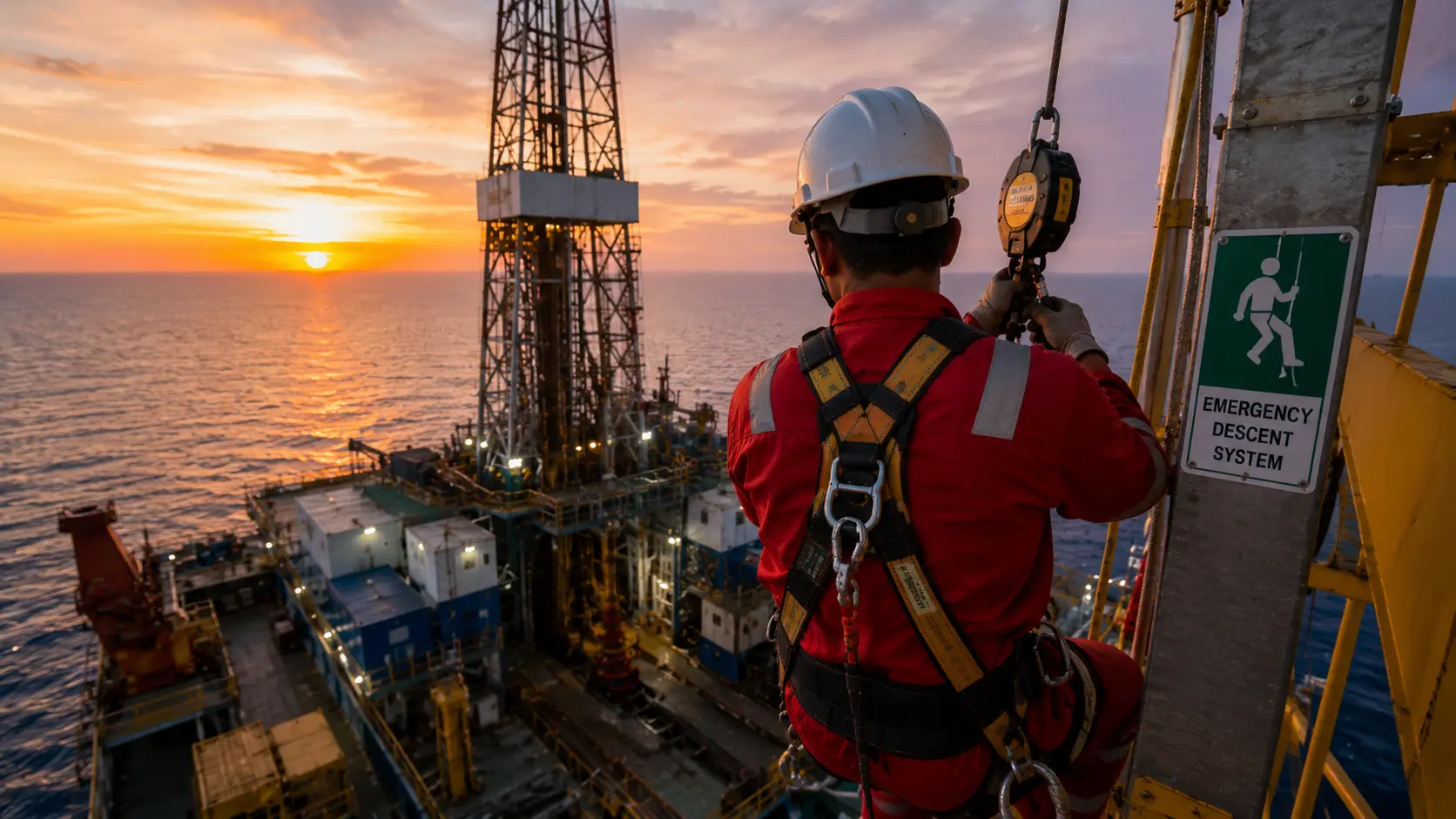
Working on an oil rig exposes personnel to some of the highest workplace risks in the industrial sector. Derrickmen and topmen routinely perform tasks at significant heights above the rig floor. In emergencies such as fire, blowouts, gas leaks, or structural failures, conventional evacuation routes may become inaccessible within seconds. Without a dedicated escape system, workers can become trapped in elevated work areas.
A derrickman escape device provides a controlled emergency evacuation method that allows personnel to descend rapidly and safely from elevated rig structures. Indian Inovatix Ltd., Ahmedabad, Gujarat, India, manufactures engineered height safety and emergency escape solutions designed to support high-risk industries where rapid evacuation can save lives.
Key Takeaways
- A derrickman escape device allows workers to evacuate safely from elevated oil rig structures during emergencies.
- Oil rig emergency escape systems provide controlled descent when ladders and stairs cannot be used.
- Modern systems reduce evacuation time while minimizing injury risks during emergency descent.
- Understanding topman escape devices how it works helps drilling operators improve emergency preparedness.
- A properly designed derrick safety evacuation guide should form part of every rig emergency response plan.
What Is a Derrickman Escape Device?
A derrickman escape device is an emergency descent system designed to evacuate workers from elevated drilling structures during life-threatening incidents.
Oil and gas drilling operations often place personnel 20 to 50 metres or more above ground level. In emergencies, workers may need immediate evacuation without relying on ladders or standard access routes.
The system typically consists of:
- Controlled descent mechanism
- Heat-resistant rope or cable
- Emergency harness connection
- Anchor assembly
- Descent braking system
The objective is simple: enable rapid evacuation while maintaining controlled descent speed.
For offshore and land drilling operations, these systems form a critical component of emergency preparedness planning.
Why is a derrickman escape device necessary?
Rig emergencies can develop rapidly.
Potential threats include:
- Well blowouts
- Fire incidents
- Explosions
- Toxic gas releases
- Structural failures
In these situations, workers positioned high in the derrick require a reliable evacuation option that functions independently of normal access routes.
Derrickman Escape Device Explained: How the System Works
A derrickman escape device uses a controlled descent mechanism that allows workers to move from elevated positions to a designated safe zone quickly and safely.
Although designs vary by manufacturer, most systems follow a similar operating principle.
Topman escape device how it works
The evacuation sequence generally includes the following steps:
- The worker connects to the escape system harness.
- The descent mechanism is activated.
- The braking system regulates descent speed.
- The worker travels along the designated escape route.
- The worker reaches a predetermined safe landing zone.
Unlike uncontrolled rope descents, engineered systems are designed to limit descent speed and reduce injury risk.
Many modern systems include automatic braking technology that functions without requiring advanced user input.
What makes controlled descent important?
Controlled descent reduces the risk of:
- Impact injuries
- Equipment misuse
- Panic-related mistakes
- High-speed descent trauma
- Secondary evacuation incidents
During emergency situations, workers often experience elevated stress levels. Systems should therefore be simple to operate and highly reliable.
Oil Rig Emergency Escape Challenges at Height
Oil rig emergency escape becomes particularly difficult because elevated workstations often have limited access and exposure to multiple hazards.
Unlike conventional industrial structures, drilling rigs present unique operational challenges.
Common factors include:
| Hazard | Evacuation Challenge |
| Fire | Blocks ladder access |
| Blowout | Rapid escalation |
| Gas Release | Limited visibility |
| Structural Damage | Access route failure |
| Severe Weather | Reduced mobility |
These hazards can make traditional evacuation methods ineffective.
As a result, dedicated emergency descent systems remain essential for worker protection.
Which rig positions typically require escape devices?
Workers commonly protected by escape systems include:
- Derrickmen
- Topmen
- Rig maintenance personnel
- Inspection teams
- Specialized drilling technicians
These individuals frequently perform tasks at elevations where emergency evacuation options are limited.
Key Components of a Derrick Safety Evacuation Guide
A derrick safety evacuation guide is a documented emergency procedure that outlines how workers should respond during elevated evacuation scenarios.
Equipment alone cannot ensure safety.
Organizations should establish clear procedures covering:
- Emergency activation criteria
- Evacuation responsibilities
- Equipment inspection requirements
- Training schedules
- Rescue coordination
The guide should remain accessible to all relevant personnel.
What should evacuation drills include?
Effective drills typically cover:
- Hazard identification.
- Escape system deployment.
- Harness attachment procedures.
- Controlled descent practice.
- Post-evacuation accountability.
Regular exercises improve worker confidence and reduce response times during actual emergencies.
Common Types of Emergency Escape Systems Used on Oil Rigs
Emergency escape systems vary depending on rig configuration, operational risk, and evacuation requirements.
Selecting the appropriate solution requires a detailed risk assessment.
Comparison of common emergency descent systems
| System Type | Typical Application | Primary Advantage |
| Controlled Descent Device | Derrick evacuation | Regulated descent speed |
| Escape Chute System | Offshore platforms | Multiple user evacuation |
| Emergency Rope System | Limited access locations | Portable deployment |
| Automatic Descender | High-risk environments | Reduced user input |
| Rescue Retrieval Device | Recovery operations | Controlled lifting and lowering |
Each system should be selected according to site-specific operational hazards.
A one-size-fits-all approach rarely provides adequate protection.
Safety Standards and Inspection Requirements
Emergency escape devices should comply with relevant safety standards and manufacturer requirements.
Regular inspection remains critical because emergency systems often remain unused for extended periods before deployment.
Inspection programs should include:
- Visual equipment checks
- Functional testing
- Rope and cable inspection
- Anchor verification
- Documentation review
According to industry best practices, inspection schedules should be documented and maintained as part of the site’s safety management system.
How often should escape devices be inspected?
Inspection frequency depends on:
- Manufacturer recommendations
- Environmental exposure
- Usage conditions
- Regulatory requirements
Organizations should always follow documented inspection procedures and maintain detailed records.
Why Training Is Critical for Emergency Evacuation Success
Emergency escape systems only perform effectively when workers understand how to use them correctly.
Training reduces confusion during high-pressure situations.
Workers should receive instruction on:
- System operation
- Equipment limitations
- Emergency decision-making
- Evacuation routes
- Post-evacuation procedures
Training should be repeated periodically rather than treated as a one-time activity.
What are the most common training deficiencies?
Common issues include:
- Lack of practical drills
- Infrequent refresher sessions
- Unclear evacuation procedures
- Incomplete equipment familiarity
- Poor emergency communication
Addressing these gaps strengthens overall emergency preparedness.
How Indian Inovatix Supports Emergency Escape and Height Safety
Indian Inovatix Ltd., Ahmedabad, Gujarat, India, has more than 50 years of experience designing and manufacturing height safety systems for industrial applications.
The company manufactured India’s first vertical fall arrest system in 1979 and India’s first retractable block in 1985. Today, Indian Inovatix protects more than 500,000 workers through certified safety solutions and has installed over 1 lakh metres of fall arrest systems across India.
For high-risk sectors such as oil and gas, emergency escape planning should be integrated with:
- Fall arrest systems
- Lifeline systems
- Anchorage solutions
- Rescue equipment
- Emergency evacuation devices
This integrated approach improves worker protection across all phases of operation.
Emergency Evacuation Planning Starts Before an Emergency Occurs
Oil rig emergencies leave little time for decision-making. Workers operating at height need evacuation systems that function quickly, reliably, and safely under extreme conditions. Understanding the derrickman escape device explained concept is an important step toward improving emergency preparedness and worker protection.
Indian Inovatix Ltd., Ahmedabad, Gujarat, India, continues to support industrial organizations with certified height safety solutions backed by five decades of manufacturing expertise. From fall arrest systems to emergency evacuation equipment, the company helps organizations strengthen safety performance in high-risk environments.
When Every Second Matters, Evacuation Systems Cannot Be an Afterthought
Emergency escape planning should be part of every drilling operation’s safety strategy. A properly selected and maintained evacuation system can make a critical difference when conventional escape routes fail.
Talk to an Inovatix safety specialist to evaluate emergency evacuation requirements for your oil and gas operations and identify the right certified solution.
Call us at +91-8849452638 or write to info@indianinovatix.com to get started.
Frequently Asked Questions
What is a derrickman escape device?
A derrickman escape device is an emergency descent system that allows workers to evacuate safely from elevated drilling structures during emergencies. It provides a controlled route to a designated safe area.
Why are emergency escape systems important on oil rigs?
Oil rigs present risks such as fires, blowouts, and gas releases. Emergency escape systems help workers evacuate quickly when normal access routes become unusable.
How does a topman escape device work?
The system connects the worker to a controlled descent mechanism. Once activated, the device regulates descent speed until the worker reaches a safe landing location.
What is the difference between fall arrest and emergency escape systems?
Fall arrest systems stop accidental falls during work activities. Emergency escape systems facilitate intentional evacuation during emergency situations.
How high are derrickman workstations typically located?
Depending on rig design, derrickman positions may be located 20 to 50 metres or more above the rig floor.
What industries use emergency descent devices?
Oil and gas, offshore operations, petrochemical facilities, power generation, and certain industrial maintenance applications commonly use emergency descent systems.
What should be included in a derrick safety evacuation guide?
The guide should include evacuation procedures, equipment operation instructions, inspection requirements, emergency contacts, and training schedules.
How often should evacuation drills be conducted?
Drill frequency depends on company policy and site risk levels. Regular practical exercises help maintain preparedness and improve response times.
Can emergency escape systems be used offshore?
Yes. Many offshore platforms use dedicated evacuation systems designed specifically for marine operating environments.
Why is a controlled descent system safer than improvised evacuation methods?
Controlled systems regulate descent speed and reduce user error. This lowers the risk of injury during emergency evacuation situations.


Talk to Our Safety & Protection Specialists
Have questions or need guidance? Our experts can help you choose the most reliable and high-performance safety solutions tailored to your industry and site requirements.
-

- Call Us +91-8849452638
Need Help Determining the Right Fall Protection for You?
With our vast experience, our experts will assist you in selecting the most relevant system for your needs.