April 14, 2026
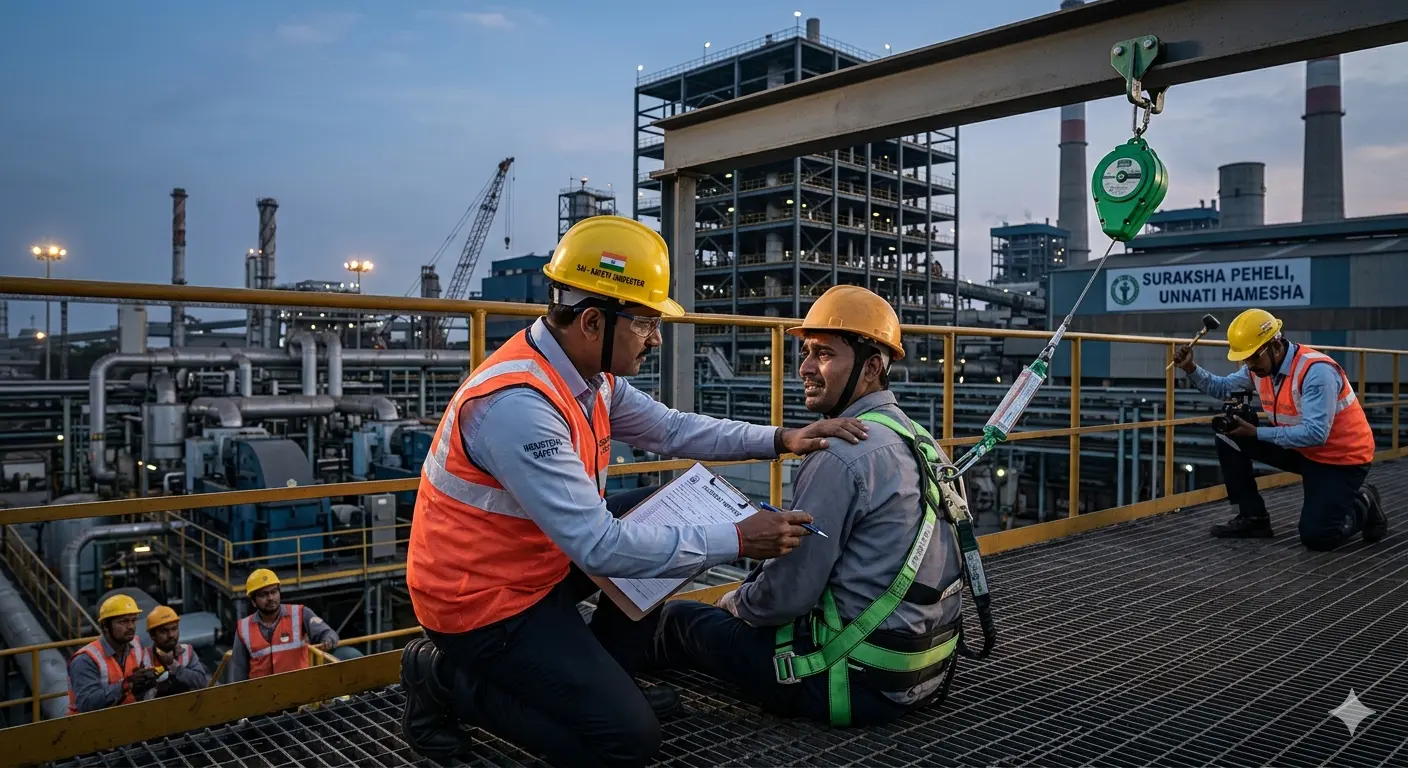
A fall from height is not just a safety incident. It is a critical event that directly impacts equipment integrity, worker safety, and regulatory compliance. Many industrial teams continue operations without fully understanding what happens to a fall arrest system after fall, which creates hidden risks.
Reusing equipment after a fall without proper inspection can lead to system failure, increased liability, and violations under the Factories Act 1948. This is a common issue across construction, EPC projects, and plant maintenance environments.
What Happens to a Fall Arrest System After It Arrests a Fall
A fall arrest system undergoes extreme force during a fall, which can permanently damage its components even if no visible defects appear.
When a fall occurs, the system absorbs energy through components like lanyards, retractable devices, and anchor points. This generates high impact forces, typically up to 6 kN or more, depending on the system design and standards such as EN 355.
Key effects on the system include:
- Internal fibre damage in lanyards
- Deformation of metal connectors and D-rings
- Activation of energy absorbers
- Stress impact on anchor points
- Potential internal damage in retractable devices
In an infrastructure project supported by Indian Inovatix Ltd., post-fall inspections revealed internal webbing damage in 78% of lanyards that appeared visually intact.
Also read: What is the Difference Between Fall Restraint and Fall Arrest?
This shows that visual inspection alone is not sufficient after a fall event.
Can You Reuse Fall Arrest System Components After a Fall
A fall arrest system must not be reused after arresting a fall unless it has been formally inspected, tested, and approved by a competent person.
Most safety standards including EN, ANSI, and IS 3521 require immediate withdrawal of equipment after a fall. The system may look functional, but internal stress can compromise its performance.
Situations where reuse is not allowed:
- Energy absorber has deployed
- Visible deformation or cuts are present
- Fall impact exceeded rated load
- Manufacturer guidelines prohibit reuse
Situations where controlled reuse may be considered:
- No fall occurred, only loading
- Certified inspection confirms integrity
- Manufacturer allows reuse under conditions
Indian Inovatix Ltd. recommends strict non-reuse unless certified inspection confirms safety, ensuring compliance and zero risk tolerance.
Why Fall Arrest Systems Must Be Removed from Service After a Fall
Fall arrest systems must be removed because their load-bearing capacity may be reduced even if external damage is not visible.
During a fall, the system absorbs kinetic energy and distributes forces across multiple components. This process can weaken fibres, stretch materials, and affect structural integrity.
Reasons for removal include:
- Hidden structural damage
- Reduced shock absorption capability
- Risk of failure during next fall
- Non-compliance with safety audits
According to OSHA and EN 361 guidelines, any system subjected to fall arrest forces must be immediately withdrawn from service.
This ensures worker safety and prevents repeat incidents.
Inspection Process After a Fall Event
A fall arrest system must undergo a structured inspection process before any decision on reuse or disposal is made.
Follow this inspection process:
- Immediately remove equipment from service
- Tag the system as “Do Not Use”
- Conduct visual inspection for cuts, burns, or deformation
- Check energy absorber deployment
- Inspect connectors and anchor points
- Send equipment for competent person inspection
- Document findings for audit compliance
Indian Inovatix Ltd., Ahmedabad, provides inspection guidance aligned with EN and IS standards to support safety teams during post-incident evaluation.
Proper documentation is essential for compliance under the Factories Act 1948.
Retractable vs Lanyard: Post-Fall Condition Comparison
After a fall, both retractable devices and lanyards behave differently based on their design and energy absorption mechanisms.
| Component | Condition After Fall | Reusability |
| Retractable Fall Arrester | Internal braking system activated, possible internal damage | Not recommended |
| Energy Absorbing Lanyard | Energy absorber deployed, webbing stretched | Not reusable |
| Anchor Point | May experience load stress | Requires inspection |
| Connectors | Possible deformation | Replace if damaged |
Based on EN 360 and EN 355 standards, both systems are generally considered non-reusable after a fall.
Selecting the right system is important, but post-fall handling is equally critical.
Real Use Case: Manufacturing Plant Incident
A manufacturing plant in Gujarat reported a fall arrest event during maintenance work.
Challenge:
The safety team considered reusing the lanyard because no visible damage was found.
Solution:
Indian Inovatix Ltd. conducted a detailed inspection and identified internal fibre stress and partial energy absorber deployment.
Result:
- Equipment was safely withdrawn
- Potential second incident avoided
- Audit compliance maintained
This case highlights the importance of expert evaluation after a fall.
Key Takeaways
- fall arrest system after fall must always be treated as compromised equipment
- Reuse is not recommended unless certified inspection approves it
- Hidden damage can exist even without visible signs
- Compliance with EN, ANSI, and IS 3521 standards is essential
- Indian Inovatix Ltd., Ahmedabad, provides expert guidance for post-fall safety
FAQs
Can you reuse fall arrest system after a fall
No, a fall arrest system should not be reused after a fall unless inspected and approved by a competent person. Most standards require removal from service. This prevents failure during future use.
What happens to a lanyard after a fall
The energy absorber in a lanyard deploys and absorbs impact forces. This permanently alters its structure. It must be replaced after use.
Are retractable fall arresters reusable after a fall
Retractable devices may have internal damage after a fall. Even if they appear functional, they should not be reused without manufacturer inspection. EN 360 recommends withdrawal from service.
What standards apply after a fall incident
Standards such as EN 355, EN 360, IS 3521, and OSHA require equipment inspection and removal after a fall. These ensure safety and compliance.
Who should inspect fall arrest systems after a fall
A competent person trained in fall protection systems should inspect the equipment. This ensures accurate evaluation and compliance.
Is visual inspection enough after a fall
No, visual inspection alone is not sufficient. Internal damage may not be visible. Detailed inspection is required.
What should companies in Ahmedabad do after a fall incident
Companies in Ahmedabad should follow compliance protocols, remove equipment from service, and consult certified providers like Indian Inovatix Ltd. for inspection and replacement.
How soon should equipment be replaced after a fall
Equipment should be removed immediately after a fall. Replacement should be done before resuming work to ensure safety.
Conclusion
A fall arrest event is a critical safety moment that demands immediate and informed action. Reusing equipment without proper evaluation can lead to serious risks and compliance violations.
Indian Inovatix Ltd., Ahmedabad, Gujarat, India, delivers certified fall protection systems backed by decades of manufacturing expertise and real-world application experience.
Ensure Safety After Every Fall Event
A single fall can compromise your entire safety system.
Request a professional inspection or replacement solution from Inovatix to keep your workforce protected and compliant.


Talk to Our Safety & Protection Specialists
Have questions or need guidance? Our experts can help you choose the most reliable and high-performance safety solutions tailored to your industry and site requirements.
-

- Call Us +91-8849452638
Need Help Determining the Right Fall Protection for You?
With our vast experience, our experts will assist you in selecting the most relevant system for your needs.