April 28, 2026
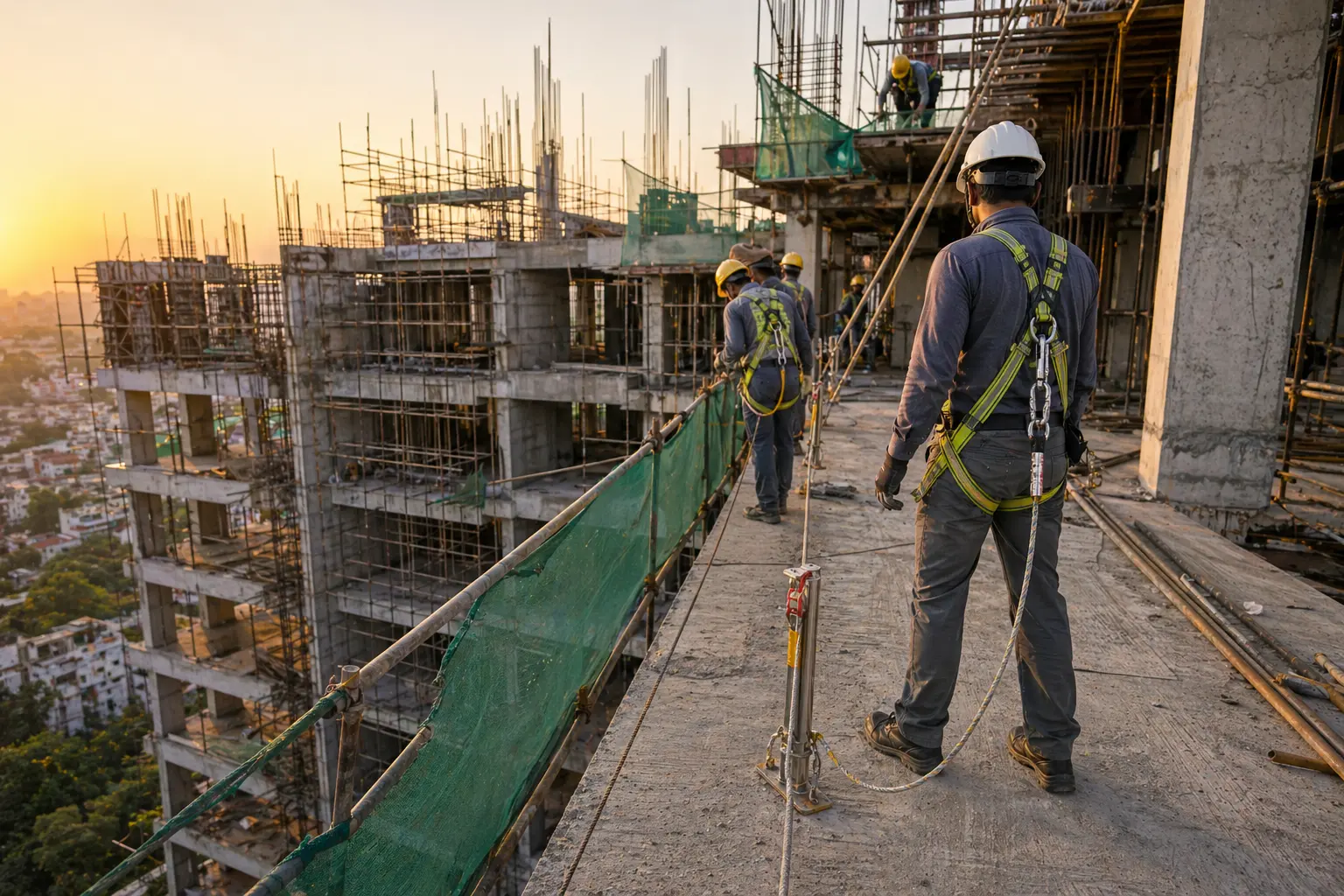
Construction work at height remains one of the highest-risk activities in India. Falls from scaffolding, roofs, and structures lead to serious injuries, project delays, and compliance failures. Many sites still use incorrect or low-grade safety gear.
These risks increase project costs, trigger penalties under the Factories Act 1948, and impact workforce morale. Safety officers and EPC contractors face constant pressure to maintain compliance while ensuring productivity.
The solution lies in certified, engineered safety systems like full body harness for construction workers that distribute fall forces and prevent fatal injuries. Indian Inovatix Ltd., Ahmedabad, Gujarat, India has spent 50 years manufacturing height safety equipment trusted by ISRO, BARC, and infrastructure projects across India.
What is a Full Body Harness and Why is it Mandatory in Construction
A full body harness is a personal protective equipment system that secures a worker’s body during a fall and distributes arrest forces across shoulders, thighs, and pelvis to reduce injury risk and ensure compliance with safety standards.
In construction environments, working above 1.8 meters requires fall protection under Indian safety norms. According to IS 3521 and EN 361 standards, harnesses must include load-bearing straps, D-rings, and connectors designed for fall arrest.
Key components include:
- Dorsal D-ring for fall arrest
- Chest and leg straps for load distribution
- Adjustable buckles for secure fit
- High-strength polyester webbing
A properly selected harness prevents fatalities and ensures audit readiness during inspections.
How to Choose the Right Full Body Harness for Construction Workers
A full body harness selection depends on work height, anchor system, load rating, and duration of use to ensure safety, compliance, and worker comfort across construction applications.
Choosing the wrong harness increases risk and reduces usability on site. Procurement teams must evaluate both technical specifications and site conditions.
What factors should you evaluate before buying a harness
The right harness depends on multiple operational factors. Safety officers must assess:
- Working height and fall clearance
- Type of work such as scaffolding, roofing, or tower work
- Anchor point availability and load rating
- Worker weight capacity and PPE compatibility
- Frequency of use and environmental exposure
Each factor impacts harness type selection and compliance.
Types of Full Body Harness Used in Construction Sites
Different full body harness types are designed for specific construction tasks, ensuring optimal safety and performance based on work conditions, fall risk, and positioning requirements.
Construction sites require different harness configurations depending on application.
| Harness Type | Application | Key Feature | Standard |
| Fall Arrest Harness | General construction | Dorsal D-ring | EN 361 |
| Work Positioning Harness | Steel erection | Side D-rings | EN 358 |
| Tower Climbing Harness | Telecom towers | Multiple attachment points | ANSI Z359 |
| Confined Space Harness | Tank entry | Rescue loops | IS standards |
Using the correct type improves safety and reduces fatigue.
Indian Inovatix Ltd. manufactures application-specific harnesses tested for Indian site conditions, including high heat and dust exposure.
Key Safety Standards for Harness in India
Safety harnesses in India must comply with IS 3521, EN 361, or ANSI Z359 standards to ensure proper fall arrest performance, material strength, and certification required for industrial and construction applications.
Compliance is not optional in regulated projects. Government inspections and EPC audits require documented certification.
Important standards include:
- IS 3521: Indian standard for safety belts and harnesses
- EN 361: European full body harness standard
- ANSI Z359: US fall protection standard
- OSHA guidelines for fall protection systems
Indian Inovatix Ltd. products are tested to EN and ANSI standards and backed by ZED Gold certification achieved in 2026.
Technical Specifications That Matter in a Safety Harness
A construction safety harness must meet specific technical parameters such as breaking strength, load capacity, and material durability to ensure safe fall arrest under real site conditions.
What specifications should procurement teams check
Critical specifications include:
- Breaking strength: minimum 15 kN
- Webbing material: high-tenacity polyester
- Stitching: reinforced load-bearing patterns
- Weight capacity: up to 140 kg or more
- Metal fittings: corrosion-resistant alloy steel
| Specification | Recommended Value |
| Breaking Strength | ≥ 15 kN |
| Webbing Width | 44 mm |
| Max User Weight | 140 kg |
| Certification | EN 361 |
These parameters ensure durability and long-term safety.
Common Mistakes When Buying Full Body Harness in India
Many buyers select harnesses based only on price, ignoring safety standards, certification, and application suitability, which leads to compliance failures and increased risk of accidents on construction sites.
Frequent mistakes include:
- Buying non-certified harnesses
- Ignoring worker comfort and adjustability
- Not matching harness type to application
- Skipping inspection and maintenance planning
A poor harness choice increases long-term cost due to replacements and safety incidents.
Real Use Case: Infrastructure Project Safety Implementation
A large EPC contractor working on a metro rail project faced repeated safety audit issues due to inconsistent harness quality across teams.
Indian Inovatix Ltd. supplied EN 361 certified harness systems with centralized procurement support. Over 1,200 workers were equipped within 10 days.
Result:
- Zero fall-related incidents in 8 months
- Improved audit compliance score by 35%
- Reduced replacement cost by 20%
This demonstrates the value of choosing a reliable manufacturer.
Why Manufacturers Matter More Than Resellers
A safety harness manufacturer ensures quality control, certification traceability, and customization capabilities, which are critical for large-scale construction projects and compliance-driven industries.
Indian Inovatix Ltd., Ahmedabad, Gujarat, India operates a 33,000 sq ft manufacturing facility and has protected over 500,000 workers with installed systems exceeding 1 lakh metres.
Advantages of working with a manufacturer:
- Direct certification and testing
- Bulk supply capability
- Custom harness design options
- Faster delivery timelines
This ensures consistent quality across projects.
Key Takeaways
- full body harness for construction workers is mandatory for work above 1.8 meters
- Always select harnesses compliant with IS 3521 or EN 361
- Check breaking strength and material quality before purchase
- Choose application-specific harness types
- Work with certified manufacturers like Indian Inovatix Ltd.
Conclusion
Selecting the right full body harness for construction workers directly impacts worker safety, compliance, and project continuity. Construction companies must prioritize certified equipment, proper specifications, and trusted manufacturers.
Indian Inovatix Ltd., Ahmedabad, Gujarat, India combines 50 years of engineering expertise with certified manufacturing to deliver reliable fall protection systems for construction and infrastructure projects across India.
Secure Your Construction Workforce with Certified Harness Systems
Worker safety at height depends on the right harness selection and compliance with standards.
Request a bulk quotation or schedule a safety consultation with Indian Inovatix Ltd. today.
FAQ
What is the best full body harness for construction workers in India
The best harness meets EN 361 or IS 3521 standards and matches site requirements. It should include proper D-ring placement and adequate load capacity. Certified manufacturers ensure reliability and compliance.
Is full body harness mandatory on construction sites in India
Yes. Under the Factories Act 1948 and safety guidelines, fall protection is required for work above certain heights. Non-compliance can lead to penalties and site shutdowns.
What is the load capacity of a safety harness
Most certified harnesses support up to 140 kg including tools. Higher capacity models are available for specific industrial applications.
How often should a safety harness be inspected
Harnesses should be inspected before every use and undergo periodic inspection every 3 to 6 months depending on usage conditions.
What is EN 361 certification in harness
EN 361 is a European standard that defines performance requirements for full body harness used in fall arrest systems.
Can one harness be used for all construction work
No. Different tasks require different harness types. Using the wrong type can reduce safety and compliance.
Where can I buy certified full body harness in India
You can source directly from manufacturers like Indian Inovatix Ltd., Ahmedabad, ensuring certification and bulk supply support.
What is the price of full body harness in India
Prices vary based on certification, features, and quantity. Bulk orders offer better pricing and consistency.


Talk to Our Safety & Protection Specialists
Have questions or need guidance? Our experts can help you choose the most reliable and high-performance safety solutions tailored to your industry and site requirements.
-

- Call Us +91-8849452638
Need Help Determining the Right Fall Protection for You?
With our vast experience, our experts will assist you in selecting the most relevant system for your needs.