April 11, 2026
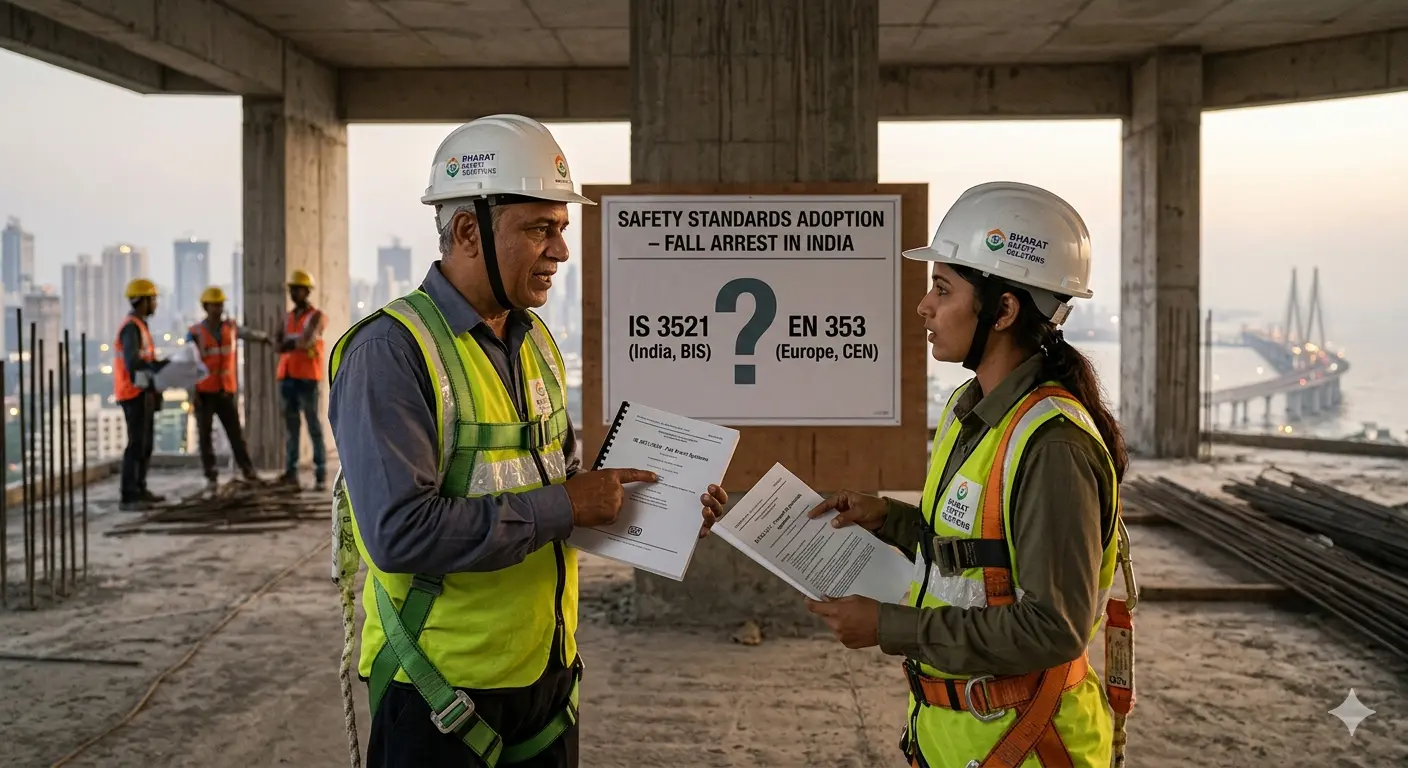
Work at height across industrial projects requires strict compliance with safety standards. However, many safety managers and EPC contractors face confusion when selecting between Indian and European standards. This confusion often leads to incorrect procurement and compliance gaps.
If the wrong standard is applied, systems may fail during audits or fail to meet project specifications. In some cases, this results in rework, delays, or safety risks on site.
Understanding IS 3521 vs EN 353 fall arrest standard India helps teams select the correct system from the start. Indian Inovatix designs and supplies certified fall protection systems aligned with both Indian and international project requirements.
Key Takeaways: IS 3521 vs EN 353 Fall Arrest Standard India
- IS 3521 vs EN 353 fall arrest standard India defines compliance direction
- IS 3521 applies to harness systems under Indian regulations
- EN 353 applies to guided fall arrest devices
- Domestic projects typically require IS compliance
- International projects may specify EN standards
- Many projects use both standards together
- Correct selection prevents audit issues and safety risks
These points help safety teams understand where each standard fits within a complete fall protection system.
What is IS 3521 Standard in India
IS 3521 is the Indian standard issued by the Bureau of Indian Standards. It focuses on safety belts and full body harness systems used in industrial environments.
This standard defines performance requirements, material strength, and testing procedures. It is widely accepted across domestic projects where compliance with Indian regulations is mandatory.
To understand its scope better, consider the key areas it covers:
- Safety belts and full body harness design
- Load bearing capacity requirements
- Testing methods for strength and durability
- Marking and identification guidelines
These requirements ensure that harness systems perform reliably under load conditions commonly seen in Indian industrial environments.
As a result, IS 3521 remains the primary reference for harness compliance across factories, infrastructure projects, and government contracts.
What is EN 353 Standard
EN 353 is a European standard that focuses on guided type fall arresters. These devices move along anchor lines and lock automatically during a fall.
Unlike IS 3521, this standard does not cover harness systems. Instead, it focuses on the performance of fall arrest devices used in vertical systems.
The standard is divided into categories based on system type:
- EN 353-1 for rigid anchor lines
- EN 353-2 for flexible anchor lines
These categories define how devices should perform under dynamic load conditions and how quickly they must engage during a fall.
Because of this focus, EN 353 is commonly specified in projects involving vertical lifeline systems, towers, and high rise structures.
IS 3521 vs EN 353 Fall Arrest Standard India Comparison
When comparing IS 3521 vs EN 353 fall arrest standard India, it is important to understand that both standards serve different roles within a fall protection system.
The table below provides a clear comparison:
| Parameter | IS 3521 | EN 353 |
| Region | India | Europe |
| Focus | Harness and belts | Guided fall arrest devices |
| Application | General fall protection | Vertical systems |
| Compliance | BIS | European standards |
| Project Type | Domestic | International |
This comparison shows that the standards are not interchangeable. Instead, they complement different parts of a complete safety system.
Understanding this distinction helps safety managers avoid incorrect equipment selection.
When Should IS 3521 Be Used
IS 3521 is required when projects fall under Indian regulatory frameworks. This includes most domestic industrial and infrastructure work.
In practical scenarios, IS 3521 is applied in the following cases:
- Government infrastructure projects
- Manufacturing plants and factories
- Warehousing and logistics operations
- Domestic EPC contracts
These environments require compliance with Indian inspection authorities. Therefore, using IS certified harness systems ensures smoother approvals and audits.
In addition, IS 3521 aligns with local working conditions, which makes it suitable for a wide range of industrial applications.
When Should EN 353 Be Used
EN 353 becomes relevant when projects follow international specifications or involve global stakeholders. This is common in sectors such as oil and gas, energy, and large infrastructure developments.
Typical use cases include:
- Projects with multinational consultants
- High rise construction with vertical lifelines
- Industrial facilities following global safety standards
- Export oriented infrastructure projects
In these situations, EN 353 ensures that fall arrest devices meet international performance requirements.
However, it is important to note that EN 353 does not replace IS standards for harness systems. Instead, it complements them in specific applications.
Can IS 3521 and EN 353 Be Used Together
In many real world projects, both standards are used together to meet different compliance requirements.
A typical system setup may include:
- Harness compliant with IS 3521
- Fall arrester compliant with EN 353
- Lifeline system designed as per project specification
This combination ensures that both local and international requirements are met.
Such an approach is common in large EPC projects where multiple stakeholders define safety standards. It allows flexibility while maintaining compliance across all levels.
Common Mistakes in Standard Selection
Incorrect understanding of standards often leads to poor decision making during procurement.
Some common mistakes observed across projects include:
- Assuming EN standards replace IS standards completely
- Selecting equipment without checking project specifications
- Using uncertified products
- Ignoring compatibility between components
These errors often result in audit failures, delays, and safety concerns.
To avoid these issues, safety teams must review project requirements carefully before selecting equipment.
Practical Use Cases Across Industries
Different industries apply these standards based on project needs and regulatory requirements.
In manufacturing plants, IS standards are usually sufficient because operations fall under Indian compliance frameworks. Safety teams focus on harness systems and general fall protection.
In infrastructure projects, consultants may specify a mix of IS and EN standards. This ensures that systems meet both local and international expectations.
In oil and gas projects, EN standards are often required due to global safety protocols. However, IS compliant components may still be used where applicable.
These examples show that standard selection depends on project type, stakeholders, and compliance requirements.
Indian Inovatix Approach to Standard Compliance
Indian Inovatix designs and manufactures fall protection systems aligned with both Indian and international standards. This ensures that clients receive systems suitable for their specific project needs.
The company supports safety teams through:
- System design based on applicable standards
- Selection of certified components
- Guidance on compliance requirements
The product range includes harness systems, guided fall arresters, lifeline systems, and anchorage solutions.
These systems are used across construction, manufacturing, infrastructure, and energy sectors. Each solution is designed to ensure safety, compliance, and reliability in real working conditions.
Compliance Considerations for Safety Managers
Selecting the correct standard is not just a technical decision. It is a compliance requirement that affects audits and project approvals.
Safety managers must evaluate:
- Project specifications and contract requirements
- Regulatory authority expectations
- Certification of equipment
- Compatibility between system components
By following a structured approach, teams can avoid compliance issues and ensure smooth project execution.
FAQs
What is the difference between IS 3521 and EN 353?
IS 3521 applies to safety belts and harness systems in India. EN 353 applies to guided fall arrest devices used in vertical systems.
Which standard applies for fall arrest in India?
For most domestic projects, IS standards apply. However, international projects may require EN standards based on specifications.
Can EN 353 be used in India?
Yes, EN 353 can be used when project requirements allow it. However, IS compliance may still be required for certain components.
Is IS 3521 mandatory for all projects?
It is required for many domestic projects, especially those regulated by Indian authorities.
When should EN standards be selected?
EN standards are selected when projects involve global consultants or require international compliance.
Can both standards be used together?
Yes, many projects use IS compliant harnesses with EN certified fall arrest devices.
How does IS 3521 vs EN 353 fall arrest standard India affect system selection?
It determines which components meet compliance requirements and ensures compatibility within the system.
Who decides which standard to follow?
Project consultants, safety teams, and regulatory requirements define the applicable standard.
Final Word
Selecting the correct standard is essential for safe work at height. IS 3521 vs EN 353 fall arrest standard India defines how fall protection systems are designed and approved for use.
Each project has unique compliance requirements based on location, stakeholders, and specifications. Indian Inovatix stands as a manufacturer, supplier, and specialist delivering systems aligned with both Indian and international standards.
Clear understanding of standards ensures safe operations and smooth project execution.
Every project demands the right compliance approach.
Talk to Indian Inovatix to request a quote, discuss your project requirements, or get customized fall protection systems aligned with your standards.


Talk to Our Safety & Protection Specialists
Have questions or need guidance? Our experts can help you choose the most reliable and high-performance safety solutions tailored to your industry and site requirements.
-

- Call Us +91-8849452638
Need Help Determining the Right Fall Protection for You?
With our vast experience, our experts will assist you in selecting the most relevant system for your needs.