August 13, 2026
Personal Protective Equipment (PPE) standards define the technical and performance requirements that protective equipment should meet before it is used in hazardous workplaces. For Indian industries, selecting PPE only by appearance or price can create serious safety and compliance gaps.
Construction sites, factories, infrastructure projects, telecom towers, oil and gas facilities, and maintenance operations expose workers to different hazards. PPE must therefore match the task, risk, work environment, and applicable standard.
Indian Inovatix Limited, Ahmedabad, Gujarat, India, manufactures certified fall protection equipment and engineered height safety systems. The company has more than 50 years of manufacturing experience, protects over 500,000 workers across India, and has installed more than 1 lakh metres of fall arrest systems.
Key Takeaways
- Personal Protective Equipment (PPE) standards define requirements for equipment design, testing, performance, and marking.
- Indian buyers should identify the applicable IS standard before selecting PPE and review EN or ANSI requirements when project specifications require them.
- Fall protection PPE can include full body harnesses, lanyards, energy absorbers, connectors, retractable devices, and related systems.
- IS 3521 covers several personal fall protection components, while EN 361 focuses on full body harnesses used for fall arrest.
- Certification documents, product markings, inspection records, and correct equipment selection are important parts of workplace PPE compliance.
What Are Personal Protective Equipment (PPE) Standards?
Personal Protective Equipment (PPE) standards are technical requirements that define how protective equipment should be designed, tested, marked, and used for specific workplace hazards. They help organizations select equipment with defined safety performance.
PPE covers many categories. These include head protection, eye protection, respiratory protection, hearing protection, hand protection, protective footwear, body protection, and fall protection.
The applicable standard depends on the equipment and hazard.
For example, a full body harness has different requirements from a safety helmet or protective glove. Procurement teams should therefore identify the exact PPE category before checking certification.
Common selection factors include:
- Hazard type
- Equipment category
- Applicable Indian standard
- International project requirements
- Certification documentation
- Worker application
- Environmental conditions
- Inspection requirements
A certified product should also be suitable for the actual work. Certification alone does not make unsuitable PPE appropriate for every task.
Which PPE Standards Apply in India?
Indian PPE requirements depend on the equipment category, industry, workplace hazard, and applicable regulations. IS standards provide Indian requirements, while EN and ANSI standards are often specified for international, EPC, and multinational projects.
For fall protection, IS 3521 is an important Indian standard series. Current IS 3521 requirements cover multiple components of personal fall protection systems, including harnesses, lanyards, self retracting lifelines, connectors, anchors, horizontal lifelines, and descending devices.
The following comparison helps procurement teams understand the main frameworks.
| Standard framework | Region or use | Typical PPE application |
| IS | India | Indian safety equipment requirements |
| EN | Europe and international projects | Fall protection and other PPE categories |
| ANSI | United States and international projects | Fall protection systems |
| OSHA | United States | Workplace safety requirements and practices |
| BIS certification | India | Applicable products under Indian certification requirements |
The correct standard should always be verified against the product category and project specification.
What Are the Main Fall Protection PPE Standards?
Fall protection standards specify requirements for equipment that protects workers from falls and related hazards. They cover components such as harnesses, lanyards, energy absorbers, connectors, lifelines, and anchorage devices.
For example, EN 361 defines requirements for full body harnesses used in fall arrest systems. IS 3521 also provides requirements for personal fall protection equipment in India.
A complete fall protection system may contain several separately certified components.
| PPE component | Main function | Common standard reference |
| Full body harness | Supports worker during fall arrest | IS 3521, EN 361 |
| Lanyard | Connects harness to anchorage | IS 3521, EN standards |
| Energy absorber | Controls arrest forces | IS 3521 |
| Self retracting lifeline | Controls connecting line movement | IS 3521 |
| Connector | Connects system components | IS 3521 |
| Anchorage | Provides structural attachment | IS 3521 |
This distinction matters during procurement. Buying a certified harness does not automatically certify the entire fall protection system.
How Should Companies Select PPE Based on Standards?
Companies should begin with a workplace risk assessment and identify the exact hazard before selecting PPE. The selected equipment should then match the applicable standard, task, worker, and complete safety system.
A practical selection process is:
- Identify the workplace hazard.
- Determine whether PPE is the required control.
- Identify the equipment category.
- Check the applicable IS or project specified standard.
- Review certification documentation.
- Verify equipment compatibility.
- Confirm worker fit and training requirements.
- Establish inspection and replacement procedures.
For work at height, the process should also consider anchorage, fall clearance, lifeline configuration, and rescue planning.
Indian Inovatix’s published guidance states that procurement teams should request certification information, user instructions, inspection requirements, product identification, and applicable standards before bulk purchasing fall protection equipment.
Why Is PPE Certification Important?
PPE certification provides evidence that equipment has been evaluated against specified requirements. It gives safety officers and procurement teams technical documentation for equipment selection, audits, and project submissions.
However, certification should not be treated as the only purchasing criterion.
A procurement review should include:
- Applicable standard
- Certification documentation
- Product identification
- Manufacturer information
- Technical specifications
- Intended application
- Inspection instructions
- Compatibility with other PPE components
For example, a fall arrest harness should be compatible with the connecting device and anchorage system. The complete arrangement must suit the work activity.
Indian Inovatix manufactures full body harness systems aligned with IS 3521 and EN 361 requirements. Its published product information also identifies certification documentation for project safety audits and client submissions.
What Should Safety Officers Check on Certified PPE?
Safety officers should check the PPE marking, condition, certification information, application, and inspection status before equipment reaches workers. PPE should also be inspected according to manufacturer instructions and workplace procedures.
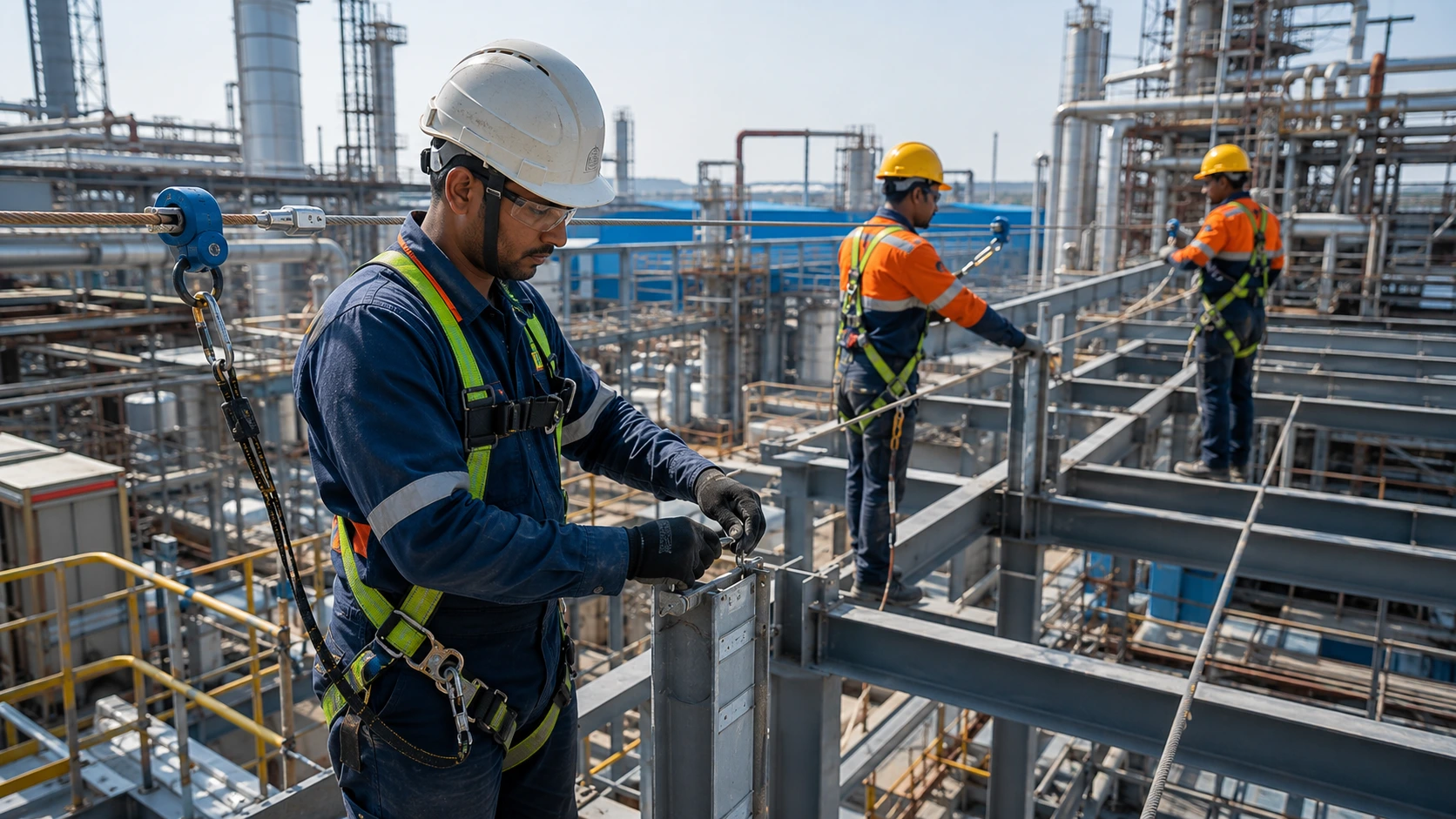
For fall protection equipment, inspection should include:
- Webbing and stitching
- D rings and connectors
- Buckles and adjustment points
- Labels and identification
- Signs of cuts or abrasion
- Chemical or heat damage
- Corrosion
- Evidence of previous fall loading
A damaged component should not remain in service simply because its certification label is present.
Indian Inovatix guidance recommends visual inspection before use and periodic inspection according to manufacturer recommendations.
How Do IS, EN and ANSI Standards Differ?
IS, EN, and ANSI standards can address similar safety objectives while using different technical requirements, testing methods, and certification frameworks. The correct choice depends on the Indian regulatory environment and project requirements.
For fall protection harnesses, EN 361 focuses specifically on full body harness requirements. IS 3521 provides an Indian framework covering several personal fall protection components. ANSI Z359 is a broader US fall protection standards framework.
For multinational EPC projects, buyers may be asked to provide equipment meeting more than one framework.
The important point is to verify the exact product standard rather than assuming that one certification applies to every PPE category.
What PPE Standards Matter for Construction and Industrial Projects?
Construction and industrial projects require PPE selection based on the specific hazards present at each work location. Work at height, confined spaces, electrical hazards, chemicals, dust, noise, and mechanical risks can require different protective equipment.
For height safety, full body harnesses and connected fall protection systems are especially important.
Indian Inovatix has more than 50 years of experience manufacturing fall protection systems and safety harnesses. Its current product range includes full body harnesses and engineered fall arrest systems for construction, infrastructure, telecom, industrial maintenance, and other applications.
For projects involving work at height, companies can review the full body harness range from Indian Inovatix and select equipment according to the application and applicable standard.
What Are Common PPE Compliance Mistakes?
Common PPE compliance problems occur when companies focus on purchasing equipment without assessing the hazard, standard, application, or inspection process. These gaps can create problems during safety audits and increase worker exposure.
Typical mistakes include:
- Selecting equipment only by price
- Using expired or damaged PPE
- Ignoring certification documents
- Choosing the wrong equipment category
- Mixing incompatible components
- Failing to inspect equipment
- Providing PPE without worker training
- Using fall arrest equipment without suitable anchorage
These problems are particularly important for fall protection systems because several components must work together.
Indian Inovatix’s safety guidance emphasizes certification, correct equipment selection, inspection, training, and proper anchorage as key parts of workplace fall protection.
Why Choose Indian Inovatix for Certified Fall Protection PPE?
Indian Inovatix Limited, Ahmedabad, Gujarat, India, is a manufacturer and specialist in fall protection and height safety equipment. The company has more than 50 years of manufacturing experience and operates a 33,000 sq ft production facility.
Its systems have protected more than 500,000 workers across India, with over 1 lakh metres of fall arrest systems installed. The company manufactured its first vertical fall arrest system in 1979 and its first retractable block in 1985.
Indian Inovatix has supplied safety equipment to organizations including ISRO and BARC. It also holds ZED Gold certification from the Ministry of MSME, awarded in February 2026.
For companies evaluating certified fall protection PPE, its product portfolio includes full body harnesses, fall arrest systems, lifelines, retractable devices, connectors, and anchorage solutions.
What are Personal Protective Equipment (PPE) standards?
Personal Protective Equipment (PPE) standards define requirements for PPE design, testing, performance, marking, and application. The applicable standard depends on the type of equipment and workplace hazard.
Which IS standard applies to safety harnesses in India?
IS 3521 is an important Indian standard series for personal fall protection equipment. Current parts address harnesses, lanyards, self retracting lifelines, connectors, anchors, horizontal lifelines, and other components.
Is EN 361 a PPE standard?
Yes. EN 361 specifies requirements for full body harnesses used in fall arrest systems. It is widely referenced for industrial and construction fall protection applications.
Are ANSI standards applicable in India?
ANSI standards are US standards, but they may be specified for multinational projects, EPC contracts, and international operations in India. Buyers should follow the standard stated in the project specification and verify product certification.
How often should PPE be inspected?
Inspection frequency depends on the PPE type, manufacturer instructions, workplace conditions, and usage. Fall protection equipment should receive a visual check before use and periodic competent-person inspection according to applicable procedures.
What should companies check before buying certified PPE?
Companies should verify the applicable standard, certification documents, product identification, technical specifications, intended application, and compatibility with other safety equipment. Supplier documentation should be retained for audits and equipment management.
Which PPE is required for work at height in India?
Work at height may require a full body harness connected to a suitable fall arrest, restraint, or positioning system. The exact arrangement depends on the work activity, hazard assessment, anchorage, and applicable requirements.
Can one PPE standard apply to every safety product?
No. Different PPE categories have different technical requirements. A standard for a full body harness cannot automatically be applied to helmets, gloves, footwear, or respiratory equipment.
Build PPE Compliance Around the Actual Workplace Risk
Personal Protective Equipment (PPE) standards help organizations establish a clear technical basis for selecting protective equipment. However, compliance requires more than purchasing products with certification markings.
Safety officers and procurement teams should match the PPE to the hazard, verify the applicable standard, review certification documents, confirm compatibility, and maintain inspection records.
Indian Inovatix Limited, Ahmedabad, Gujarat, India, combines more than 50 years of manufacturing experience with certified fall protection solutions for industrial and construction applications. Its experience includes more than 1 lakh metres of installed fall arrest systems and protection for more than 500,000 workers across India.
Is Your PPE Selection Ready for the Next Safety Audit?
Selecting the correct standard is the first part of compliant PPE procurement. Indian Inovatix can help organizations identify suitable fall protection equipment based on the work environment, application, and applicable IS, EN, or ANSI requirements.
Request certified fall protection PPE with the technical documentation required for your project.
Call us at +91 88494 52638 or write to info@indianinovatix.com to get started.


Talk to Our Safety & Protection Specialists
Have questions or need guidance? Our experts can help you choose the most reliable and high-performance safety solutions tailored to your industry and site requirements.
-

- Call Us +91-8849452638
Need Help Determining the Right Fall Protection for You?
With our vast experience, our experts will assist you in selecting the most relevant system for your needs.