June 25, 2026
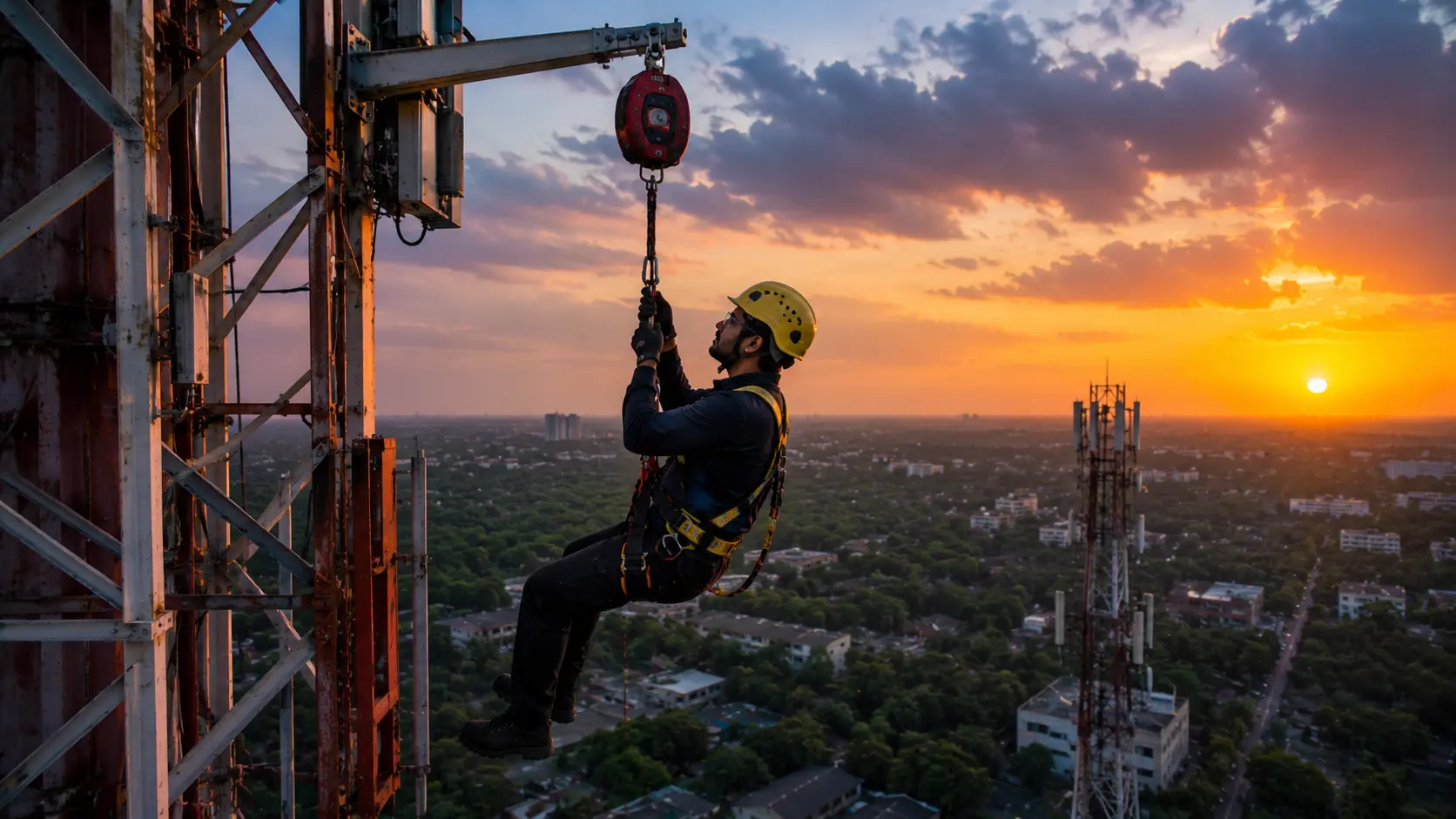
Telecom towers are among the most challenging workplaces when emergencies occur. Unlike factories, offices, or commercial buildings, tower workers cannot simply walk to the nearest exit during a fire, medical emergency, structural issue, or extreme weather event. Their work environment often places them hundreds of feet above ground with limited escape options.
When an incident occurs at height, every second matters. A well-planned telecom tower emergency evacuation strategy can mean the difference between a controlled descent and a life-threatening situation. Specialized evacuation systems, rescue planning, and worker training are essential components of telecom safety programs.
Indian Inovatix Ltd., Ahmedabad, Gujarat, India, has spent over 50 years manufacturing height safety systems that help organizations address complex work-at-height challenges across telecom, infrastructure, industrial, and utility sectors.
Key Takeaways
- Standard building fire exits are ineffective for telecom towers because workers operate on elevated structures with limited access routes.
- A telecom tower emergency evacuation plan requires dedicated descent and rescue equipment.
- Tower worker emergency descent systems help workers evacuate safely during fires, medical emergencies, and structural incidents.
- Height evacuation telecom planning should include rescue procedures, training, and certified equipment.
- Emergency evacuation systems can significantly reduce response time during critical situations.
Why Standard Fire Exits Do Not Work on Telecom Towers
Standard fire exits are designed for buildings where occupants can move horizontally and descend through protected stairways.
Telecom towers present a completely different environment. Workers often operate on narrow platforms, ladder systems, monopoles, guyed towers, and lattice structures that may exceed 50 metres in height.
Unlike conventional buildings, telecom towers generally have:
- Single access routes
- Vertical climbing paths
- Limited worker capacity
- Restricted movement areas
- Exposure to weather conditions
During an emergency, workers cannot depend on traditional evacuation methods.
What makes telecom towers different from buildings?
Telecom towers create unique risks because evacuation often requires controlled vertical descent rather than horizontal movement.
Key differences include:
| Commercial Building | Telecom Tower |
| Multiple exits | Limited access routes |
| Protected staircases | Vertical ladders |
| Ground-level assembly access | Elevated work positions |
| Fire suppression systems | Open structure environment |
| Short evacuation distance | Significant descent distance |
These factors require specialized evacuation procedures tailored to tower environments.
What Emergencies Require Telecom Tower Evacuation?
Telecom tower emergencies include any event that prevents workers from safely remaining on the structure.
Although fire receives significant attention, many other emergencies can require immediate evacuation.
Common examples include:
- Electrical fires
- Lightning activity
- Structural damage
- Medical emergencies
- Equipment failure
- Severe wind events
- Worker injury
- Communication failures
Each scenario requires a planned response supported by appropriate equipment.
Why is rapid evacuation important?
Emergency conditions can escalate quickly at height.
A worker experiencing a medical emergency 60 metres above ground may require immediate descent to receive treatment. Delays can increase risk and complicate rescue operations.
Organizations should establish evacuation procedures before work begins rather than reacting during an emergency.
What Is Tower Worker Emergency Descent Equipment?
Tower worker emergency descent equipment is a controlled evacuation system designed to lower personnel safely from elevated structures.
These systems allow workers to descend in a controlled manner when normal access routes become unsafe or inaccessible.
Modern systems are engineered to manage descent speed while minimizing panic and physical strain.
What equipment is commonly used?
Emergency descent solutions may include:
- Controlled descent devices
- Emergency escape systems
- Rescue and evacuation kits
- Certified ropes
- Anchorage connectors
- Full body harnesses
The appropriate solution depends on tower height, worker count, environmental conditions, and rescue requirements.
Indian Inovatix Ltd., Ahmedabad, Gujarat, India, manufactures height safety solutions designed for demanding industrial and infrastructure applications where rapid evacuation may be required.
What should a descent system provide?
A properly selected system should offer:
| Requirement | Purpose |
| Controlled descent speed | Prevents uncontrolled lowering |
| Certified load capacity | Supports worker safety |
| Reliable operation | Functions during emergencies |
| Ease of deployment | Reduces response time |
| Compatibility with harness systems | Improves safety integration |
Equipment should comply with relevant certification requirements and manufacturer guidelines.
Height Evacuation Telecom Planning: What Every Site Needs
Height evacuation telecom planning is the process of preparing personnel, procedures, and equipment for emergency situations at elevated work locations.
Effective planning reduces confusion and improves emergency response performance.
Every telecom site should maintain documented evacuation procedures.
What should an evacuation plan include?
An effective plan should address:
- Hazard identification.
- Emergency communication procedures.
- Worker responsibilities.
- Rescue and evacuation equipment.
- Medical response coordination.
- Site access information.
- Emergency contact details.
These elements help ensure workers understand their role during an incident.
How often should plans be reviewed?
Plans should be reviewed:
- Before major projects
- After site modifications
- Following incidents
- During periodic safety audits
- After regulatory updates
Regular reviews help keep procedures aligned with actual site conditions.
Challenges of Evacuation from Elevated Structures
Evacuation from elevated structures presents challenges that are rarely encountered in conventional workplaces.
The higher the work location, the more complex emergency response becomes.
Several factors influence evacuation effectiveness.
What are the most common challenges?
Workers may encounter:
- High wind conditions
- Limited mobility
- Restricted visibility
- Equipment obstructions
- Physical fatigue
- Communication difficulties
These challenges can affect both evacuation and rescue operations.
Indian Inovatix Ltd. has supplied safety systems for demanding industrial environments where access and evacuation planning are critical components of worker protection.
Why is rescue planning as important as evacuation planning?
Not every worker can evacuate independently.
An injured or unconscious worker may require assisted rescue using dedicated equipment and trained personnel.
Organizations should ensure rescue procedures complement evacuation plans rather than relying solely on self-rescue methods.
Choosing the Right Emergency Escape System for Telecom Towers
The right emergency escape system depends on site conditions, worker exposure, and operational requirements.
No single solution fits every telecom tower environment.
A structured assessment helps identify the most appropriate equipment.
What factors should be evaluated?
Safety teams should consider:
- Tower height
- Number of workers
- Structure type
- Environmental conditions
- Anchor locations
- Rescue requirements
- Training levels
A site-specific approach improves effectiveness and compliance.
Why work with a height safety specialist?
Specialists help organizations evaluate hazards and select certified solutions suitable for telecom applications.
Indian Inovatix Ltd., Ahmedabad, Gujarat, India, combines manufacturing expertise with decades of height safety experience. The company has protected more than 500,000 workers, operates from a 33,000 sq ft manufacturing facility, and manufactures systems certified to EN and ANSI standards.
Real-World Telecom Safety Lessons
Telecom infrastructure projects often involve maintenance and installation activities at significant heights.
Workers may spend extended periods on towers while handling antennas, cabling, communication equipment, and structural components.
A recurring lesson across the industry is that emergency planning must begin before workers leave the ground.
Successful telecom operators typically implement:
- Pre-job risk assessments
- Certified climbing systems
- Emergency descent equipment
- Rescue planning
- Routine drills
These measures help create safer working environments while supporting operational continuity.
When the Only Way Out Is Down
Telecom towers create unique emergency challenges that standard building evacuation methods cannot address. Workers operating at height require specialized systems designed specifically for elevated structures, restricted access routes, and emergency descent scenarios.
Indian Inovatix Ltd., Ahmedabad, Gujarat, India, has spent decades developing height safety solutions that support safer work environments across telecom, industrial, and infrastructure sectors. From emergency descent systems to complete height safety solutions, the company helps organizations prepare for situations where rapid and controlled evacuation is critical.
If a Tower Emergency Happened Today, Could Every Worker Get Down Safely?
Emergency response plans are only effective when supported by the right equipment and procedures. Review your telecom tower evacuation strategy before the next maintenance activity begins.
Talk to an Inovatix safety specialist before your next tower project. We’ll assess your evacuation requirements and recommend the right certified solution for your structure and working conditions.
Call us at +91-8849452638 or write to info@indianinovatix.com to get started.
Frequently Asked Questions
What is telecom tower emergency evacuation?
Telecom tower emergency evacuation is the process of safely removing workers from elevated telecom structures during emergencies such as fires, medical incidents, or structural failures. It requires specialized descent systems and procedures.
Why can’t telecom workers use standard fire exits?
Telecom towers do not have conventional staircases or protected exits. Workers must descend vertically from elevated structures using specialized access and evacuation systems.
What is tower worker emergency descent equipment?
Tower worker emergency descent equipment allows personnel to lower themselves safely from elevated locations during emergencies. These systems are designed for controlled and reliable operation.
What emergencies require evacuation from elevated structures?
Common examples include electrical fires, lightning, medical emergencies, equipment failures, structural damage, and severe weather conditions.
How does height evacuation telecom planning improve safety?
Height evacuation telecom planning establishes procedures, equipment requirements, and worker responsibilities before emergencies occur. This improves response speed and reduces confusion.
What standards apply to emergency evacuation equipment?
Depending on the application, equipment may be designed to comply with EN, ANSI, and other relevant safety requirements. Selection should follow manufacturer recommendations and site-specific hazards.
How often should telecom evacuation drills be conducted?
Organizations should conduct drills periodically and whenever significant changes occur to equipment, personnel, or site conditions.
Can injured workers evacuate independently?
Not always. Some emergencies require assisted rescue procedures using dedicated rescue equipment and trained responders.
What equipment is required for telecom tower evacuation?
Typical equipment includes full body harnesses, descent devices, rescue kits, anchorage connectors, and certified rope systems.
Why should telecom companies invest in evacuation systems?
Emergency evacuation systems help protect workers, reduce incident severity, support compliance objectives, and improve overall site safety performance.


Talk to Our Safety & Protection Specialists
Have questions or need guidance? Our experts can help you choose the most reliable and high-performance safety solutions tailored to your industry and site requirements.
-

- Call Us +91-8849452638
Need Help Determining the Right Fall Protection for You?
With our vast experience, our experts will assist you in selecting the most relevant system for your needs.