June 28, 2026
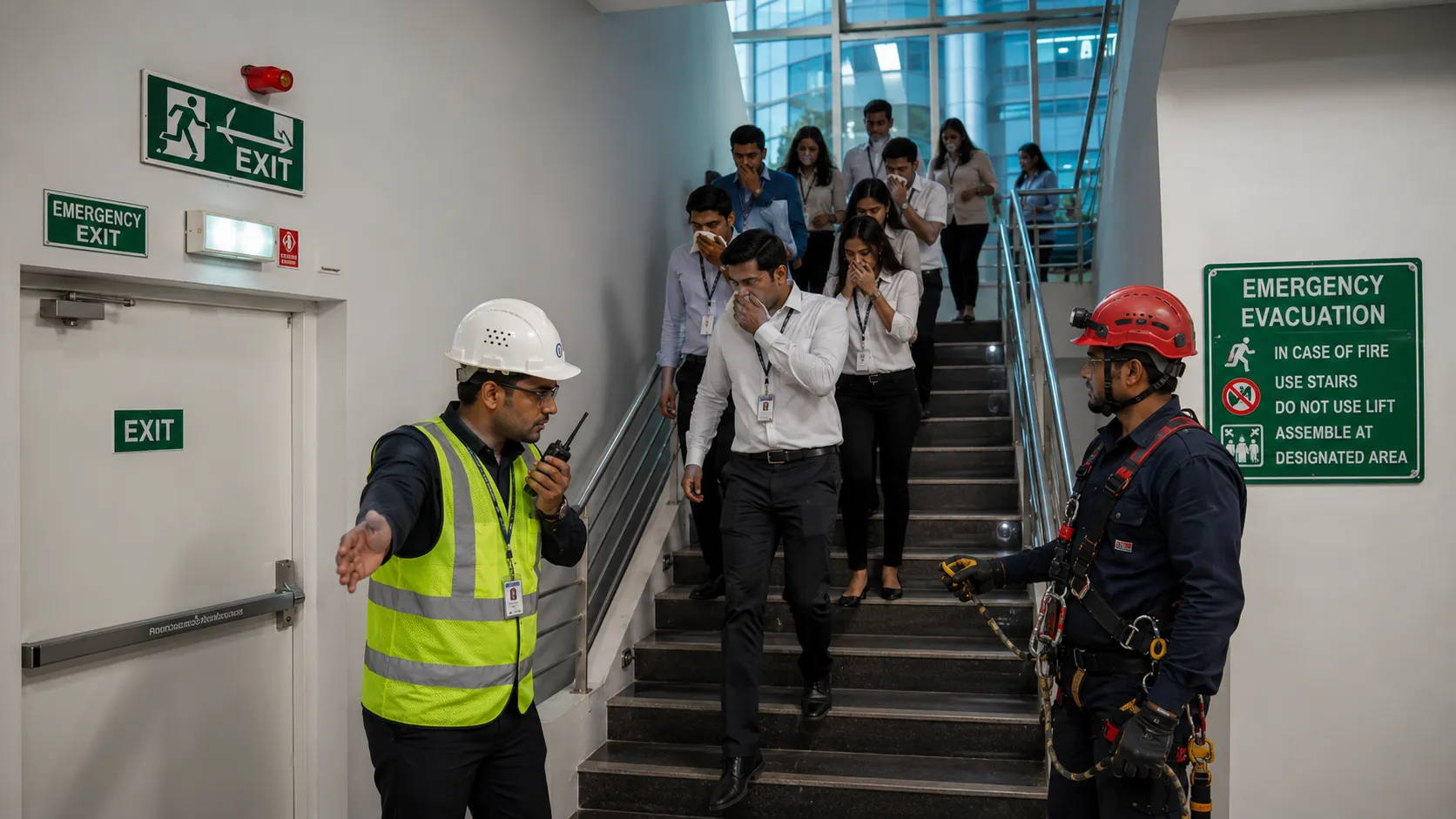
Fire, structural failure, power outages, and hazardous material incidents can create life-threatening situations in tall buildings. Effective high rise emergency evacuation planning helps organizations protect workers, maintain compliance, and reduce response times during emergencies.
The consequences of poor evacuation planning can be severe. Delayed evacuation, blocked exits, inadequate equipment, and untrained personnel can increase injury risks and expose organizations to regulatory penalties. High-rise structures present additional challenges because occupants must travel longer distances to reach safe zones.
A structured evacuation strategy supported by certified equipment, regular drills, and trained emergency teams helps organizations respond effectively. Indian Inovatix Limited, Ahmedabad, Gujarat, India, has supported workplace safety initiatives for over 50 years through engineered safety solutions, certified equipment, and specialized expertise in emergency response systems.
Key Takeaways
- High-rise buildings require detailed evacuation procedures that account for building height, occupancy, and emergency scenarios.
- Regular high rise emergency evacuation planning improves response times and helps organizations meet compliance requirements.
- Certified building evacuation safety equipment supports safer evacuation during fires, power failures, and rescue operations.
- Evacuation drills help identify bottlenecks, communication gaps, and equipment deficiencies before a real emergency occurs.
- Emergency escape devices and trained response teams are essential components of any high-rise evacuation strategy.
Why Is High Rise Emergency Evacuation Planning Important?
High-rise emergency evacuation planning is a structured process that establishes procedures, responsibilities, equipment requirements, and communication systems for safe building evacuation during emergencies.
Tall structures present unique evacuation challenges. Occupants may be located dozens of floors above ground level. Stairwell congestion, smoke movement, and limited access routes can significantly affect evacuation speed.
According to the Factories Act 1948 and international safety practices, organizations must establish emergency procedures that support worker safety and emergency response readiness.
Key planning objectives include:
- Protecting occupants during emergencies
- Reducing evacuation time
- Maintaining communication throughout the incident
- Supporting rescue operations
- Meeting regulatory requirements
A well-developed plan also supports business continuity by reducing disruption following emergency events.
What Hazards Should a High-Rise Evacuation Plan Address?
A high-rise evacuation plan should address all foreseeable emergencies that could require partial or full building evacuation.
Common hazards include:
| Emergency Type | Potential Impact |
| Fire | Smoke spread, blocked exits |
| Earthquake | Structural damage |
| Power Failure | Elevator shutdown |
| Hazardous Gas Release | Toxic exposure |
| Structural Failure | Immediate evacuation |
| Security Threat | Controlled evacuation |
Each hazard requires specific response procedures, assembly points, and communication protocols.
Organizations operating industrial towers, telecom facilities, and infrastructure projects often require specialized evacuation procedures due to elevated work locations and restricted access areas.
Emergency Exit High Rise Requirements and Best Practices
An emergency exit high rise system consists of designated escape routes, protected stairwells, signage, emergency lighting, and evacuation controls that allow occupants to leave the building safely.
Building design significantly affects evacuation performance. Exit routes must remain accessible, clearly marked, and regularly inspected.
Critical emergency exit elements include:
- Fire-rated stairwells
- Illuminated exit signage
- Emergency lighting systems
- Smoke control systems
- Refuge areas where applicable
- Emergency communication systems
Following these practices improves evacuation efficiency:
- Conduct monthly exit route inspections.
- Keep stairwells free from obstructions.
- Test emergency lighting regularly.
- Verify signage visibility.
- Review occupancy loads periodically.
Safety officers should document all inspections and corrective actions to support compliance audits.
How Many Emergency Exits Should a High-Rise Building Have?
The required number of exits depends on building occupancy, floor area, local building codes, and risk assessments.
Most high-rise structures require multiple protected exit routes. Redundancy ensures that evacuation remains possible if one route becomes inaccessible.
Emergency exits should be distributed strategically to minimize travel distances and prevent crowding during evacuation.
Building Evacuation Safety Equipment Every Facility Should Have
Building evacuation safety equipment includes devices and systems that support safe occupant movement, rescue operations, communication, and emergency response during evacuation events.
Equipment selection should match building height, occupancy levels, and identified hazards.
The following equipment is commonly recommended:
| Equipment | Function |
| Emergency Escape Devices | Controlled descent from elevated locations |
| Rescue Tripods | Rescue support in confined access points |
| Full Body Harnesses | Worker protection during rescue |
| Descenders | Controlled evacuation |
| Communication Systems | Coordination during emergencies |
| Emergency Lighting | Route visibility |
| Stretchers | Casualty evacuation |
Indian Inovatix Limited, Ahmedabad, Gujarat, India manufactures safety and rescue solutions that support industrial evacuation and rescue applications across multiple sectors.
The company operates a 33,000 sq ft manufacturing facility and has helped protect over 500,000 workers across India through engineered safety systems and equipment.
Which Equipment Is Required for Elevated Rescue Operations?
Elevated rescue operations require equipment capable of supporting safe descent and casualty recovery.
Typical requirements include:
- EN-certified full body harnesses
- Rescue descenders
- Anchorage systems
- Rescue ropes
- Connectors and carabiners
- Communication devices
Equipment should always comply with applicable EN, ANSI, or IS standards.
Example Specification for Emergency Escape Equipment
| Specification | Typical Value |
| Minimum Anchorage Strength | 12 kN |
| Harness Standard | EN 361 |
| Lanyard Standard | EN 355 |
| Connector Standard | EN 362 |
| Lifeline Standard | EN 353 |
Safety professionals should verify specifications based on project requirements and manufacturer recommendations.
Evacuation Drill High Rise Building: How Often Should Drills Be Conducted?
An evacuation drill high rise building program helps occupants practice emergency procedures, improve response times, and identify weaknesses before real emergencies occur.
Drills transform written procedures into practical skills. They also provide measurable performance data for continuous improvement.
Organizations should establish a documented drill schedule.
Recommended frequency:
- Quarterly evacuation drills for high-risk facilities
- Semi-annual full-building drills
- Annual emergency response team exercises
- Post-renovation drills following significant building changes
Regular drills improve familiarity with evacuation routes and emergency responsibilities.
What Should Be Evaluated During an Evacuation Drill?
Every drill should generate measurable performance data.
Evaluate:
- Evacuation completion time
- Stairwell congestion
- Alarm effectiveness
- Communication performance
- Assembly point accountability
- Equipment readiness
- Response team coordination
Following the exercise, conduct a formal review and implement corrective actions.
A metro infrastructure project recently reduced evacuation times by over 20% after revising assembly procedures and improving emergency communication protocols identified during drill evaluations.
Comparing Evacuation Strategies for High-Rise Structures
Different evacuation approaches suit different building types and emergency conditions.
| Strategy | Advantages | Limitations |
| Full Building Evacuation | Maximum occupant protection | Longer evacuation times |
| Phased Evacuation | Reduced congestion | Requires strong coordination |
| Zoned Evacuation | Efficient for large buildings | More complex planning |
| Shelter-in-Place | Useful in specific incidents | Not suitable for all emergencies |
The most suitable strategy depends on building design, occupancy profile, and risk assessment findings.
Safety officers should review evacuation strategies annually to ensure continued effectiveness.
The Role of Training in Emergency Preparedness
Emergency response training develops the skills required to execute evacuation procedures effectively under pressure.
Training should include:
- Alarm recognition
- Exit route familiarity
- Equipment use
- Assembly procedures
- Communication protocols
- Rescue awareness
Organizations that integrate training with drills often achieve faster evacuation times and stronger compliance performance.
Indian Inovatix Limited, Ahmedabad, Gujarat, India has supplied certified safety systems for critical infrastructure, industrial plants, and specialized installations across India. The company’s experience includes projects supporting organizations such as ISRO and BARC, where safety and reliability requirements are particularly demanding.
Building an Effective High-Rise Emergency Response Program
A successful emergency response program combines planning, equipment, training, and continuous improvement.
Key components include:
- Risk assessment
- Emergency procedures
- Exit route management
- Equipment inspection
- Personnel training
- Evacuation drills
- Program review
Organizations should review their programs annually and after significant incidents or operational changes.
Consistent improvement helps maintain readiness and supports worker safety throughout the building lifecycle.
Your Evacuation Plan Is Only as Strong as Your Last Drill
Emergency preparedness requires more than documented procedures. Effective planning, certified equipment, and realistic drills help organizations respond confidently when incidents occur. Strong high rise emergency evacuation planning reduces risk, supports compliance, and protects occupants during critical situations.
Indian Inovatix Limited is a manufacturer, supplier, and specialist in workplace safety solutions. With more than 50 years of engineering experience, over 1 lakh metres of fall arrest systems installed, and EN and ANSI certified products, the company supports safer operations across industries throughout India.
Need to review your building evacuation readiness?
Request a safety assessment for your facility’s evacuation procedures, rescue requirements, and emergency equipment selection. Our specialists can help identify gaps and recommend certified solutions aligned with your operational risks.
Call us at +91-8849452638 or write to info@indianinovatix.com to get started.
Frequently Asked Questions
What is high rise emergency evacuation planning?
High rise emergency evacuation planning is the process of creating procedures for safely evacuating occupants from tall buildings during emergencies. It includes route planning, communication systems, emergency equipment, and training. Regular reviews help keep the plan effective as building conditions change.
How often should an evacuation drill high rise building exercise be conducted?
Most organizations conduct drills at least annually, while high-risk facilities often perform them quarterly. The frequency depends on occupancy levels, hazards, and regulatory requirements. Regular drills improve familiarity with evacuation procedures.
What is the most important emergency exit high rise requirement?
Protected and clearly marked exit routes are essential. Emergency lighting, signage, and unobstructed stairwells help occupants evacuate safely. Regular inspections ensure continued readiness.
What building evacuation safety equipment is commonly required?
Common equipment includes emergency lighting, communication systems, rescue harnesses, emergency escape devices, and stretchers. Requirements vary based on building use and risk assessments. Equipment should comply with relevant standards.
Which safety standard applies to full body harnesses?
EN 361 is one of the most widely recognized standards for full body harnesses. It specifies performance and testing requirements for fall arrest harnesses. Many industrial projects require EN-certified equipment.
What is the minimum anchor strength commonly used for rescue systems?
Many rescue applications use anchorages rated at 12 kN or higher, depending on system design. Engineers should verify load requirements for each application. Manufacturer recommendations must always be followed.
Are evacuation drills mandatory in India?
Requirements depend on local regulations, industry standards, and facility type. Many organizations conduct drills as part of their emergency preparedness and compliance programs. Regular drills also improve worker readiness.
Which Indian cities have the greatest need for high-rise evacuation planning?
Major urban centres such as Mumbai, Ahmedabad, Bengaluru, Delhi NCR, Hyderabad, and Pune have significant high-rise development. As building heights increase, evacuation planning becomes increasingly important. Site-specific assessments remain essential.
Can emergency escape devices replace stairwell evacuation?
No. Emergency escape devices typically serve as supplementary evacuation or rescue tools. Primary evacuation procedures generally rely on designated exit routes and stairwells. Their use depends on risk assessments and emergency conditions.
Why should organizations review evacuation plans annually?
Building occupancy, layouts, and operational risks can change over time. Annual reviews help maintain compliance and improve emergency readiness. Lessons learned from drills should also be incorporated into updates.


Talk to Our Safety & Protection Specialists
Have questions or need guidance? Our experts can help you choose the most reliable and high-performance safety solutions tailored to your industry and site requirements.
-

- Call Us +91-8849452638
Need Help Determining the Right Fall Protection for You?
With our vast experience, our experts will assist you in selecting the most relevant system for your needs.